
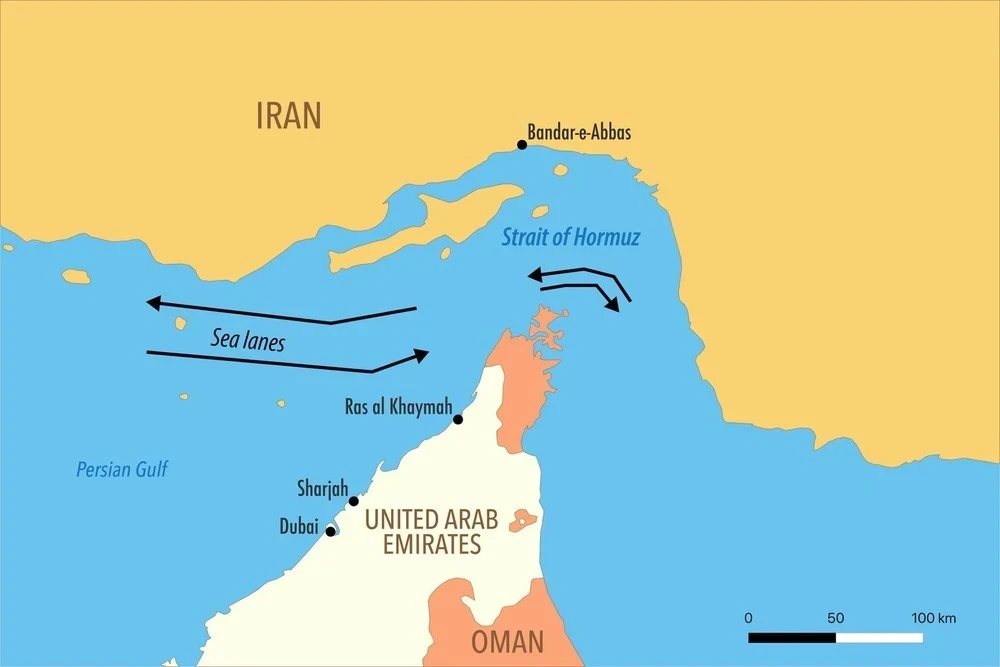
According to information from international sources, Iranian forces of the Islamic Revolutionary Guard Corps have been warning ships in the area that access through the strait is "forbidden." These messages have been recorded by the European Union's naval mission.
However, there has been no official confirmation of a complete blockade from Iranian authorities, and international organizations have not confirmed the legal status of the closure of the strait.
Media reports indicate disruptions in shipping: some oil companies and traders have temporarily suspended shipments through the Hormuz Strait, while some tankers have changed their routes or stopped in regional ports due to safety concerns.
The U.S. Navy has expressed concerns about the safety of commercial shipping in the Persian Gulf, and several countries have advised their vessels to avoid the region. Additionally, insurance companies have begun raising rates due to increased military risks.
According to reports, even without an official closure, the movement of vessels through the strait may be effectively restricted. The Hormuz Strait plays a key role in the global energy system, as a significant portion of the world's maritime oil and liquefied gas supplies passes through it.
Tensions have escalated following Israeli strikes on Iranian facilities on February 28, which, according to international sources, targeted military and nuclear infrastructure. In response, Iran announced retaliatory strikes against Israeli and U.S. targets in the region, significantly increasing the risks of conflict escalation in the Middle East.
The Hormuz Strait serves important functions:
- it connects the Persian Gulf, where oil exporters such as Saudi Arabia, Iraq, Kuwait, Qatar, and the UAE are located,
- to the Gulf of Oman,
- and then to the Arabian Sea and the Indian Ocean.
Routes from the Indian Ocean lead:
- to Europe (via the Red Sea and the Suez Canal),
- to Asia (including India, China, Japan, and South Korea),
- to Africa and other regions.


