
Overchuk emphasized that the open customs border with partners in the EAEU creates conditions for the influx of goods that could negatively impact competition in the domestic market. He noted that Russia is determined to take strict measures to combat this issue.
As part of this strategy, a system for confirming the expected delivery of goods (SPOТ) was implemented this year. It requires importers to confirm the conclusion of contracts for the supply of goods from EAEU countries and to prepare the relevant documents, the Deputy Prime Minister added.
In September 2025, the Federal Customs Service of Russia was instructed to strengthen control at the border sections with Belarus and Kazakhstan. This is aimed at preventing the illegal import and export of goods, as well as monitoring their transit.
“I want to emphasize that this is not a temporary initiative. We will maintain this control on a permanent basis. No attempts to evade attention at the Kazakh border will be successful. This is our clear position,” Overchuk stated.
Inspections are carried out in cooperation with various government agencies, including the Ministry of Internal Affairs, the National Guard, and the FSB border service. According to the official, in 2025, mobile groups identified more than 9,000 vehicles carrying 137,000 tons of goods that violated legislation.
Additionally, Russia has begun to combat "gray" certificates that are issued in EAEU countries without proper expertise.
“We have noticed that the tightening of control on our side has led to the transfer of problems to the platforms of our EAEU partners. This creates not only unfair competition but also a threat to consumers. To protect the domestic market from counterfeit goods, at the end of 2025, the State Control and Rosakkreditation authorities were granted the power to suspend the actions of certificates and declarations issued in EAEU countries,” he added.
Overchuk also reminded that from February 11, electronic navigation seals have begun to be used in the EAEU, which are intended to prevent the entry of non-compliant goods into the Russian market.
It is worth noting that the EAEU consists of five countries: in addition to Russia, these are Kazakhstan, Kyrgyzstan, Belarus, and Armenia.
Kazakh political scientist Marat Shibutov expressed doubt about how permanent customs control aligns with the statutory documents of the EAEU. He raised questions about the coordination of these actions with partners and possible retaliatory measures, emphasizing that integration should not be one-sided.
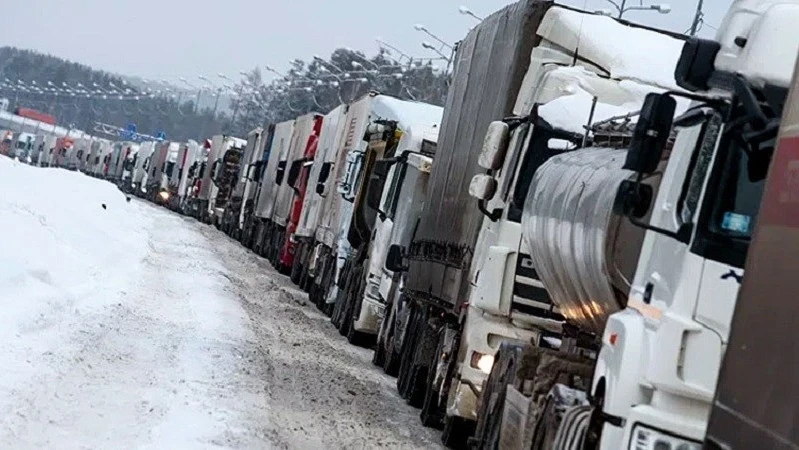
Last autumn, multi-kilometer traffic jams with trucks formed at the border between Kazakhstan and Russia, which were described as record-breaking — at different times, between 2,500 and 15,000 vehicles were stuck in the jams. The customs services of both countries shifted the responsibility for the traffic jams onto each other. As a result, the Federal Customs Service of Russia accused unscrupulous businessmen who intentionally delayed at the border to avoid inspections, while the Kazakh side referred to the tightening of control by Russia.
These traffic jams led to an almost complete halt of the western route for transporting goods from China to Russia. To resolve the situation, a simplified procedure for crossing goods at the border was introduced in October 2025, which remained in effect until the end of 2025.


