
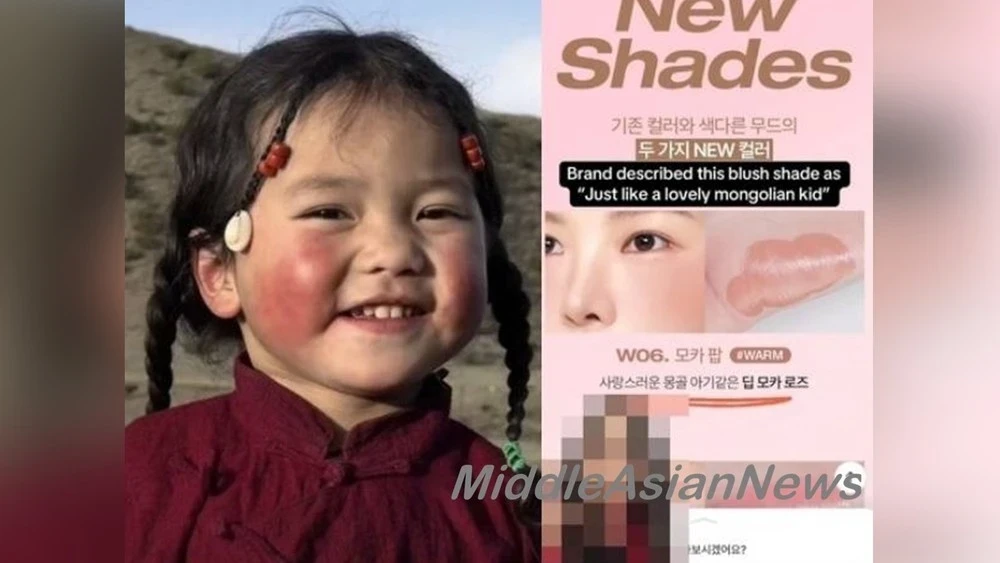
Recent events have drawn attention to a South Korean cosmetics brand that has faced criticism for racist remarks. This occurred after a social media post where one of its products, blush, was advertised with the phrase "cheeks like a Mongolian baby," reports MiddleAsianNews.
In December of last year, the brand, which specializes in decorative cosmetics, released moisturizing blushes. One of the nine shades, named "Mocha pop," was described as blush for "charming Mongolian babies."
The scandal erupted on the 19th of last month when Mongolian influencer Khaliun posted a video on Instagram titled "Did a Korean brand just stereotype Mongolian children?".
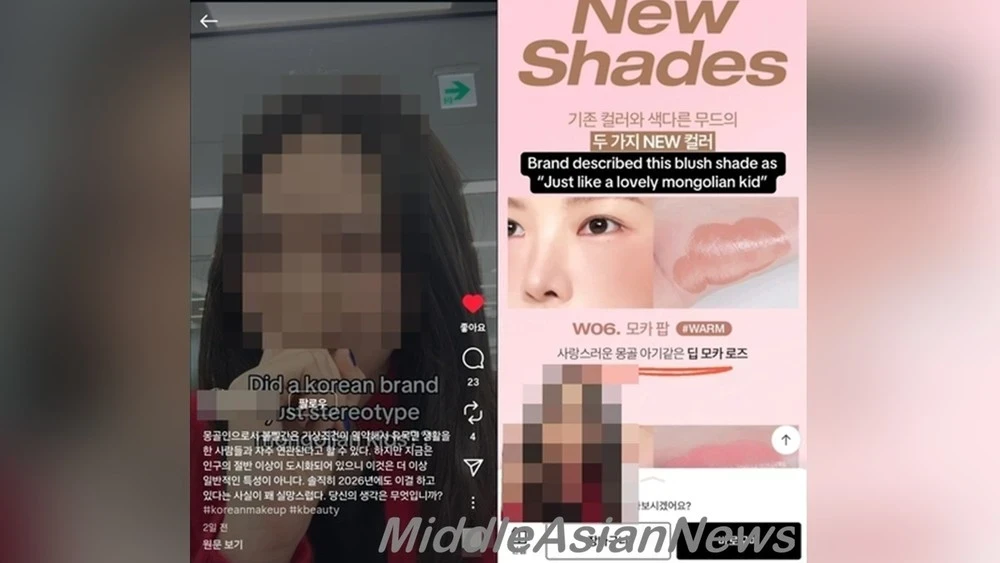
In her video, which garnered 270,000 views, Khaliun expressed her discontent: "As a Mongolian, I can say that rosy cheeks are often associated with a nomadic lifestyle due to harsh climatic conditions. I am very upset that this is still happening in 2026."
The criticism that arose in response to her words included comments such as: "This is racism" (user Daum Cafe 'ne***'), and "If I were Mongolian, this would sound derogatory" (anonymous user from 'Theqoo'). Other users noted: "People don't even understand why this stereotype exists" (Instagram user 'ne***').
Mongolian internet users supported the criticism, leaving comments like: "The description of the blush color is strange and unnecessary," "It's odd to mention only one country," and "As a Mongolian, I have mixed feelings."
On the platform Theqoo, opinions were also expressed such as: "This is no different from using the hair color of a foreign baby to name a product or calling it 'contact lenses for mixed races.' Someone asked: 'Would it be okay to call it 'cheeks of a Korean baby'?" and another added: "Could they imagine how this would be perceived in the West?".
As of the 14th, the phrase on the product page was changed to "a color that looks slightly sun-kissed."
Given the global spread of Korean cosmetics, criticism regarding insufficient racial sensitivity is growing.
Local users noted that the brand should be more careful with its wording, considering the growing influence of Korean cosmetics on the international stage.
One user on Threads noted: "Perhaps the marketer who created this name didn't mean to offend anyone, just thought Mongolian babies were cute. But with the global popularity of Korean cosmetics, we should be more mindful of how this can be perceived as racism."
Another user added: "Would it be okay if a foreign cosmetic product was advertised with the phrase 'double eyelids of Korean women' because Koreans are known for their success in double eyelid surgery? But regardless of intentions, this will be perceived as racism."
In response to the growing criticism, the company changed the description to "a beautiful rich pink mocha color, as if slightly warmed by the sun."
A Mongolian girl named Nomin (25) shared her thoughts on the phrase "rosy cheeks of a Mongolian baby": "In the past, children with such cheeks were mocked, and this expression was used as a hint at their rural origins." She also added: "I hope that people will consider the cultural and environmental features of each country and not interpret this expression negatively."
This debate also touches on the term "salsaeck" (skin color), which has long been used in Korean society without proper consideration of its implications.
Previously, the light beige color of pencils and paints was called "salsaeck" (skin color), but this practice faced criticism for racism, implying that the skin color of Caucasians or Asians is the "standard."
After a series of critical remarks that this term alienates people with various skin tones, in 2002 it was replaced with "apricot color" (salgu color) or "light orange color" (light orange) in accordance with recommendations from the National Human Rights Commission of Korea.


