Natural disasters occurred worldwide, resulting in significant human casualties and environmental damage.Celeste Saulo, head of the WMO, emphasized that extreme weather conditions continue to be one of the main risks mentioned in the annual report of the World Economic Forum on global threats. "The number of people affected by climate disasters is constantly growing, and in January we witnessed their tragic consequences," she added.
Saulo also reminded that in countries with effective early warning systems, the mortality rate from natural disasters is six times lower, making the initiative "Early Warning Systems for All" particularly important.
Winter Frosts and Storms
Despite the overall trend of decreasing frequency of severe cold spells since 1950, according to the Intergovernmental Panel on Climate Change (IPCC), individual cold waves continue to occur. The weakening of the polar vortex has led to the intrusion of Arctic air into temperate latitudes, causing severe frosts in North America, Europe, and Asia. This process is associated with a large area of cold air and strong winds that usually remain around the Arctic but sometimes weaken, allowing Arctic cold to push southward.In Kamchatka, over two meters of snow fell in the first two weeks of January, and in December, 3.7 meters, marking one of the snowiest periods since the 1970s, according to Russian meteorological services. In Petropavlovsk-Kamchatsky, transportation was nearly paralyzed, and snowdrifts blocked access to buildings and infrastructure.
At the end of January, a severe winter storm hit Canada and the United States, leading to widespread power outages, flight cancellations, and human casualties. The National Weather Service of the United States warned of a new wave of Arctic cold expected by January 31, which would affect the plains states and Great Lakes regions, as well as the southeast and east of the country.
Some meteorological forecasts suggest that stratospheric warming over the Arctic may lead to a significant weakening of the polar vortex in early February, creating conditions for a new intrusion of Arctic air into North America and Northern Europe in the second half of the month.
Floods and Heavy Rains
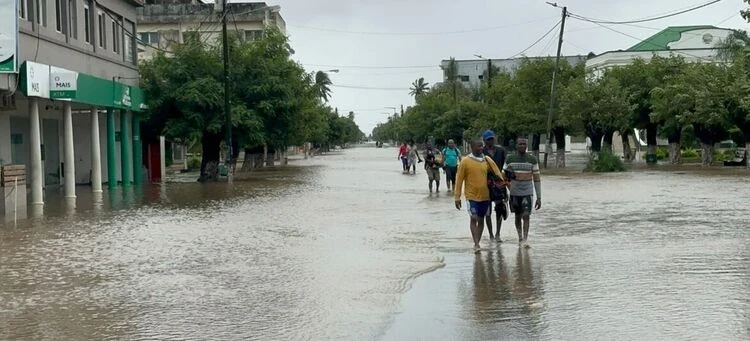
Europe faced a series of storms accompanied by heavy rains, strong winds, and flooding affecting Ireland, the UK, and Mediterranean countries. Meteorologists warned of continued increased precipitation in Northwestern Europe and the Mediterranean.The situation is also complicated in southern Africa. According to authorities in Mozambique, floods have affected at least 650,000 people, and hundreds of thousands have been forced to leave their homes. About 30,000 residential buildings have been damaged or destroyed. South Africa declared a national disaster after torrential rains claimed dozens of lives.
Abnormal Heat and Fires
Australia experienced two heatwaves in just one month. In the town of Ceduna, temperatures reached 49.5 degrees Celsius, setting a record for the region. Scientists note that climate change has made January's heat about 1.6 degrees more intense.In Chile, wildfires claimed the lives of at least 21 people, and tens of thousands were evacuated. Fires also spread across southern Argentina. According to an IPCC report, human-induced climate change has increased the frequency and intensity of heatwaves since the mid-20th century.
The Importance of Early Warning Systems
The WMO is ramping up efforts to address the impacts of extreme heat and other climate threats, including joint initiatives with the World Health Organization.January 2026 served as a vivid reminder that investments in early warning systems, climate resilience, and disaster preparedness are crucial for saving lives.
Photo on the main page is illustrative: idea.int.