
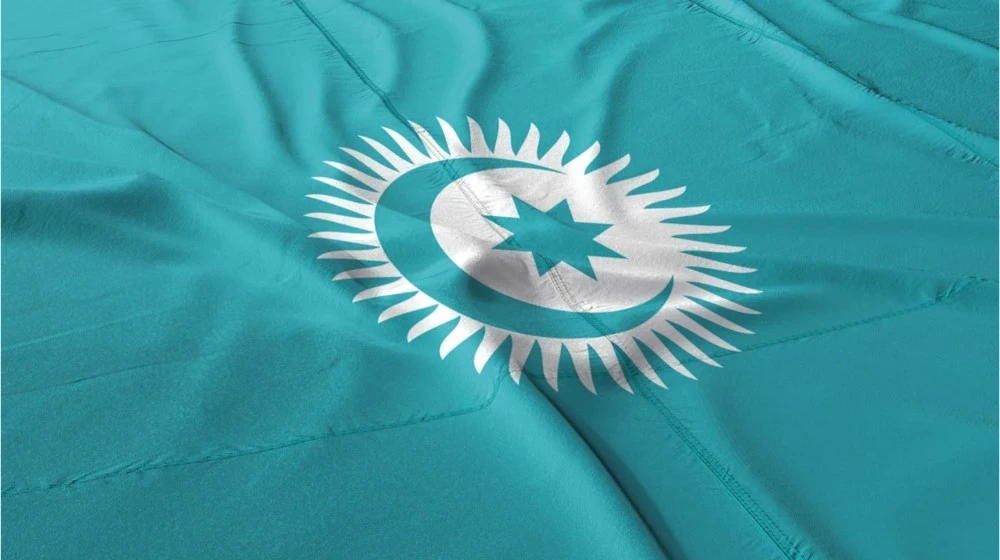
The visit of the Secretary General of the Turkic Council, Kubanychbek Omuraliev, to the USA last month, which included a series of meetings with representatives of the American government, went unnoticed. Coffey emphasizes that if America wishes to remain competitive in the era of great powers, it needs to engage more actively with organizations like the Turkic Council.
What is the Turkic Council?
The Turkic Council is an intergovernmental alliance uniting Turkic countries of Eurasia with the aim of strengthening a common identity, culture, and aligning geopolitical interests.
The idea of creating this organization was voiced in 2006 when Nursultan Nazarbayev, the then President of Kazakhstan, proposed to strengthen cooperation among Turkic states. The Turkic Council was established in 2009 by Turkey, Kazakhstan, Kyrgyzstan, and Azerbaijan, and Uzbekistan joined in 2019. In 2021, the organization adopted its current name. In addition to the five full members, Turkmenistan, Hungary, and the Turkish Republic of Northern Cyprus participate as observers.
Significance of the Turkic Council
The geographical location of the member countries of the Turkic Council makes them strategically important on the world stage. Collectively, they represent over 160 million people across an area of about 1.6 million square miles, and their gross domestic product is nearly 2 trillion dollars. These states possess significant natural resources, including reserves of oil, gas, and rare earth minerals.
Moreover, they are located on key trade routes, such as the Turkish Straits, the Middle Corridor, and the Ganja Corridor, which host important oil and gas pipelines and fiber-optic networks connecting Central Asia with Europe, bypassing Russia and Iran.
The influence of the Turkic Council extends beyond national borders. Millions of ethnic Turks live in various countries, from the Balkans to China, and look towards major Turkic states, especially Turkey, which exerts significant influence through its culture, including television and music. For example, the Bashkir group "Ay Yola" with their hit "Homay" ranked high in the global charts in 2025.
Bashkirs, being a Turkic ethnic group in Russia, highlight how Turkic culture encompasses even those regions that are not independent states. In the context of the revival of Turkic identity, the Turkic Council is likely to play an increasingly important role for ethnic Turks across Eurasia, which explains its significance in Eurasian geopolitics, despite a relatively low GDP.
After the collapse of the Soviet Union, Turkic countries in Central Asia sought to restore the significance of their language and culture, including the transition from Cyrillic to Latin script. In 2024, a 34-letter common Turkic alphabet was proposed within the Turkic Council, along with the prioritization of national languages.
Goals of the Turkic Council
The Turkic Council is expanding its ambitions. In addition to cultural issues, discussions are underway at political levels to deepen economic integration, possibly creating a system similar to a customs union, with existing initiatives such as the Simplified Customs Corridor. At this year's Turkic Council summit in Gabala, Azerbaijan emphasized security and proposed conducting military exercises in 2026, which would be an important step for the organization.
The geopolitical situation in the region is still defined by Russia and China, as well as India and Iran. However, with the deepening cooperation among Turkic states, the Turkic Council is becoming an important center of power in Eurasia, highlighting the need for the United States to engage with this organization.
For President Donald Trump, the time has come to address this issue. In his first year in office, he showed interest in strengthening the U.S. position in the region, including mediating a peace agreement between Armenia and Azerbaijan, which could open new transport routes. This, in turn, would create opportunities for trade and the economy throughout the region.
Trump also strengthened U.S. ties with Central Asia by hosting a "Five Plus One" summit at the White House and signing agreements in business and mining. Kazakhstan and Uzbekistan were invited to the G20 meeting in Miami at the end of the year.
At the same time, Trump maintains strong personal ties with Turkish President Recep Tayyip Erdoğan. Turkey, being a key player in the Turkic Council, has its headquarters in Istanbul, and its influence on the organization opens opportunities for deepening U.S. engagement with the Turkic Council.
During his visit to Washington, Omuraliev met with Assistant Secretary of State for South and Central Asia, S. Paul Kapur, which is certainly better than no communication at all. However, for more effective interaction, a higher level of meetings with American officials is required, which could culminate in a summit of the heads of Turkic Council states with Trump.
The members of the Turkic Council adhere to a balanced foreign policy, and more active U.S. participation could help maintain this balance. The Turkic Council is becoming one of the few geopolitical centers in Eurasia that contributes to the balancing of influence, which is important for Washington.
Although the members of the Turkic Council are unlikely to characterize themselves this way, this is how Washington views it. Nevertheless, relations between the U.S. and the Turkic Council will not develop on their own and will require targeted efforts. Ignoring this organization would mean geopolitical irresponsibility and would not align with America's interests in the context of global competition.


