
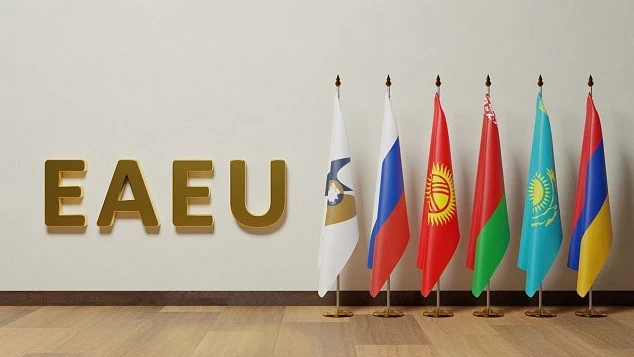
Kazakhstan is now responsible for the EAEU at a time when the global economy is experiencing unstable times, noted Kazakh political scientist Talgat Kaliev. According to him, the world economy is on the brink of transformation, and the current changes could radically alter the familiar paradigms that have been in place since World War II. “The global trading system, which was based on market specialization, is now changing, and its new equilibrium is still unclear. It is important to anticipate these changes,” he added.
Kaliev pointed out that over more than a decade of the EAEU's history, the organization has faced numerous external challenges. “Kazakhstan and Russia are the two main economies of the union, and their dependence on global energy prices requires constant adjustments to economic policy in response to changing conditions. The EAEU faces the task of finding its place in the new global trade and economic system, which requires both modernization and the formation of a new identity,” he specified.
In 2026, the influence of external factors on the EAEU will remain significant, the political scientist added. He emphasized that the member countries must strive for economic stability. “Much will depend on the situation regarding the peace process between Ukraine and Russia, mediated by the USA or other countries, if it takes place next year. The sanctions conflict between the West and Russia also has a serious impact on the position of the EAEU,” he noted.
Priority Tasks for Astana
Kassym-Jomart Tokayev, the President of Kazakhstan, who will chair the Supreme Eurasian Economic Council in 2026, stated at a meeting in St. Petersburg at the end of 2025 that the world is entering an era of artificial intelligence. He emphasized the importance of integrating this technology into all areas of the Union's activities, including forecasting trade flows, assessing the impact of customs duties, and monitoring compliance with the legislation of member states to the EAEU Treaty. He also proposed to prepare a joint statement on the responsible development of AI within the framework of the upcoming Eurasian Economic Forum in the republic.
Tokayev also expressed the opinion that the EAEU could become a global transport and logistics hub, noting the need to develop logistics and strengthen industrial cooperation. “Additional opportunities for the production and export of industrial goods in the Union countries are estimated at 67 billion dollars, according to analysts from the Eurasian Development Bank,” he added.
Furthermore, the Kazakh president emphasized the need to eliminate artificial barriers to the free movement of citizens within the EAEU and to minimize queues at borders. He called on member countries to fulfill their mutual obligations. Tokayev also reminded of the signing in 2025 of free trade agreements with Mongolia and of economic partnerships with the UAE and Indonesia. He highlighted the importance of expanding the Union's cooperation with Arab states, Global South countries, Southeast Asia, and Africa.
Currently, the EAEU unites five countries: Armenia, Belarus, Kazakhstan, Kyrgyzstan, and Russia. Each of these states annually takes turns serving as the chairman of the Union.


