
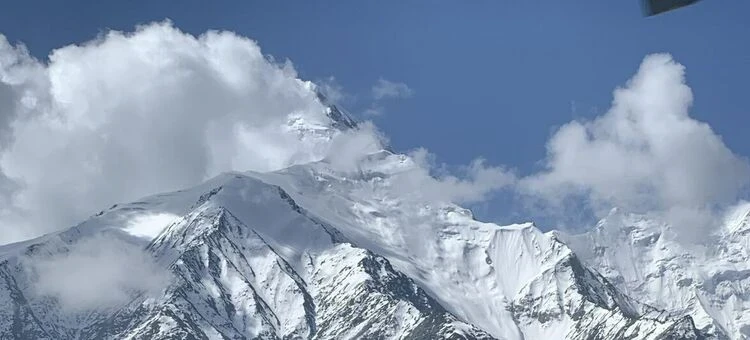
According to UN data, glaciers in Central Asia and other mountainous regions are melting at an unprecedented rate. The increase in temperature leads to a reduction in the winter season and an extension of summer, which, in turn, causes glaciers to retreat, as reported by the UN News Service.
Glaciers play a crucial role, providing about 70% of the planet's freshwater resources. Approximately 2 billion people depend on these resources for drinking water supply, agriculture, industry, and energy production.
Moreover, glaciers help maintain ecosystems and act as "climate stabilizers," reflecting sunlight back into space and thus preventing excessive warming of the Earth.
However, as glacier melting continues, the water cycle becomes increasingly unpredictable, negatively impacting water supply worldwide. This loss represents not only an ecological but also an economic problem affecting the lives of millions of people.
The UN Environment Programme warns that the depletion of freshwater resources from glaciers could lead to losses of $4 trillion in global GDP due to disruptions in agriculture, urban water supply, and energy production.
The situation in Central Asia continues to deteriorate.
According to the Eurasian Development Bank, since 2022, the temperature in the region has been rising nearly twice as fast as the global average, exacerbating desertification issues and accelerating glacier melting.
At the first International High-Level Conference on Glacier Conservation, held in May 2025 in Dushanbe, Tajikistan's President Emomali Rahmon noted that more than 1,000 of the country's 14,000 glaciers have already completely melted. Over the past decades, the total volume of glaciers in Tajikistan has decreased by almost a third, and they account for over 60% of Central Asia's water resources.
Glaciers in Kyrgyzstan have also not escaped changes; over the past 50-70 years, their area has decreased by 16%.
The UN emphasized that at the initiative of Tajikistan, the General Assembly proclaimed 2025 as the International Year of Glacier Conservation. This is necessary to draw attention to the issue of glacier melting and to develop effective strategies for their protection.
“Glacier conservation is a key element of a comprehensive strategy for climate change adaptation developed jointly by Kazakhstan, Kyrgyzstan, Tajikistan, Turkmenistan, and Uzbekistan. As part of this strategy, the countries are enhancing their national capabilities in glacier monitoring by conducting joint inspections and compiling comprehensive inventories of the region's glaciers,” the statement noted.


