
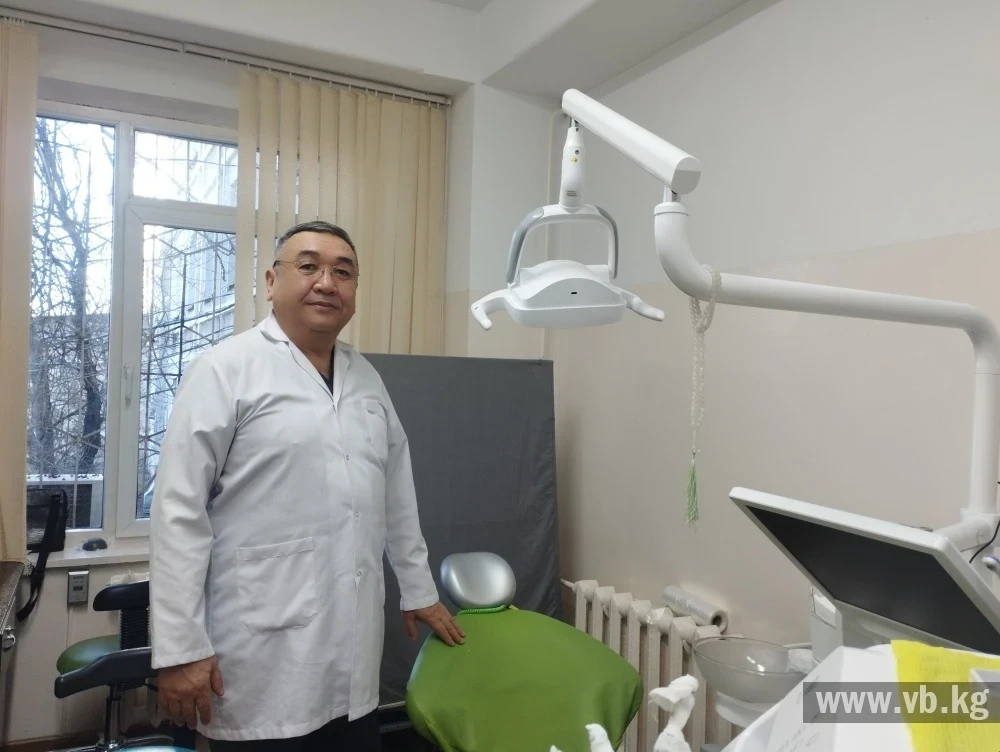
The condition of teeth plays a significant role in a person's overall health, yet many still do not give proper attention to oral care. Poor chewing function, bacterial proliferation, and inflammation can lead to serious diseases of the stomach and other organs. In an interview with dentist Turatbek Bakirov, we discussed how to properly care for teeth, common mistakes patients make, and the importance of hygiene from an early age.
- Turatbek Zhenishbekovich, how important do you think the connection between teeth and overall health is?
- It's not just an important aspect; it's the foundation of health. The condition of the teeth affects the functioning of the entire body. If a person has dental problems, they cannot chew food properly, which puts additional strain on the digestive system and can lead to various diseases.
Moreover, cavities promote the proliferation of bacteria in the oral cavity, which can cause inflammatory processes. Therefore, dental health is not just a beautiful smile but also the overall condition of the body.
- What key points should be focused on in dental care?
- First of all, it is essential to follow basic hygiene rules. Teeth should be brushed twice a day, in the morning and evening, for at least two minutes. It is important not just to "brush" but to do it correctly: using circular and sweeping motions, working on all surfaces of the teeth.
Additionally, after each meal, especially sweet ones, it is recommended to rinse the mouth to reduce the number of bacteria and minimize the risk of cavities.
Regular visits to the dentist are important even in the absence of symptoms, as prevention is always easier and cheaper than treatment.
- Which products have the most negative impact on teeth?
- First and foremost, sweets and soda, which create an acidic environment that promotes bacterial proliferation and enamel destruction.
One should also be cautious with hard foods, such as nuts and seeds, as they can lead to micro-cracks and damage to the teeth.
It is important to note that eating sweets before bedtime is not recommended, as saliva production decreases at night, making teeth more vulnerable.
- How does nutrition affect dental health?
- Nutrition has a huge impact. Calcium and vitamins are essential for dental health. Unfortunately, the quality of modern products does not always meet expectations, so it is important to monitor the diet and choose natural products whenever possible.
A deficiency of trace elements affects both the condition of the teeth and the health of the gums.
- When should one start caring for a child's teeth?
- Dental care should begin at the earliest age. Many parents underestimate the importance of baby teeth, considering them temporary, which is a mistake.
Baby teeth form the correct bite and hold space for permanent ones. If they are removed too early, it can lead to deformation of the dental arch and improper growth of permanent teeth.
Thus, dental care should start from the first years of life, and parents should closely monitor this process.
- Are there any special considerations for dental care for women during pregnancy?
- Yes, this is an important aspect. During pregnancy, a woman's body works under increased load, and some vitamins and minerals are used for the development of the child, which can affect the condition of the teeth and gums.
Therefore, it is important to address dental issues before pregnancy, as not all dental procedures are permissible during this period, especially if there are risks.
- How to choose the right dental care products?
- There is a wide range of products on the market. If there are issues, such as bleeding gums, it is better to choose therapeutic pastes.
The toothbrush should be of medium hardness: too hard can damage the gums, while too soft may not provide sufficient effect.
Whitening pastes should not be used every day, as they can thin the enamel and increase tooth sensitivity.
Additionally, rinses, such as saline solution, can be used, which is a simple and effective method.
- Has the attitude of people towards dental health changed?
- Yes, it is noticeable. Previously, patients often came with serious neglected problems, but now more people seek help in a timely manner. Parents have become more attentive to their children and more frequently bring them in for check-ups, which is a positive trend.
- What should patients pay attention to in a dental clinic?
- First and foremost, to the compliance with sanitary standards. The office should be clean, the doctor must work with gloves, and the instruments should be sterile. Patients have the right to demand adherence to these rules, as there is a risk of transmitting infections, including hepatitis B and C.
- And finally, what main advice could you give?
- I would advise treating your teeth as an important part of overall health. Dental problems rarely remain confined to the oral cavity. One should not wait for pain to appear and treat "as needed"; it is better to establish a system: regular care, check-ups with a doctor, and attentive monitoring of one’s condition. If discomfort arises, it is better to consult a specialist immediately, without delay.
Establishing these habits should start from childhood. If a person understands the importance of dental care from an early age, they will have significantly fewer serious problems in adulthood.
Ultimately, it all comes down to a simple rule: the earlier you start caring for your dental health, the less intervention will be needed in the future.


