
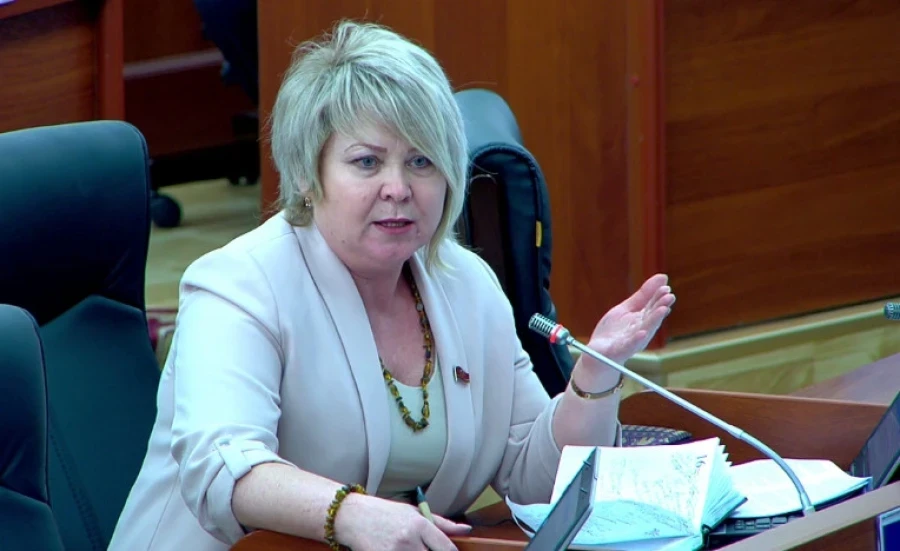
The politician cited the case of Hunter Biden as an example
Irina Karamushkina, a former deputy of the Jogorku Kenesh, has appealed to President Sadyr Japarov for a pardon.
She is currently serving her sentence in the women's colony No. 2, located in the village of Stepnoye in the Chui region. Karamushkina was transferred there in November 2025 after being convicted in a case related to the events in Koi-Tash and voter bribery, receiving an eight-year sentence.
Former Prime Minister Felix Kulov commented on this situation on his Facebook page.
In his post, he noted that Karamushkina did not admit guilt in her letter, which some believe may hinder a positive outcome for her appeal.
Kulov emphasized that neither the law on pardons nor Article 94 of the Criminal Code of the Kyrgyz Republic requires a convicted person to admit guilt or express remorse. The regulations mention factors such as the health condition of the convicted person, the severity of the crime, and their behavior in the colony, but do not mention an admission of guilt.
He also reminded that he had previously expressed his opinion regarding pardons in December 2024. In particular, he mentioned the pardon of Hunter Biden by U.S. President Joe Biden, who justified his decision by stating that the legal proceedings were "tainted by politics".
Interestingly, Hunter Biden's sentences were supposed to be handed down only a couple of weeks later, but the president made the decision to pardon him in advance.
Moreover, Joe Biden acted within his powers, having the right to "absolution," which is part of the broader concept of "pardon." For example, Gerald Ford applied absolution to Richard Nixon even before the start of the legal proceedings in the Watergate case.
The situation in Kyrgyzstan is different. According to Article 94 of the Criminal Code of the Kyrgyz Republic, a pardon can only be applied after the conviction has entered into legal force and after a written appeal from the convicted person to the president.
However, according to paragraph 10 of Article 70 of the Constitution of the Kyrgyz Republic, the president has the right to grant pardons without any additional conditions. This means that the president can issue decrees on pardons without waiting for an appeal from the convicted person.
Kulov emphasized that the constitutional norm takes precedence over Article 94 of the Criminal Code and can be applied at any stage of the criminal process.
He also shared that he had previously appealed to the president to apply absolution to some journalists and politicians during the investigation stage, but apparently, the lawyers did not realize the importance of this issue.
In particular, in the "Kempir-Abad" case, a pardon could have been applied, considering the problems with the evidence base, which was later confirmed by an acquittal. A similar decision could have been made in the case of former president Almazbek Atambayev, who has been in an indefinite criminal procedural status for over a year.
It is important to note that absolution is not a rehabilitative act, and the court will not be able to review the case of the pardoned individual. Challenging the president's decision in this case is not within the jurisdiction of the judicial authorities.
Nevertheless, an act of pardon by the president can improve his image and reduce social tension, as well as lessen criticism from international organizations.
Kulov concluded that pardons should be applied with caution, taking into account many factors and the individual circumstances of each case," he noted.
photo www


