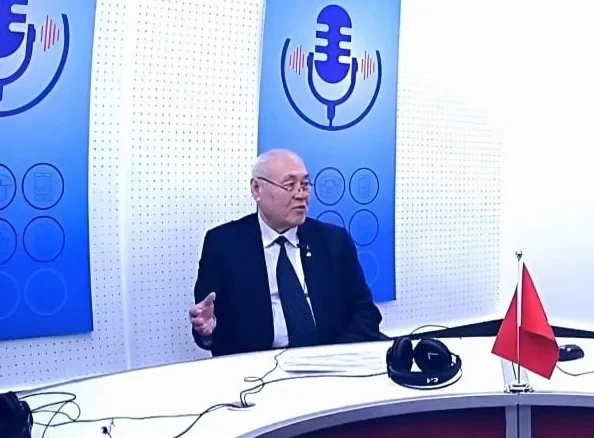
Kasymov explained that smog is a combination of dust, gases, and organic and inorganic substances formed as a result of human activities, including industry, construction, and road transport.
According to him, the problem of air pollution is particularly acute in the autumn-winter and partially spring periods when residents of the capital often observe smog, which raises concerns.
It should be noted that young children are the most vulnerable: their immune and morphofunctional systems are not yet fully developed, making their health more susceptible to threats from polluted air.
He added that in the last 7-8 years, there have been regular instances of severe smog. The level of air pollution varies throughout the year and depends on climatic conditions. For example, rainy weather contributes to the natural cleansing of the air, while in windless and cold days, harmful substances accumulate in the atmosphere, which can penetrate homes and cause discomfort.
The academician also provided statistics on the health status of the population before the COVID-19 pandemic, noting an increase in diseases. According to him, the indicators worsened by approximately 10-20 per 100,000 population, with a 2% increase in cardiovascular diseases and a rise in respiratory diseases from 24% to 34%.
Child morbidity has also increased: among children aged 0 to 14 years, it reached 8-11%, and for cardiovascular diseases - 14-18%. At the same time, after the pandemic, there has been a slight decrease in these indicators, which may be related to insufficient disease registration.
For a more accurate assessment of the impact of smog on health, the scientist believes that special studies are necessary.
"Screening and targeted studies are needed to clearly understand under what conditions the health of the population deteriorates," he emphasized.Kasymov also pointed out the importance of regularly informing the population about air quality. Previously, such data was published, but recently it has decreased.
"When people are aware of air quality, they can take measures: avoid walks on unfavorable days, purify the air indoors, and so on," he added.
The academician emphasized that smog during periods of high concentration negatively affects health, especially the respiratory and cardiovascular systems. In spring, there is also an increase in allergies caused by a dust-gas mixture containing both organic and inorganic substances.
Kasymov noted that air pollution affects not only Bishkek but also the areas of the Chui region. Due to the peculiarities of the terrain and air mass inversion, polluted air can move throughout the valley.
Urban planning solutions also play an important role. He stated that proper construction and greening can contribute to better air exchange and atmospheric cleansing.
Kasymov positively assessed the transition of some types of urban transport to gas and electricity but expressed dissatisfaction with the dismantling of the trolleybus network. "Trolleybuses could have been preserved and the system gradually modernized. Currently, there is a shortage of public transport," he noted.
According to the scientist, many factors influence the health of the population: the dust-gas mixture, seasonal infections, weather changes, and geomagnetic storms. During such periods, the elderly and children are particularly vulnerable.
Kasymov added that the use of air purifiers can help create a healthier atmosphere indoors, but not everyone has the opportunity to purchase them.
"Comprehensive programs to improve air quality are needed both in Bishkek and in the Chui Valley," he stated.In the academician's opinion, addressing the smog problem requires a comprehensive approach involving various government agencies.
"This is not just a health issue. Healthcare is already facing the consequences. The main task is to eliminate the causes of air pollution," concluded Kasymov.
Photo on the main page: rutube.ru, 24.kg.