

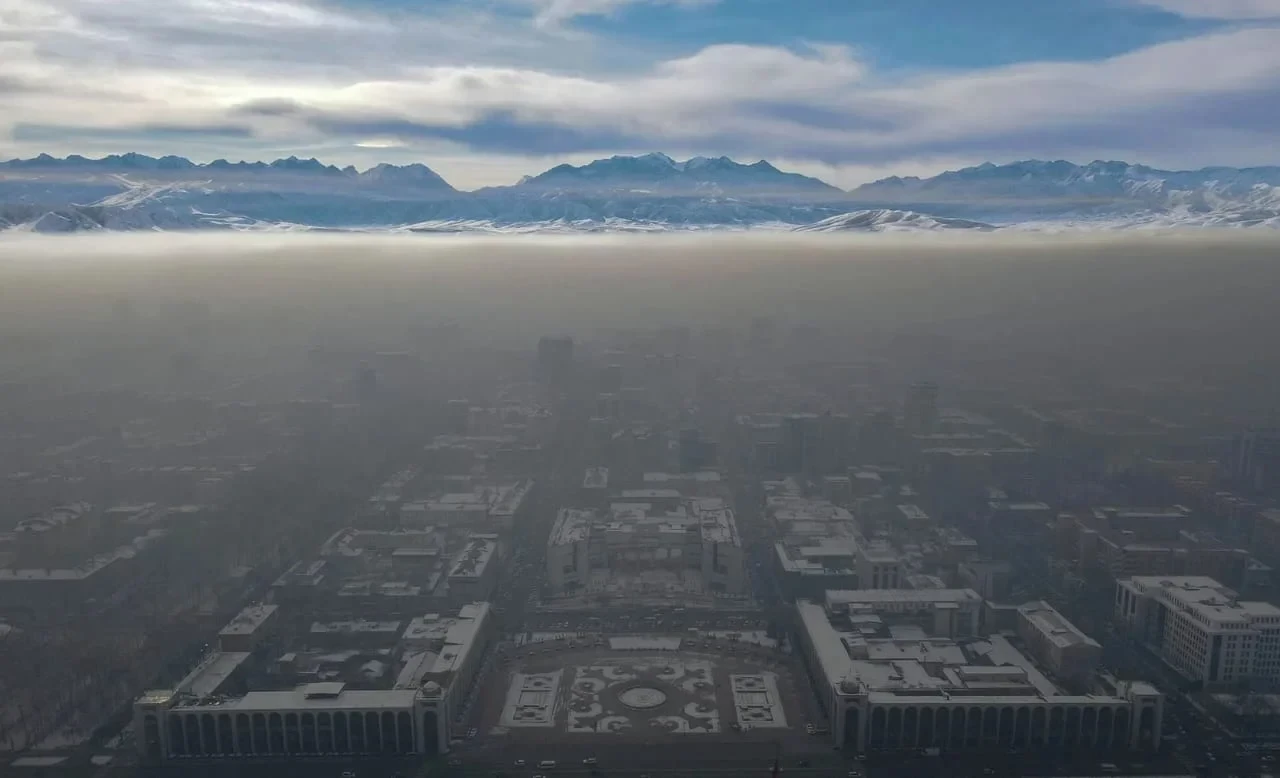

Omor Kasymov, an academic and doctor of medical sciences, spoke about the problem of air pollution in Bishkek and its negative impact on the health of citizens on the air of Birinchi Radio. He noted that smog affects not only the residents of Kyrgyzstan but also the inhabitants of many large cities around the world. Kasymov pointed out that different types of smog have been named after the cities where they were first recorded.
For example, "London smog" forms in foggy climate conditions when dust mixes with gases. Similarly, "Los Angeles smog" arises in clear weather due to dry climate and gas accumulation. There is also the "Alaskan type of smog," which is associated with cold temperatures. According to Kasymov, all these factors are relevant for Bishkek, especially during certain seasons of the year.
The academic explained that smog is a combination of dust, gases, and other substances that arise as a result of human activity. Industry, construction, automobile transport, and heating of private houses are all sources of air pollution in Bishkek.
Kasymov emphasized that the solution to the problem of air pollution lies on the shoulders of government and local authorities, including the Bishkek city hall. A clear action plan is needed to prevent further deterioration of air quality.
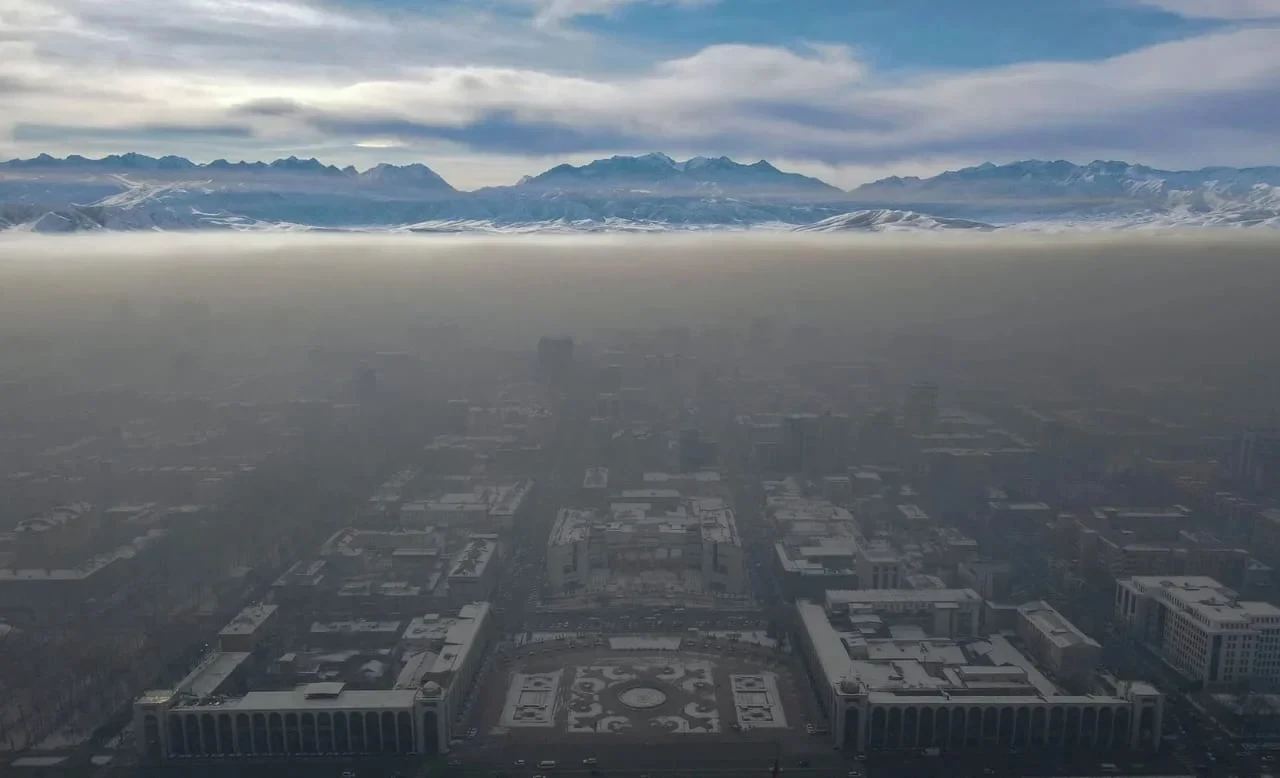
He also noted that autumn, winter, and part of spring are the most critical seasons for the health of city dwellers, when the deterioration of air quality is felt particularly acutely. This raises concerns among the population, and photos showing the smog enveloping the city often appear on social media.
The specialist noted that under such conditions, residents, especially children, are at risk. Inhaling polluted air can negatively affect health, especially on the developing bodies of children whose immune systems are not yet fully formed.
Kasymov also added that the impact of smog on health and air quality varies throughout the year, depending on climatic and geographical conditions. He pointed out that the recent days of rainy weather have contributed to the improvement of air quality, and residents may notice it has become easier to breathe. However, during windless periods with low temperatures, there is a deterioration when smells and smoke penetrate into apartments.
The academic shared statistics indicating that before the COVID-19 pandemic, there was a deterioration in the health of the population by 10-20%. In particular, the increase in cardiovascular diseases was about 2%, while respiratory diseases increased by 24-34%. High morbidity rates are also recorded among children aged 0 to 14 years, especially for respiratory diseases.
Kasymov noted that in the post-COVID period, these indicators began to decline, which may be related to measures taken by the Bishkek city hall to improve the situation. Nevertheless, further research and monitoring of the health status of the population are necessary to accurately determine the causes of the changes.


