
Since the assassination of Iran's Supreme Leader Ali Khamenei, the international community has witnessed an escalation of the crisis in the region.
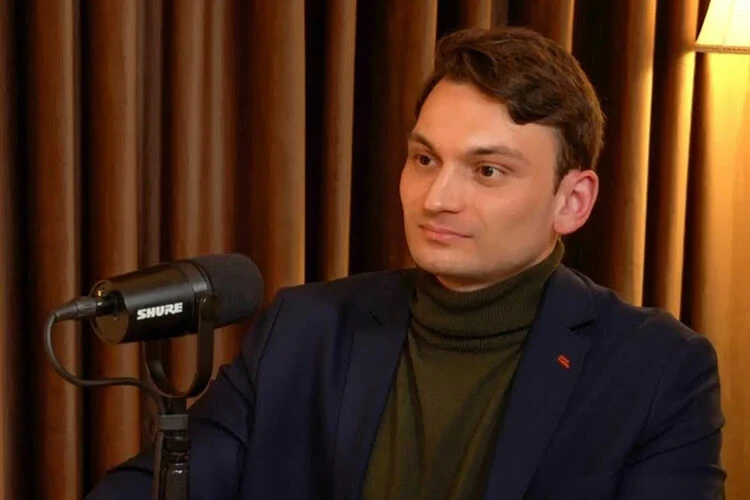
Middle East expert Ruslan Suleimanov shares his views in an interview with 24.kg about the unclear objectives of Trump and Netanyahu, as well as how military actions affect not only Iran but also other countries.
- What do you think are the true objectives of the US and Israel's military operation in Iran?
- Determining the real goals of the military campaign in Iran is a challenging task. Trump and his team's statements change daily. However, it is clear that Israel is more interested in destroying the current regime than the US. Trump has spoken about creating conditions for a change of power, but this does not necessarily imply its immediate implementation.
Trump likely expected a more successful and swift operation and perhaps did not anticipate that Iranian missiles could hit the territories of Arab monarchies, the security of which is guaranteed by the United States.
Ruslan Suleimanov
The unexpected resistance from Tehran, especially after Khamenei's death, has become evident to Trump and Netanyahu. Now their main task is to find an acceptable way out of the situation and formulate some kind of "victory" to announce. Trump needs a triumph, but how to define it remains an open question.
- Can airstrikes be considered sufficient for regime change in Iran?
- Judging by the 12-day war, it has become clear that airstrikes alone are insufficient to overthrow the regime. Even after the removal of the Supreme Leader, Iranian authority not only did not collapse but, on the contrary, consolidated.
Within Iran, there are various political factions—both conservative and reformist—but they are currently united by the task of survival. The common people also dream of change; however, security remains a priority.
- How plausible are Trump's plans to support Iranian Kurds in the conflict?
- This is an extremely risky idea. The issue of Kurdish autonomy affects not only Iran but also neighboring countries, and attempts to activate the Kurdish movement in Iran could negatively impact Turkey and Syria, which is highly disadvantageous for Ankara and Damascus. This will lead to a strengthening of nationalists who, although they do not support the Islamic Republic, advocate for the preservation of their country.
Among the Kurds in Iran, there is no organized resistance movement—leaders are either killed, imprisoned, or abroad.
Thus, it is unclear from which forces Trump and Netanyahu intend to form a Kurdish militia, and whether they can indeed reach Tehran and overthrow the authorities.
- How long could the conflict last, and what would constitute a "victory" for Trump?
- The duration of military actions will depend on the goals that Trump sets and what he considers his victory. The 12-day war waged by Israel and the US lacked a clear objective and ended with strikes on nuclear facilities, allowing Trump to proclaim himself a victor. The assassination of Supreme Leader Khamenei could have been a success, but for Trump, that is not enough.
- How does the pressure from Arab countries affect the operation?
- Arab states undoubtedly influence Washington. Leaks from Arab sources confirm this. For example, the UAE does not want its territory to be subjected to drone and missile strikes.
They suffer both material and image losses. This pressure certainly affects Trump and his team's decisions, hastening the search for a way out of the conflict.
- Who has suffered the most from the conflict, and who is benefiting from it?
- The main beneficiary of the war is Israeli Prime Minister Benjamin Netanyahu, whose ratings are rising amid military activity.
For Trump, the war is turning into problems: countries with which he has made major contracts and whose security he has ensured are under attack.
Ruslan Suleimanov
Russia finds itself in a difficult position, unable to influence the situation and having no obligations to Tehran. This creates awkwardness, as Moscow is forced to watch the destruction of its strategic partner.
The only thing Putin can do is send condolences to the Iranian president, without mentioning the US or Israel as culprits.
Moreover, Russia faces economic losses: potential freezing or cessation of joint projects with Iran, such as the North-South transport corridor and the construction of a nuclear power plant.
These projects are now in serious doubt. In the short term, Russia may gain some benefits, such as diverting Americans from the war in Ukraine and rising oil prices. However, in the long term, this leads to significant reputational and economic losses.
Ruslan Suleimanov
China is also facing challenges, as it is the largest buyer of Iranian oil and is currently receiving it intermittently and at high prices. Therefore, Beijing is trying to act as a mediator, seeking a ceasefire, but, like Russia, it has no military obligations to Iran.
China can only offer diplomatic efforts but lacks the ambitions of a defender of the Global South, as Russia does. Therefore, the consequences of the conflict are not as critical for China.
- Is there a connection between the conflict in Iran and the war in Ukraine?
- There is no direct overlap, but the situation in Iran diverts resources and attention from Ukraine. This allows the Kremlin to continue its military actions without even wanting to establish a ceasefire.
- How are Central Asian countries reacting to the conflict?
- All countries are striving not to side with the losing party. At the beginning of the conflict, it was unclear how the Iranian regime would act. Given the closeness of the presidents of Kazakhstan and Uzbekistan to Trump, they would not want to disappoint him.
The invitation of Astana and Tashkent to the Council of Peace and numerous joint projects worth billions of dollars predetermine the choice in favor of whoever is considered stronger in Central Asia.
Ruslan Suleimanov
Meanwhile, Tehran is not in a position to complain about the silence or insufficient condemnation. The fact that Central Asia is not participating in military actions and is not supplying arms to the US is already significant for Iran.


