
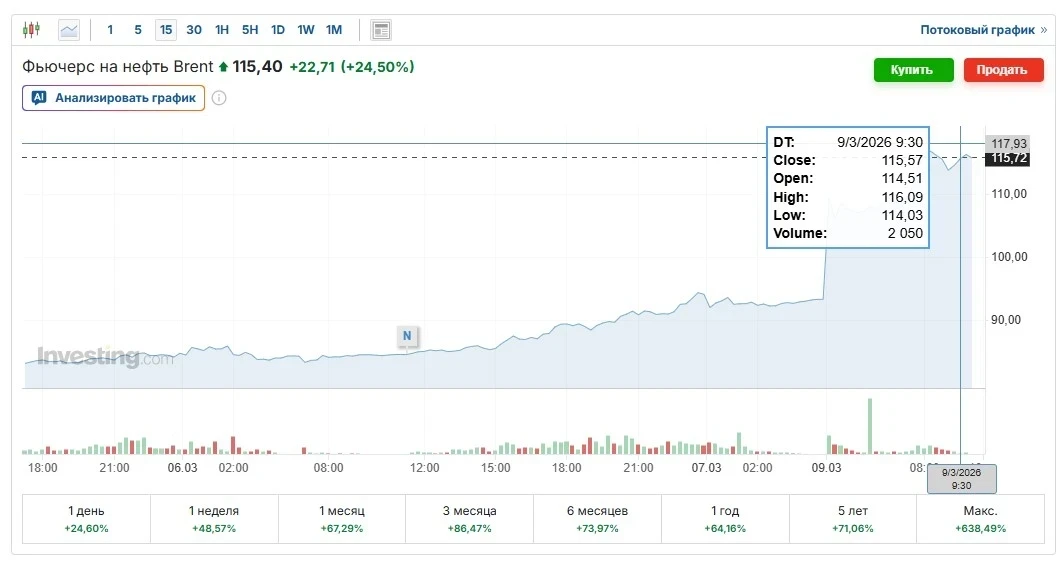
According to RBC, since the beginning of last week, oil prices have increased by more than 50%. The main reason for this rise has been concerns related to the possible closure of the Strait of Hormuz, through which about 20% of global oil supplies pass.
The increase in tensions in the region has already led to supply disruptions, and analysts from "VTB My Investments" predict that the price could reach $100–120 per barrel in the coming days.
Shares of Russian oil companies also reacted positively to the rise in oil prices: Rosneft's shares rose by 4.42%, Surgutneftegas by 2.9%, and Gazprom Neft by 1.51%.
The Minister of Energy of Qatar warned that if the conflict continues, the world price of oil could reach $150 per barrel in the coming weeks.
The situation is exacerbated by the fact that the largest storage facilities in Saudi Arabia and the UAE are filling up quickly, as there is virtually no export of raw materials. According to Citigroup estimates, the blockade of the strait is causing the global market to miss out on 7 to 11 million barrels of oil per day. At the same time, the U.S. administration has stated that it does not plan to use the strategic reserve to lower oil prices.
- The conflict between Israel and the U.S. on one side and Iran on the other began on February 28 with massive air and missile attacks on Iranian cities and military facilities. In response, Tehran attacked Israel and U.S. bases in several countries in the region. In the first hours of the attack, high-ranking Iranian officials and military personnel were killed. Following the launch of Operation "Epic Fury," U.S. President Donald Trump confirmed the start of military actions.
- As a result of the attack, the Supreme Leader of Iran, Ayatollah Ali Khamenei, and about ten high-ranking officials were killed. The new Supreme Leader became the son of the slain Ayatollah, Mojtaba Khamenei.


