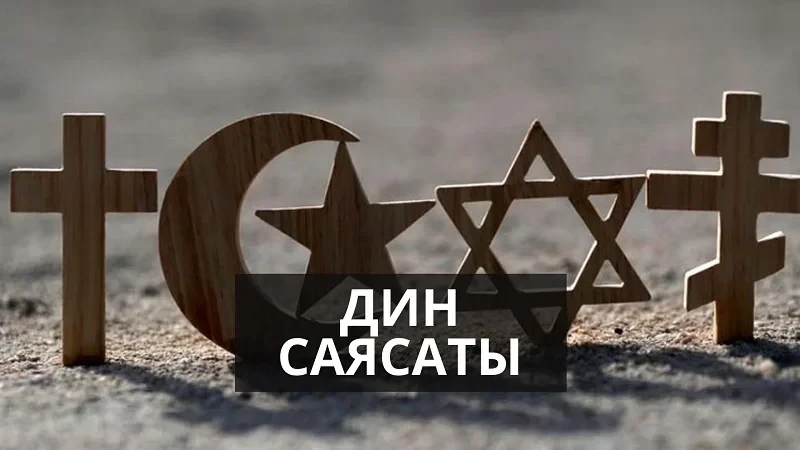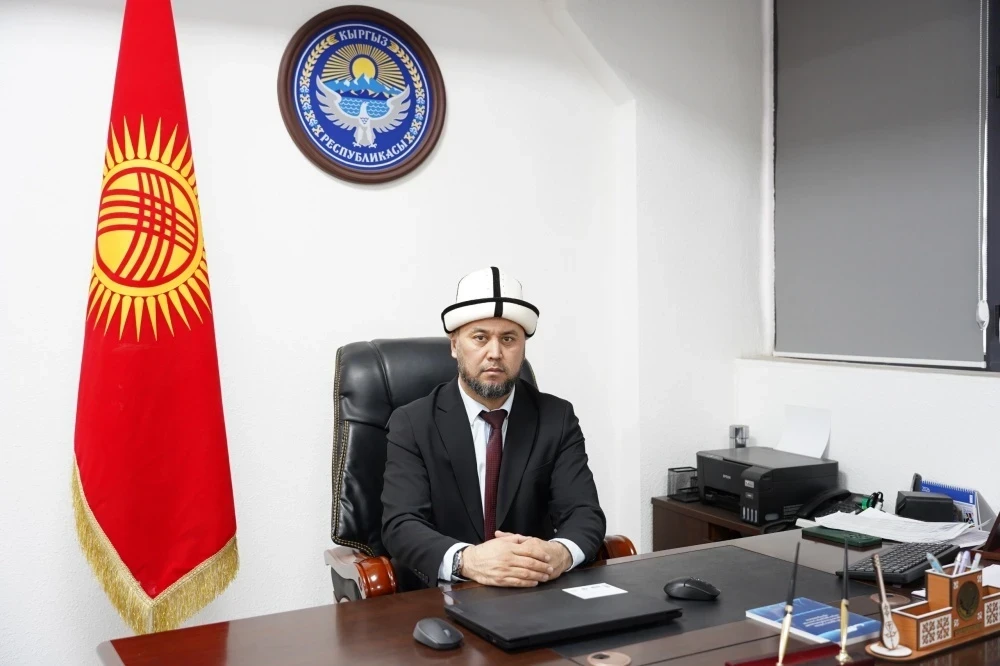
Talantbek Tashibekov, who recently took over as the head of the National Agency for Religious Affairs and Interethnic Relations of the Kyrgyz Republic, has outlined a decisive approach to strengthening the secular nature of the state and maintaining interfaith harmony. In an interview with VB.KG, he shared his plans, assessed the work of his predecessors, and analyzed the current situation in the country's religious sphere.
- What are your impressions of the religious situation in Kyrgyzstan at the moment?
- Kyrgyzstan has a stable and positive religious situation, which is the result of systematic work by government agencies, legislative initiatives, and conceptual programs. It is also important to note the significant contribution of religious institutions. We regularly meet with religious leaders to discuss and improve legislation in the area of freedom of religion. In particular, we are working on a law regarding the "Waqf" fund, which is currently absent in the country. This term in Arabic implies the preservation and restriction of the use of property for charitable purposes. Waqf cannot be appropriated, making it an important tool in the management of land and buildings. Additionally, we are developing a concept for state policy in the religious sphere and interethnic relations for 2027-2031.
The secular nature of the state is our fundamental principle. We insist on adherence to the constitutional provision: religion should not interfere in state affairs, and political figures cannot use religious ideas in election campaigns. This law is non-negotiable.
- How does the National Agency monitor interethnic relations in the republic?
- We apply active monitoring methods in regions with a multinational population, such as Osh, Jalal-Abad, and Batken regions. Our research teams regularly travel to collect information. We also have a network of representatives who promptly inform us about the current situation.
Based on the collected data, we send recommendations to local authorities for preventive measures. In anticipation of the spring holidays and after the month of Ramadan, we plan to organize outreach events aimed at strengthening friendship and religious tolerance.
- How do you cooperate with the Spiritual Administration of Muslims of Kyrgyzstan?
- We actively support their activities, including legislative initiatives and the implementation of electronic systems. Our goal is to transition the registration of pilgrims to an online format to simplify the procedures for Hajj and Umrah and reduce the document processing time from 6-8 months to a minimum.
Additionally, starting this month, we have increased the salaries of imams from 8,000 to 15,000 soms. Currently, about 4,000 imams registered in mosques receive an official salary from the Spiritual Administration. In the future, we plan to raise this amount to 20,000 soms.
- You started working at the NADRMO in mid-January of this year. How do you assess the work of the previous leaders of the agency?
- I believe that the work has been satisfactory: a good foundation has been laid for systematic work in the future.
- Radicalism poses a serious threat, not only in Kyrgyzstan but also in other CIS countries. How does your agency combat religious radicalism?
- The State National Security Committee and other law enforcement agencies are doing significant work to counter destructive religious movements. The National Agency has a Research Center that conducts analysis, surveys, and monitoring, based on which we prepare analytical reports.
Recommendations are sent to law enforcement agencies, the Presidential Administration, and the Spiritual Administration of Muslims. While law enforcement agencies handle operational work, we focus on preventive activities.
- Are there plans to organize international events for Kyrgyzstan involving religious figures?
- Yes, this year we are celebrating a number of anniversary events. We plan to hold a scientific conference involving religious leaders and foreign experts. We are also preparing for the anniversary of the Issyk-Kul Forum named after Chinghiz Aitmatov, to which we will invite specialists on issues of tolerance and religious tolerance.
- Is Kyrgyzstan attracting foreign theologians to work with the youth?
- We have already started in this direction. A list of scholars adhering to traditional Islamic values has been compiled, whom we plan to invite to the forum and other events to discuss issues of religious tolerance and the interaction of religion with the state.
If the Spiritual Administration wants to invite a foreign expert, it requests our approval. Together with law enforcement agencies, we assess potential risks, and if there are no threats, we grant permission.
- How do you assess the state of interethnic harmony in the country?
- The overall situation is favorable. In all regions, authoritative leaders and aksakals work with whom we maintain constant contact for preventive work. The situation remains tolerant and harmonious. We also plan to intensify cooperation with the Assembly of Peoples of Kyrgyzstan through cultural and educational events.
- Tell us about the practice of holding iftars with foreign representatives that contribute to strengthening Kyrgyzstan's cooperation with other countries.
- This is an important aspect of interreligious dialogue. Recently, iftars were held in Bishkek with delegations from Dagestan and Tatarstan, to which their diasporas and representatives of other ethnic groups, as well as our religious leaders, were invited.
Iftars are also held by other countries, inviting all religious organizations of Kyrgyzstan.
We maintain friendly relations with leading religious figures from Tatarstan and actively cooperate with their higher educational institutions, such as Kazan Islamic University and the Bulgarian Islamic Academy. Furthermore, we often invite the Mufti Sheikh Ravil Gainutdin and the Mufti of the Republic of Tatarstan Kamil Samigullin to our international conferences, including events celebrating the 30th anniversary of the National Agency for Religious Affairs.
These events contribute to strengthening friendly ties, exchanging experiences in traditional Islam, and serve as an additional platform to counter extremist ideas.
- What would you like to wish the people of Kyrgyzstan during the holy month of Ramadan?
- On behalf of the National Agency for Religious Affairs and Interethnic Relations, I congratulate all Kyrgyzstani people on the holy month of Ramadan and the blessed night of Qadr.
Ramadan is a time for spiritual purification, mercy, and strengthening moral values. During these days, believers strive for self-improvement, show patience, and care for others, supporting those in need.
May this holy month bring peace, harmony, and prosperity to every home. I hope that the good intentions expressed during the days of fasting will become the foundation for strengthening public unity and harmony in our multinational and multi-confessional society.
We also wish peace and prosperity to our common homeland - Kyrgyzstan!