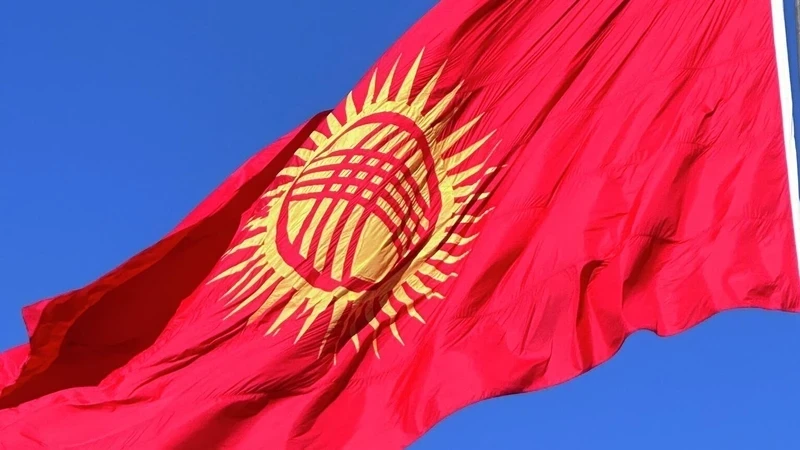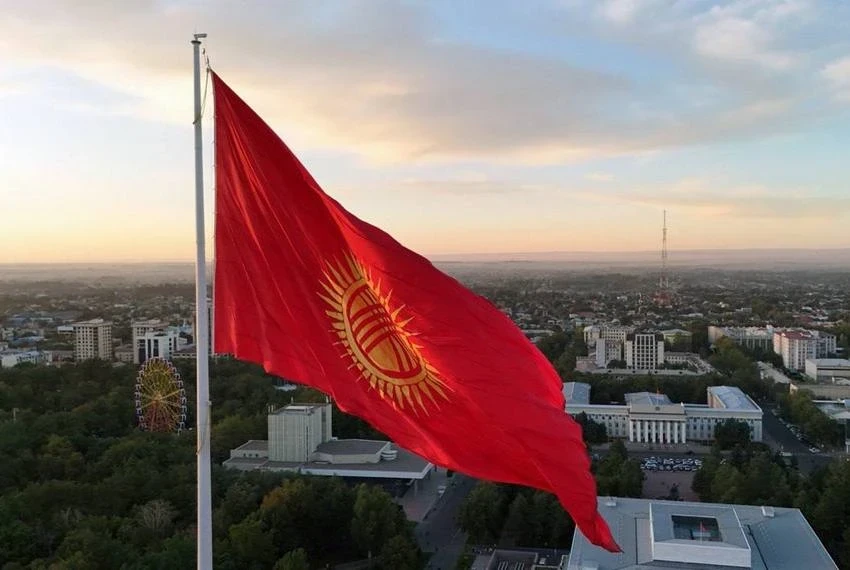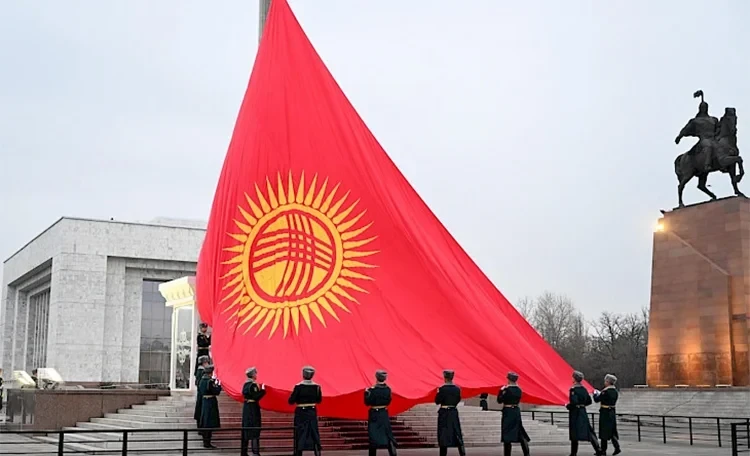
On March 3, 1992, the Supreme Council of Kyrgyzstan approved a new state flag, which was raised over the Government House just two days later, on March 5. From that moment on, it became the official symbol of an independent state.
It is worth noting that just a few days prior, on March 1, 1992, Kyrgyzstan was admitted to the United Nations. However, by that time, the flag had not yet been officially approved, and the flag of the Kirghiz SSR was temporarily flying at the UN headquarters in New York. Thus, the history of the new flag began in the eyes of the international community.
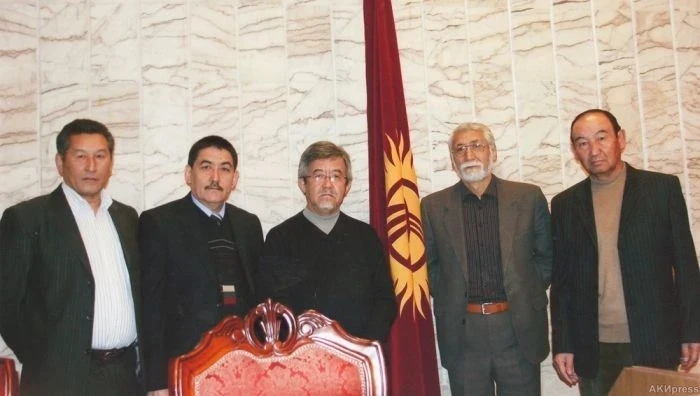
The creation of the flag was the result of the work of a group of authors: E. Aydarbekov, B. Zhaichibekov, S. Iptarov, Zh. Mataev, and M. Sydykov, who managed to reflect the philosophy of the people in one symbol.
The flag of Kyrgyzstan is a red banner with a golden sun disk in the center, inside of which is depicted a tunduk — the top part of a Kyrgyz yurt.
Each element of the flag has a deep meaning:
- The red color symbolizes historical memory, courage, and valor.
- The sun with forty rays embodies life, light, and the unity of forty ancient tribes.
- The tunduk of the yurt symbolizes the native home and the connection between earth and sky, as well as the unity of all the peoples of the country.
Discussion and Changes to the Symbol
State symbols often become subjects of public discussion. In 2014, deputy Abdyrahman Mamataliyev proposed a radical change to the flag. A parliamentary commission studied numerous alternatives, including secular and religious options, but society was not ready for such changes.
Since the late 2010s, the metaphor of the "sunflower" appeared in public discourse, where some critics pointed out the similarity of the wavy rays of the sun to a flower.
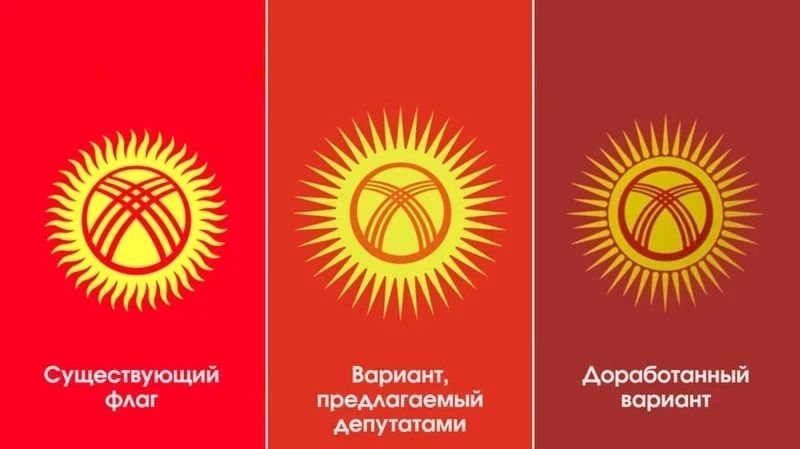
The main changes are that the sun rays became straight, and the image of the tunduk was redesigned. A transitional period was also established for updating documents and license plates.
The authorities emphasized that this is not a change of concept, but merely a clarification of details.
The Flag as a Reflection of Society
Today, March 3, Kyrgyzstan celebrates Flag Day with the updated symbol, where the sun now has straight rays. Formally, the changes only concern the graphics, but public debates have shown that the flag is not just an image. It is a symbol of identity, a source of pride, and a topic of emotional discussions.
The flag continues to be a symbol of:
- independence, achieved in difficult times;
- the unity of the people;
- national self-awareness and historical memory.
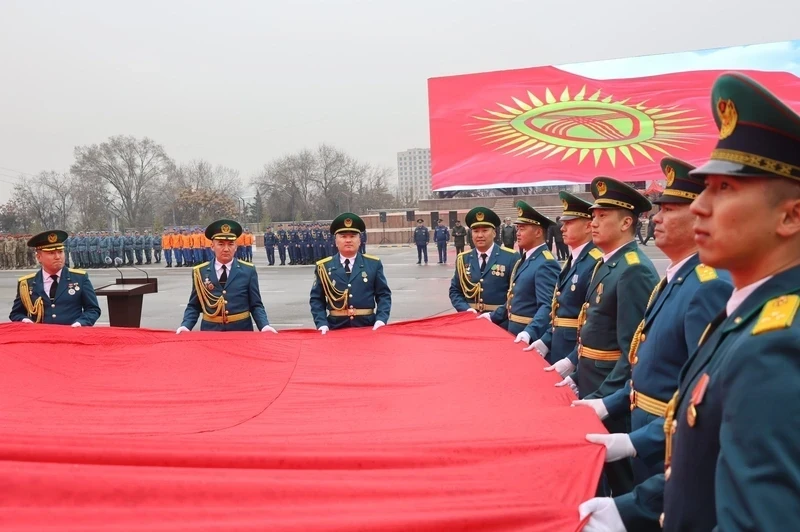
The flag is raised in moments of joy and trials, accompanying significant victories and quiet, personal moments of pride.
The Banner at Heights and in Sporting Achievements
Our flag has witnessed historical achievements that have brought international respect to Kyrgyzstan:
- Munarbek Seyitbek uulu, becoming the first boxer from Kyrgyzstan to reach the semifinals of the Olympic Games, etched his name in history. His silver medal and the flag raised over the Olympic ring became a symbol for the entire country.
- Eduard Kubatov took our flag to the summit of Everest in May 2023, proving that Kyrgyz people can reach any heights.
- Our banner has also been to the coldest point on the planet — Antarctica, thanks to AUCA student Talgat Subanaliev, who raised it near the South Pole.
- The trio "Nomad" won silver at the international contest "Intervision," raising the flag of Kyrgyzstan among representatives from 23 countries.

The flag accompanies us everywhere; it proudly adorns license plates, symbolizing belonging to a great mountainous country in any travels. It is present in every state document, on the uniforms of our soldiers, and in the hearts of patriots.