
With the departure of Kamchybek Tashiev and the end of the duumvirate, the political system of Kyrgyzstan has begun a process of transformation. In the context of significant personnel changes and preparations for the upcoming presidential elections in 2027, a new political configuration is being formed.
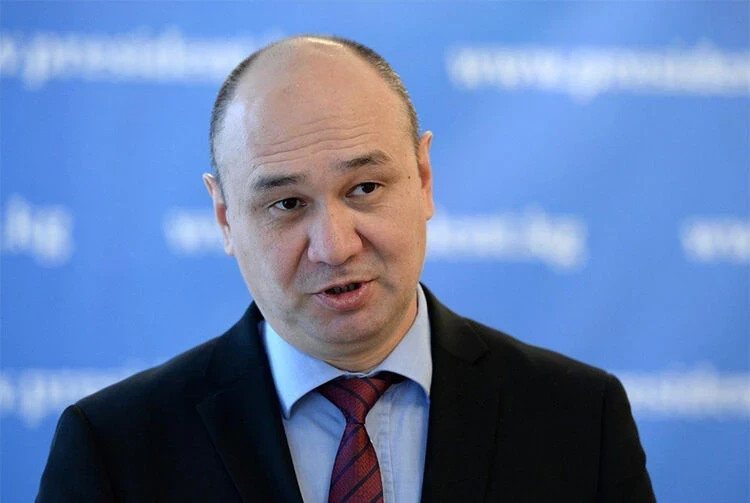
The head of the Center for Political and Legal Studies, Tamerlan Ibraimov, shares his thoughts on the challenges that the authorities and elites will face.
“Quiet Fronde”
“After the collapse of the duumvirate, I have more than 7 million friends behind me,” noted President Sadyr Japarov.It is important to understand that the duumvirate as a form of governance is more of an exception than a rule, and its prolonged existence in the country represents a unique phenomenon for Eurasia.
This is undoubtedly related to Sadyr Japarov's high self-confidence, his personal qualities, and the fact that he is not afraid of strong personalities around him. His friendship with Kamchybek Tashiev and his key role in the transfer of power in 2020 also played a part.
Paradoxically, during the duumvirate, despite the apparent duality of power, the pluralism of the political field significantly decreased, while its collapse may lead to the opposite result.
This creates opportunities for the president; however, the complication of the system will require a new approach and a variety of management tools.
A large-scale purge in the state bodies of Kyrgyzstan evokes associations with similar processes in Turkey related to the "Hizmet" movement. The fates of President Recep Tayyip Erdoğan and his former ally Fethullah Gülen, who became an opponent with a broad network of supporters, are well known.
Despite the differences between Kyrgyzstan and Turkey, the scale of the purges is comparable, and the future of local political figures remains uncertain.
One thing is clear: a significant part of the political elite has been left without a job and may transition into a “quiet fronde,” waiting for their chance. Whether they remain quiet or assert themselves depends on Sadyr Japarov's political skills in creating a stable political field and a number of other factors.
Achievements and Challenges
Among the president's achievements are: the reform of the tax and customs systems, the resolution of border issues with Tajikistan and Uzbekistan, the fight against organized crime, economic growth, and the initiation of several strategically important projects that could elevate Kyrgyzstan to a new level.Recent external economic conditions have been favorable for the country, including rising gold prices and increased foreign economic operations. However, these factors are independent of Kyrgyzstan, and it is necessary to be prepared for their change.
The president's domestic economic policy is based on a Keynesian approach with high state investments and demand stimulation, which has yielded positive results. Nevertheless, an increased role of the state in the economy may at some point lead to negative consequences, so it is important for economic policy to remain flexible.
However, GDP growth alone is not a decisive factor. For citizens, GDP may be an abstract concept, and their personal economic situation and the fairness of state policy are more important.
Economic growth may be rapid, but discontent among political elites and certain social groups can negatively impact society.
Tamerlan Ibraimov
For example, “kusturization” has elicited mixed opinions: some supported it, seeing it as a necessity to punish “corrupt bourgeois,” while others, primarily large business owners, perceived it with concern. Niccolò Machiavelli noted in "The Prince" that people are more likely to forgive the death of a father than the loss of property.
The legality and justification of any punitive measures are perceived by society very sensitively, and feelings of justice and legal justification of state policy are important.
New Political Elite
Another important factor influencing politics is the elite itself — its views, ideas, and behavior. Corruption, incompetence, or unworthy behavior by even a few members of the elite can undermine citizens' trust and the legitimacy of power more than a decline in GDP.The current purge in the upper echelons of power is forming a new generation of the political elite. Whether this elite will be new not only in composition but also in views and thinking will be shown by time.
Sadyr Japarov and his “closest friends” will have to shape a political field that either attracts new connections and competencies or falls victim to old mistakes and turns the “quiet fronde” into active resistance.
It is important to consider that tension in the political system increases during power transitions and elections. The next presidential elections will take place in 2027. Sociological surveys show high popularity for Sadyr Japarov, confirming his words about “more than 7 million friends,” making him the favorite of the elections. However, opposition forces are unlikely to agree with this without a fight. In politics, past achievements have relative significance, and it is necessary to constantly reaffirm leadership with new successes.
At the same time, it should be noted that even if the president wins the next elections, his second term may be no less complicated than the first. The opposition, including the “quiet fronde,” which possesses significant resources, may attempt to use the “lame duck” factor before the end of the second term.
Therefore, creating a new political field with new faces and a stable management system perceived by society as fair and legitimate will be a key element of the political system.
In the current political system, all keys are in the hands of the president. One can only hope that he recognizes all the challenges and opportunities to choose the right path for development.


