
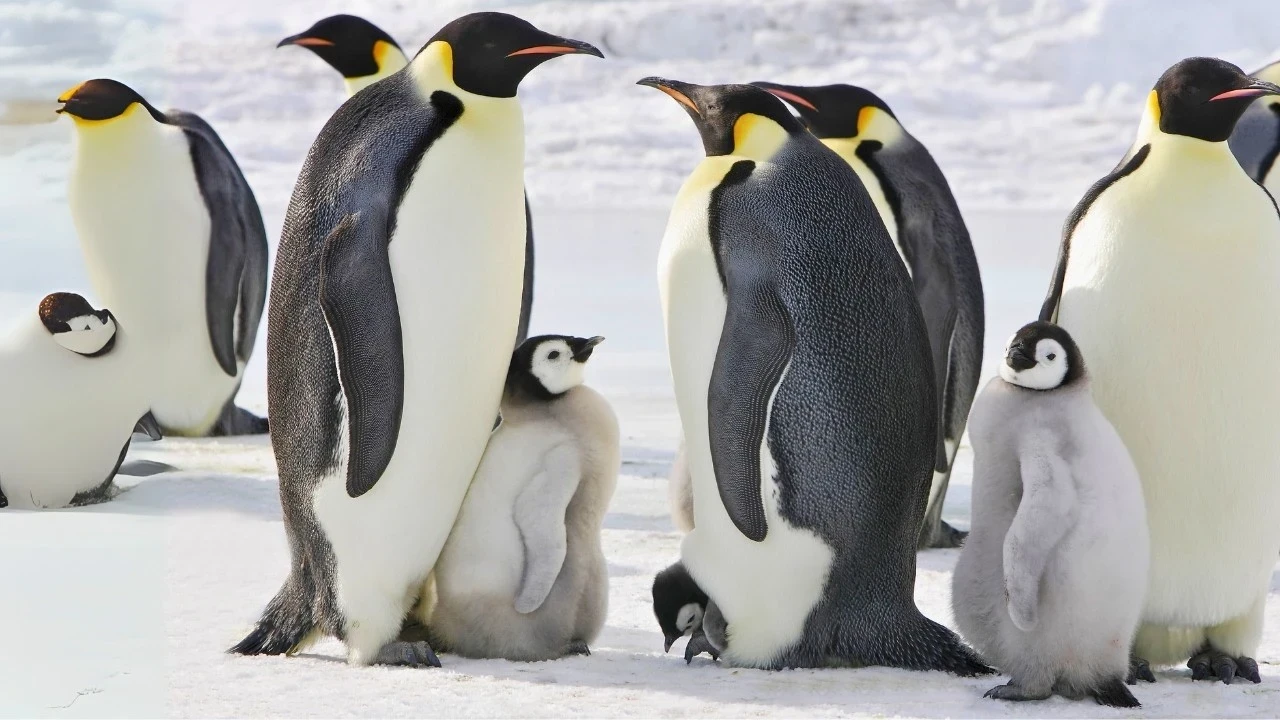
Emperor penguins, which spend most of their time on sea ice, will face habitat loss due to the melting of Antarctic glaciers. Each year, the ice becomes less stable, which could lead to increased mortality among the birds and, in some cases, their complete disappearance.
During the molting period, when penguins replace their feathers with new ones, they become particularly vulnerable. At this critical moment, they cannot go into the water for food until their plumage becomes fully waterproof.
Recent photographs have shown that due to the reduction in sea ice area, penguins are gathering in smaller and more crowded groups. If the ice melts prematurely, it could lead to the death of the colony. Scientists warn that the melting of the ice could accelerate the extinction process of these birds by decades.
Every year, emperor penguins migrate a thousand kilometers from the Ross Sea to the Marie Byrd Land in search of reliable ice for molting. Their waterproof plumage helps retain heat but requires regular lubrication with a special substance secreted by a gland at the base of their tail.
The molting process, which lasts three to four weeks, forces penguins to stay on land, and during this period they actively feed to build up the necessary fat reserves for survival during times of starvation.
The area of sea ice in Antarctica reached a record low from 2022 to 2024, shrinking from 500,000 square kilometers to just 100,000.
The situation is further exacerbated by the slow breeding rate of emperor penguins, making them unable to quickly recover their numbers, as reported by BAS.


