
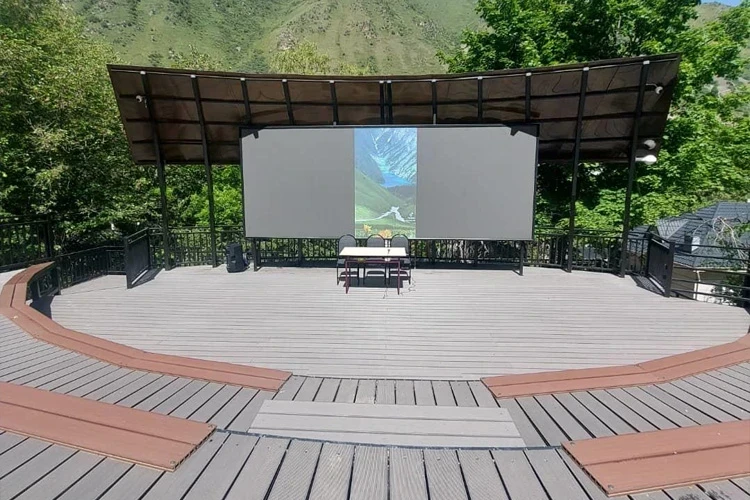
We discussed with Daniyar Toktotemirov, head of the administration for managing sanatorium and resort facilities, how this unprofitable system was transformed, state assets were returned, and large-scale modernization was initiated.
— Mr. Daniyar, what was the basis for the establishment of your administration?
— The main turning point occurred in 2023 when the President of the Kyrgyz Republic, Sadyr Japarov, personally visited the sanatoriums and boarding houses managed by the Federation of Trade Unions. The condition of the facilities was critical: major repairs had not been carried out for 20-30 years, and the conditions for recreation and treatment did not meet standards.
After sharply criticizing the leadership of the trade unions, the president decided to transfer the management of these facilities to the administration of the president.
In March 2024, our administration was established, and we took over 15 out of 16 facilities (one facility is still undergoing legal proceedings). Among them are the sanatoriums "Jety-Oguz," "Issyk-Ata," "Blue Issyk-Kul," the boarding house "Arstanbap," as well as the children's health complex "Ulan" and others.
Some land and buildings had previously been lost, but we have already returned more than 5 hectares of land and several structures. Legal disputes are ongoing.
— What were the conditions of the facilities at the time of transfer?
— The financial situation was extremely difficult: the facilities could not even cover current expenses, and debts for taxes and utilities reached 87-90 million soms. The infrastructure was in a deplorable state, and many buildings were considered emergency and unfit for habitation. For example, the sanatorium "Issyk-Ata" had completed the second phase of reconstruction, while in "Jety-Oguz," over 70% of the premises were deemed unfit.
— What measures were taken to improve the financial model?
— After the transfer of management, we changed the leadership at the facilities, began active economic activities, and optimized expenses. Our main goal was to reverse the negative trend of bankruptcy and bring the facilities to self-sufficiency. We conducted an audit, eliminated corruption schemes, organized accounting, and reduced unnecessary expenses.
Special attention was paid to the income side: we began attracting tenants and investors, implemented digitalization, and completely banned cash transactions, switching to cashless payments. This ensured transparency in revenue. By 2025, we began covering our expenses despite high tax burdens.
— How are the funds from the Workers' Health Fund used today?
— According to the president's decree, the funds are temporarily (until the end of 2027) directed towards the reconstruction of facilities. The annual volume of the fund is about 660-700 million soms, allowing us to repair 1-2 facilities per year.
— How can one currently obtain vouchers for resort and sanatorium treatment?
— Currently, there is a moratorium on the issuance of vouchers until 2027. This decision was necessary as the previous issuance of vouchers through the Federation of Trade Unions was opaque and involved corrupt elements, causing dissatisfaction among vacationers.
Now, sanatoriums operate on a commercial basis, and vouchers are sold directly through their sales departments.
— How much does a voucher to the "Issyk-Ata" sanatorium cost?
— In "Issyk-Ata," the cost is 2,400 soms per day per person, including accommodation, meals, and medical procedures. Various accommodation options are also available: single and double rooms, suites, and A-frame houses.
The state has reclaimed a hotel previously built on private land and also provides rooms. The occupancy of the sanatoriums ranges from 70 to 100 percent depending on the season, making this place popular for recreation year-round.
— How is the issue of seasonality at the Issyk-Kul facilities being addressed?
— In Issyk-Kul, seasonality is indeed more pronounced, but we strive to make the facilities available year-round.
For example, in 2026, we plan to bring the children's rehabilitation center "Ulan" up to international standards so that it operates year-round: as a children's camp in summer and as a sports base for training in the off-season.
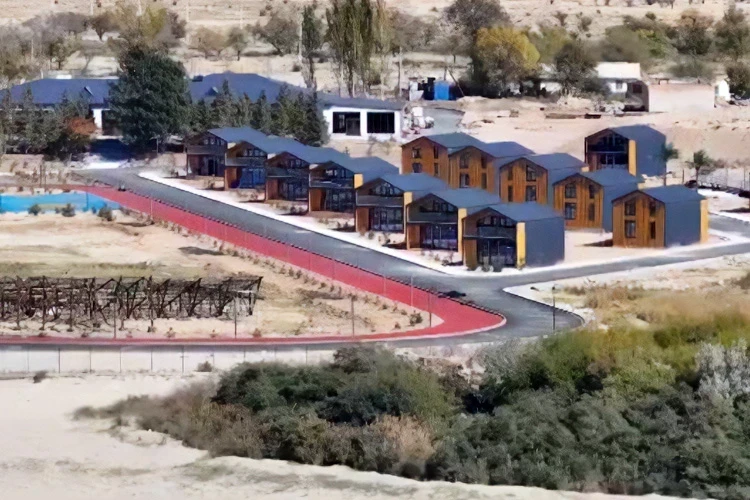
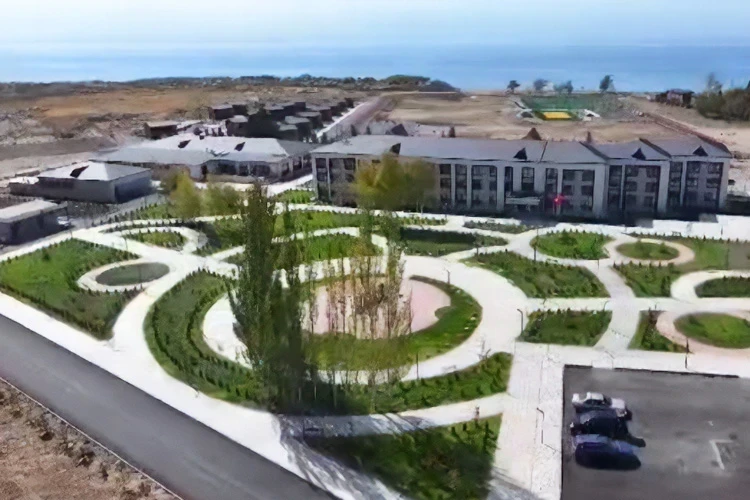
We are also planning to build a physical culture and health complex for athletes and complete a SPA area using a mineral spring. The first phase is already open, and the completion of the second is expected by the end of April so that the facility operates fully by May.
— What is the cost of a voucher to the children's camp "Ulan"?
— Staying at the camp will cost 2,500-3,500 soms per day per child. Prices will be clarified closer to the season to ensure a balance between profitability and accessibility.
— How is the renovation of other facilities progressing?
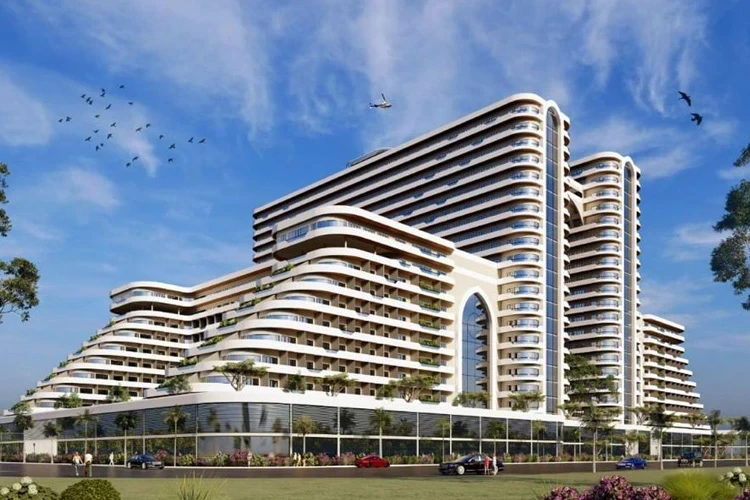
— A modern 5-star hotel complex is planned to be built on the site of the "Cholpon-Ata" rest house. The investor is the Turkish company Royal Adrasan, with an investment volume of $25 million.
In the "Ala-Tuu" rest house, there is currently no full renovation due to limited funds, but work has been optimized, two modern football fields have been built, and repairs to the dining room are planned.
We are also completing work at the "Jety-Oguz" sanatorium, where a new administrative building and treatment facility are being constructed, and the infrastructure is being updated. The initial estimate for the renovation was about 500 million soms, but after identifying emergency structures, it increased to 700-800 million soms. We plan to complete the work by August and possibly open the first phase as early as May.
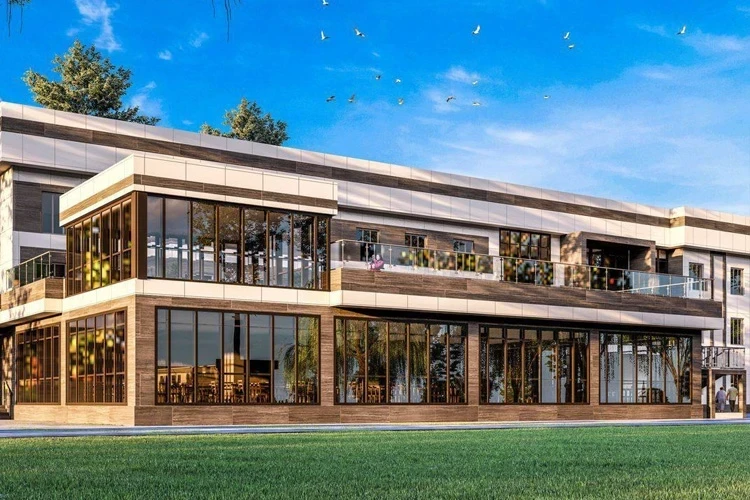
— What can you say about the "Blue Issyk-Kul" and "Jalal-Abad" sanatoriums?
— These sanatoriums, which have remained in better condition, are also being modernized. In "Blue Issyk-Kul," a new 4-star building with more than 100 beds has been constructed.
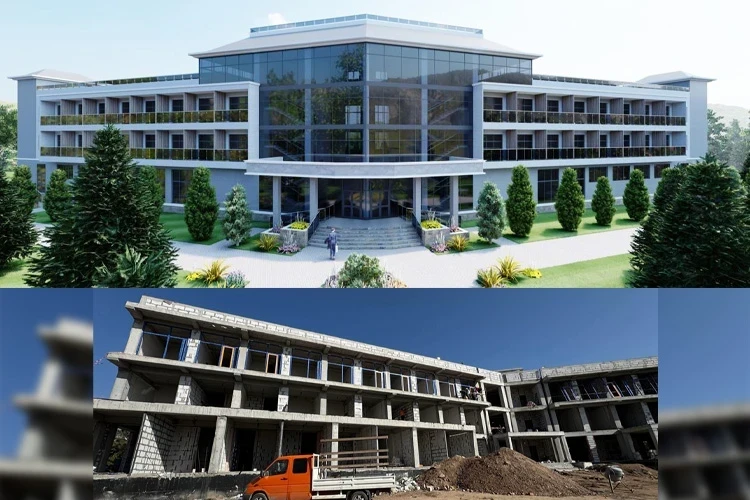
Before the transfer of management, the net profit of "Blue Issyk-Kul" was about 30 million soms, and in 2024 we increased it to 62 million. For the first 9 months of 2025, the profit already amounted to 65 million soms. These funds are directed towards infrastructure development.
Renovation is also underway at the "Jalal-Abad" sanatorium: a new building has been constructed, a summer pool has been built, the main springs have been updated, and greening is being carried out.
Overall, the development of year-round tourism requires increased efficiency and the development of medical and sports tourism, ensuring stable income for the facilities.
We are also creating conditions for the development of medical tourism based on the natural healing properties of mineral springs in the sanatoriums.
The support of the presidential administration has allowed us to purchase modern medical equipment for the "Jety-Oguz," "Issyk-Ata," "Blue Issyk-Kul," and "Jalal-Abad" sanatoriums. Funding was allocated in advance, allowing the facilities to pay in installments to reduce financial burden.
— How is public-private partnership being implemented?
— We are actively attracting investors, having already signed five public-private partnership agreements.
For example, in the "Blue Issyk-Kul" sanatorium, a PPP project is being implemented where, in the off-season, one of the universities will use the building as a dormitory for students from India. Thus, the income amounts to about 40 million soms per year.
— How is the renovation of the "Dostuk" and "Sayakat" hotels progressing?
— As for the "Dostuk" hotel, 35.59% of the shares, previously owned by a private shareholder, have been returned to the state. The building needed major repairs, and we attracted a Turkish investor who will invest between $15 and $25 million.
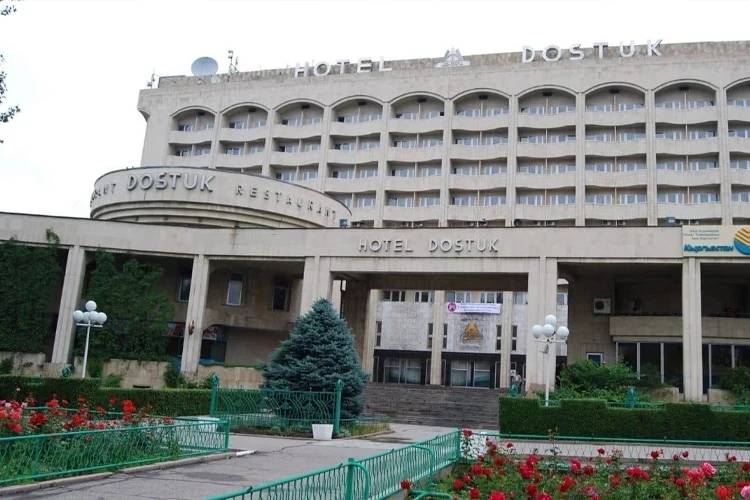
It is important to note that during the renovation, the "Dostuk" hotel will be closed, but the investor has taken on the obligation to pay rent, which will amount to 40 million 800 thousand soms per year. From 2027, the rent will increase to 80 million 580 thousand soms per year, and from 2029 to 100 million 900 thousand soms per year.
This agreement is the most beneficial in the entire history of the "Dostuk" hotel complex.
The same model is applied for the "Sayakat" hotel, where the Russian investor R Global is investing $5 million, paying $480,000 per year for renovation, and after reconstruction, the amount will increase to $600,000.
The start of renovation work not only allows us to avoid risks but also modernizes the hotels to international standards so that the "Sayakat" and "Dostuk" tourist complexes take their rightful place in the city.
— What is the role of the sanatorium-resort sector in the economy of Kyrgyzstan?
— This sector is actively developing and makes a significant contribution to domestic tourism. After the completion of renovations, the facilities will be able to host foreign guests.
The "Jalal-Abad" sanatorium, for example, is popular among citizens of Uzbekistan due to its proximity to the border. Increasing the length of stay for foreign tourists would be beneficial for our resorts.
Citizens of Kazakhstan are also showing interest, especially in the Issyk-Kul facilities, as the mineral springs there are unique and in demand for treatment.
— How do you respond to the public's concerns about rising prices for recreation after renovations?
— Regarding the social aspect of our pricing policy, we participate in tenders conducted by the Ministry of Labor. For example, the "Blue Issyk-Kul" sanatorium accepts people with disabilities at a reduced price, 20% lower than usual. The contract amounts to about 30 million soms per year, which is equivalent to 1,700 people for 10 days.
After the renovations are completed, we plan to return to a broader social model for distributing vouchers to vulnerable categories of citizens.
— How do you react to citizens' complaints?
— If local managers do not respond to complaints, citizens can contact us directly. We create commissions to check and resolve such issues. We plan to install QR codes in customer service areas to collect requests via WhatsApp and other channels.
We have also implemented a CRM system to process requests from Instagram, WhatsApp, and the website, which will allow us to respond quickly to inquiries.
— How is the administration funded?
— The administration does not receive funding from the state budget and is self-sufficient. We have 14 employees, and annual expenses amount to about 14 million soms. At the same time, the profits from the sanatoriums are not used to support the administration but are directed towards the development of the facilities.
— What is your main goal?
We have taken over the facilities for temporary management for 5 years. Our goal is to modernize them, achieve sustainable profits, and create a modern management model based on transparency and digitalization.
We have already proven that it is possible to transition from unprofitable and semi-ruined sanatoriums to an effective system that generates income and contributes to the country's development.
Our management approaches include:
- transition to cashless payments;
- implementation of digital feedback tools;
- optimization of management;
- attracting investors through PPP;
- increasing transparency and efficiency.
— What are the financial results of your activities?
In terms of financial indicators: before the transfer of management, the gross revenue of 15 facilities was about 340 million soms. In 2024, it increased to 480 million soms, and in 2025, it reached 802 million soms, more than 2.5 times.
The net profit in 2024 was 34 million soms, and for the first 11 months of 2025, it was 117 million soms. We expect that by the end of the year, the net profit will amount to 140-150 million soms, which will be used for the development of the facilities.
— Has an audit of your activities been conducted?
— An audit was conducted by the Accounts Chamber at the end of 2024, and no violations were found. Our work was positively assessed in terms of optimization and digitalization.


