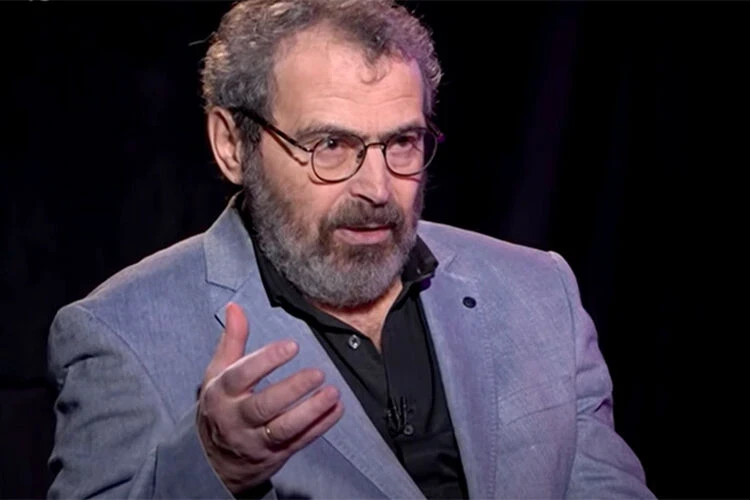
— Recently, there has been an increase in high-profile visits by American diplomats to Central Asia. How do you explain this interest?
— The main reason for U.S. attention to Central Asia is the formation of a new world order. On December 4, Washington announced its new security strategy, symbolizing the end of the era that began after the fall of the Berlin Wall in 1989. Since then, especially after the annexation of Crimea in 2014 and the conflict in eastern Ukraine, the world system has become fragmented, lacking clear rules and hierarchies.
Today, it is the "Asian highway," where everyone decides for themselves how to drive, and the only criterion is the power of the vehicle.
Stanislav Belkovsky
Currently, the U.S. is not a global moderator. They act as the largest player on the road, and any powerful vehicle needs fuel. Central Asia can become one of those sources, offering rare earth metals, traditional energy resources, and logistical capabilities.
— So, Washington no longer sees Moscow as a competitor in this region?
— Moscow is no longer the power it once was. For the U.S. today, there is no qualitative difference between Russia, Kazakhstan, Uzbekistan, and Kyrgyzstan. They are all viewed in the same context, and direct interaction with them occurs without Moscow's mediation.
Russia has lost its influence through soft power, and when such power wanes, conflicts arise. This also explains the situation in Ukraine.
Stanislav Belkovsky
China is now the main competitor for the U.S., as Beijing controls a significant portion of the region's resources and logistics as part of its "Belt and Road Initiative."
— How do you view Trump's invitations to Tokayev and Mirziyoyev to the "Board of Peace"? Could this lead to fragmentation in the region?
— In a fragmented world, hierarchies do not exist. The U.S. will interact with each country individually, and regional associations are not of primary importance to them.
“Board of Peace” is a personal project of Trump. It represents a private alternative to the UN, and it is important for Trump to show that there is a more effective decision-making structure controlled by him. It is also a political tool for maintaining his global status after his presidential term ends.
— Can the "Board of Peace" overshadow regional associations like the Organization of Turkic States?
— I don't think so. The fate of the Organization depends on the ambitions and resources of Turkish President Recep Tayyip Erdoğan. If the organization has support, it can survive and develop. Otherwise, the question of its necessity arises. Nevertheless, Trump will work with individual countries rather than associations.
— Azerbaijan seeks to establish an equal standing with Turkey. Is this realistic?
— Azerbaijan demonstrates a successful model of functioning in a fragmented world. A state can become equal to any powerful nation if it has the resources to address its own challenges.
We have seen how Baku interacts with France and Russia, not seeking imperial ambitions, but showing that old hierarchies no longer work. This can serve as an example for other countries.
— Is there a chance for the U.S. to displace China from the region?
— Complete displacement is impossible, but weakening China's positions is quite realistic. However, much depends on the consistency of Washington's actions.
Trump has a philosophy akin to the fable of "The Fox and the Grapes": if something doesn't work out, he can quickly lose interest in it. In the modern world, the one who diversifies their interests wins.
Like Azerbaijan, which maintains close ties with both Turkey and Israel, despite their complex relations. Similarly, Central Asian countries can cooperate with both the U.S. and China simultaneously, without relying on a single player.
— Should countries outside the "Board of Peace" seek contacts with Trump?
— It is always worth it, but it is important to understand what exactly you are offering. Trump is interested in rare earth metals, energy resources, artificial intelligence, and decentralized finance.
If there is a business opportunity — the doors are open.
Stanislav Belkovsky
However, how to protect national interests and avoid America "wiping its feet on you" is a separate question for each country.
P.S. Returning to the old order in the world is no longer possible. Neither under Trump nor after. It will remain fragmented, which opens up opportunities for small states if they learn to maneuver between centers of power and do not rely on a single player.