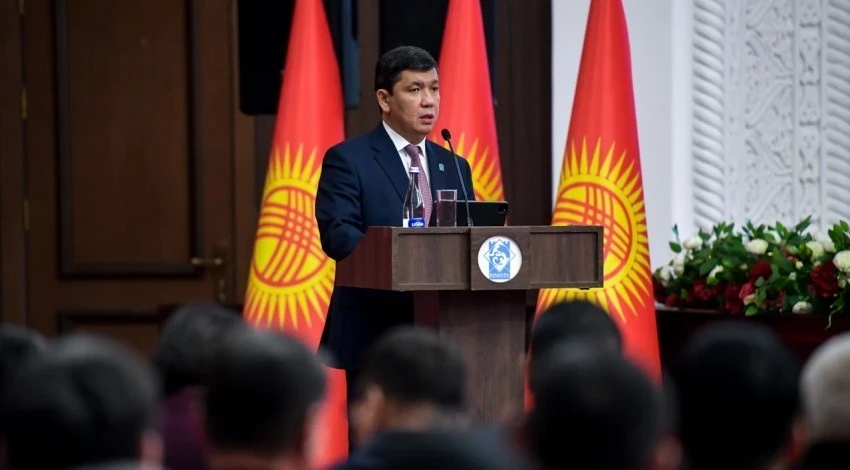
In Bishkek, under the leadership of Mayor Adylbek Kasymaliev, a board meeting was held to summarize the results of the city's socio-economic development for 2025 and to determine tasks for 2026.
According to the city hall, the first deputy mayor, Mirlanbek Baigonchokov, reported on the completed work within the framework of the reform of administrative-territorial structure and digitalization.
During the reform, new boundaries for municipal territories and districts were established. To optimize management in the Lenin and Pervomaisky districts, two new municipal territorial administrations were created, the number of employees increased, and a digital numbering system for all administrations was introduced.
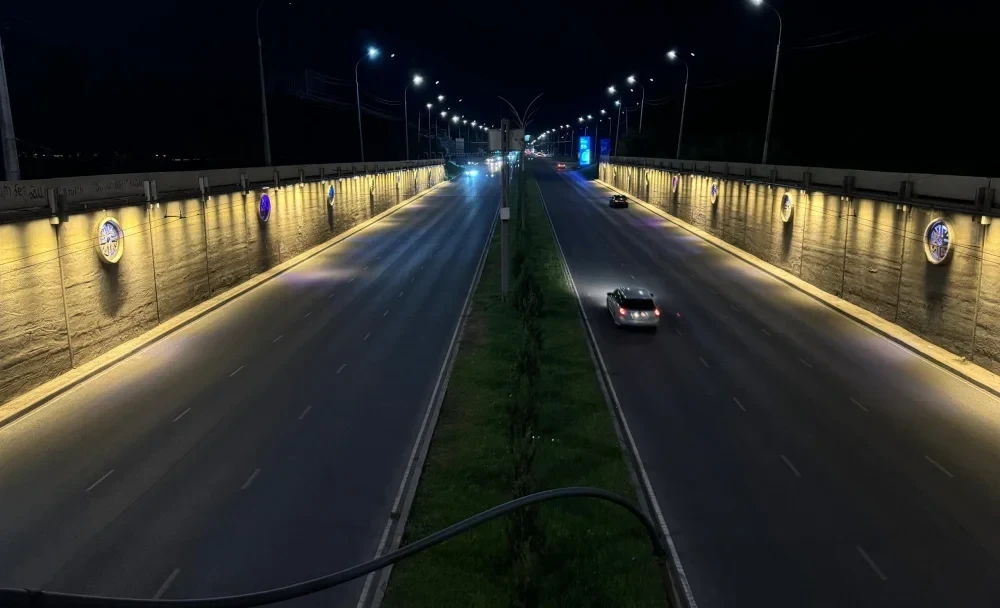
In 2025, the construction of six social facilities was completed, and design and research work was carried out for seven other facilities. A major renovation of the kindergarten in the village of Orok was conducted, 18 streets were repaired with a total length of 12.16 km, and 48.8 million soms were allocated for the development of outdoor lighting, which allowed for the installation of 2078 new light points.
The digital technology center of the city hall, in collaboration with the Ministry of Transport and Communications, expanded the functionality of the mobile application "My City".
In the updated version of the application, the function for tracking the location of public transport in real-time is now available, as well as the ability to build routes considering transfers and actual movement.
As of today, the number of active users of the "My City" application has reached 531.4 thousand people. Within the framework of the city's digital transformation, important projects such as the "Auto Evacuator" and "Smart Stop" systems have been launched, which show routes, arrival times of transport, and provide voice prompts.
An information system called "Municipal Property" has also been developed, which includes a tenant's personal account integrated into the "My City" application. This allows tenants to significantly reduce the time spent on document processing and make payments electronically, avoiding the need for personal visits to municipal institutions.
In collaboration with the St. Petersburg Research Institute of Prospective Urban Development, a project for the city’s master plan until 2050 has been developed, which has undergone public discussion, and work on its implementation continues.