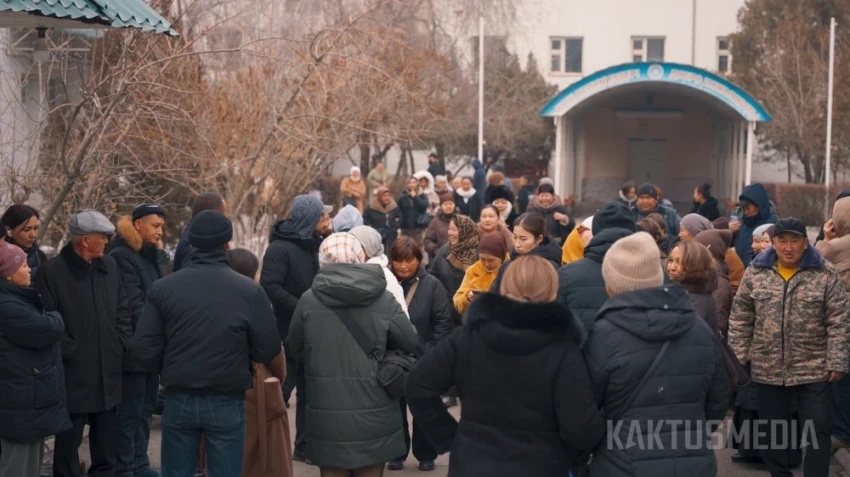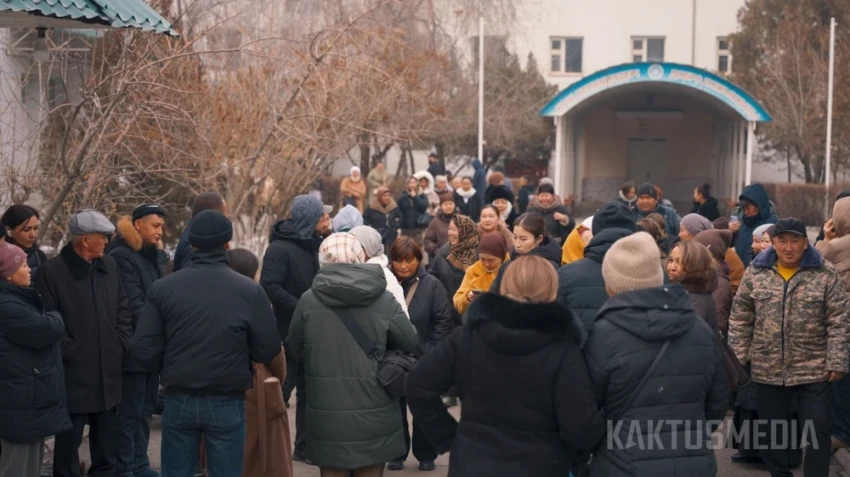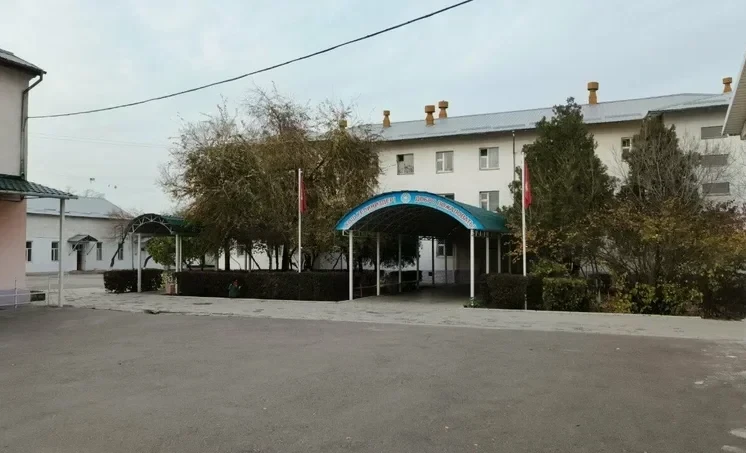
In Bishkek, at a press conference held at the Special Boarding School for Blind and Visually Impaired Children on Kulatov Street, 37, parents and educators expressed their protest against the possible relocation of this educational institution to the village of Vorontsovka.
Bekbolsun Alymbaev, an educator who has been working at the school for 10 years, noted that the issue of relocation is very pressing. According to him, parents insist on the need to keep the school in its current location rather than moving it, suggesting that reconstruction or renovation of the building should be carried out instead.
One of the main arguments against the relocation is the necessity of socialization for blind and visually impaired children.
Alymbaev emphasized that moving to the village would lead to the isolation of children, while it is important for them to develop skills for interacting with society and adapting to the urban environment. He also pointed out potential logistical problems: parents would have to take their children to the bus earlier, which would disrupt their daily routine and class schedule.

According to her, many of these children have long been establishing safe routes around Bishkek and are familiar with the streets, stops, and transport, including thanks to the sound signals in the buses.
“They already know how to get to school. Many use canes. If the educational institution is moved to Vorontsovka, the children will find themselves in isolation and will soon face the need to learn to socialize again as adults,” Orozalieva noted.
She also added that difficulties will arise not only for the children but also for visually impaired parents who will be bringing their children to the new location.
Iskender Sultanaliyev, one of the parents, shared that his family is experiencing significant stress due to the possible relocation of the school.
“We can’t sleep normally. I am blind, my wife has a visual impairment. We send our children to school by taxi, as we cannot drive a car,” he said.
Sultanaliyev emphasized that in the global context, inclusive education is actively developing, and such schools are most often located closer to city centers.
“My daughters are in grades 5-6 and attend clubs after school. When they grow up, we planned for them to take preparatory courses for the ORT and to be able to enter higher educational institutions. If the school ends up in Vorontsovka, these opportunities will be lost. Who will teach them additional classes in Vorontsovka? How will they prepare for the ORT? Right now, my girls interact with other children and play together, but if they end up in Vorontsovka, that opportunity will be lost,” said parent Iskender Sultanaliyev.
He also expressed concerns that the relocation of the school will negatively impact the health of the children due to long commutes. According to him, the journey could take up to 3-4 hours a day, which would reduce the time available for sleep and homework. Additionally, the bus will likely not pick up the children directly from their homes, so parents will have to transport them to the gathering point. He emphasized that for blind children, moving requires significant effort, as they cannot move quickly, and additional trips will increase financial burdens for families.