
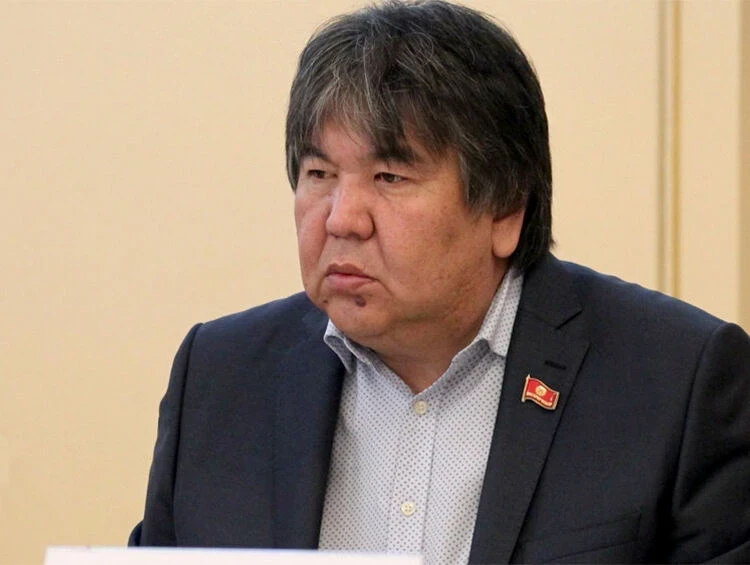
Sadık Sher-Niyaz, representing Kyrgyzstan as Ambassador to France and Permanent Representative to UNESCO, stands out among domestic diplomats. He confidently discusses various aspects, including cultural policy, architectural practices, and green economy. In an interview with 24.kg, he shared his thoughts on the significance of the UNESCO Executive Council for Kyrgyzstan, how a yurt can become the basis for modern buildings, and how Bishkek engages in dialogue with the West amid a complex geopolitical situation.
The yurt is one of the most sustainable structures created by humanity
— In Bishkek, your innovation—a lightweight structure inspired by the yurt—is actively discussed. Is it really patented?
— Yes, it is an independent invention that has no relation to UNESCO or my diplomatic activities. I applied for a patent nine months ago and recently received it. It is not quite a classic yurt, but a frame house based on the principles of a yurt.
I believe that the yurt is one of the most reliable and sustainable structures created by humans. Therefore, it seemed reasonable to apply this principle in modern construction.
Sadık Sher-Niyaz
This technology resembles panel-frame houses, which are actively used in Finland, Canada, and the USA. It involves a wooden frame, a lightweight foundation, and importantly, accessibility and speed of construction.
— When can such houses appear in Kyrgyzstan?
— This is still in the implementation stage. The invention has attracted attention at the state level; specialists, including seismologists, have already positively assessed it and are ready to provide certifications. However, the process is not quick, but it has already started, which is a good sign.
— How many floors are planned?
— It is expected that the houses will be up to three stories. But at the first stage, we will start with single-story buildings to test the reliability of the structure in practice. This will be country housing, cottages. In Kyrgyzstan, especially in tourist areas, there is high demand for such houses.
— Will this housing be only for the commercial market?
— Not at all. In Canada and the USA, frame houses are used as social housing. For example, if the State Mortgage Company shows interest, such houses can be built for low-income families. It is functional, reliable, and practical.
UNESCO is not just prestige, but a tool for development
— You have been dealing with cultural heritage issues for a long time. What initiatives of Kyrgyzstan in UNESCO do you consider the most significant?
— UNESCO covers both tangible and intangible heritage of humanity. For example, in 2003, the art of akyns (improvisational poets) was recognized as intangible heritage, and I was a co-author of this nomination along with Beksultan Zhakiev.
Sulaiman-Too is a vivid example of tangible heritage and a source of pride for any country. We also have other nominations: kok-boru, ak-kalpak, and just recently, the nomination for the drink maksym was defended in India. We are also developing new projects, including for the Kumbes of Manas.
— How is the celebration of Nowruz going?
— This is a joint nomination of 13 countries, initiated by Iran, which is historically justified. But it is important that Nowruz has been recognized as a universal holiday that transcends a single culture.
— Kyrgyzstan recently joined the UNESCO Executive Council. Why is this important?
— This is a significant achievement. The Executive Council is the highest advisory body of UNESCO, consisting of about 60 countries. At the General Conference in Samarkand, despite skepticism and doubts about its organization, everything went at a high level.
The election of Kyrgyzstan to the Executive Council is a success not only for our country but for the entire Central Asian region. Now we can more actively promote issues of intercultural dialogue, green economy, and the use of renewable energy sources.
Sadık Sher-Niyaz
— What else can Kyrgyzstan offer to UNESCO?
— We are considering ideas for Sulaiman-Tash, our famous petroglyph park. We are also discussing Arslanbob. The competition is high: about 200 countries, each deserving attention.
But we have enormous potential. The story of the walnut, possibly taken from our land during the campaigns of Alexander the Great, is an example of how cultural heritage can become part of world history.
— What advantages does inclusion of sites in UNESCO lists give to a country?
— It is not only about prestige. It also brings investments, tourism development, and international recognition. In Europe, you will always see the UNESCO sign—it's a symbol of trust. The same applies to intangible heritage. UNESCO is one of the most authoritative organizations in the field of culture, science, and education.
France and Kyrgyzstan: the potential is not yet exhausted
— You are currently in Bishkek, actively meeting with the country's leadership. Are these working visits?
— Certainly. We are preparing high-level visits and conducting negotiations. The work of an ambassador is a continuous process.
— What ideas do you plan to discuss in Paris?
— We have many ideas. Kyrgyzstan has become a member of the UNESCO Executive Council, which opens new opportunities. But my role as an ambassador in France includes not only cultural issues but also economy and politics.
We have acquired an embassy building in Paris—this is a symbol of our long-term intentions. The tourist project "Three Peaks" is developing, which is already being called the Kyrgyz Courchevel. We are also collaborating with French companies in aerospace.
Sadık Sher-Niyaz
French cuisine restaurants are opening in Bishkek—this is also part of cultural diplomacy.
— So you are betting on promising cooperation?
— Definitely. Kyrgyzstan is always for constructive dialogue and real economic ties. This is the only reasonable path.


