
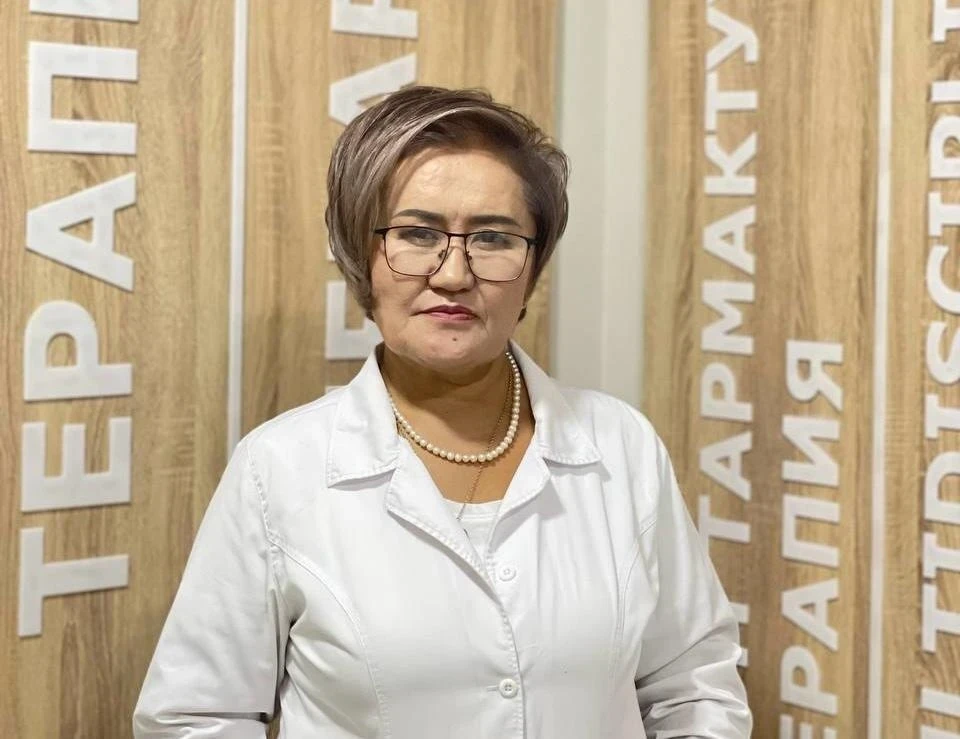
Although universal "anti-aging" pills do not yet exist, Professor Gulmira Baitova, head of the Department of Therapy at the International School of Medicine and the Gerontology course at the Kyrgyz State Medical Institute, is confident that improving living conditions for the elderly is possible and achievable.
In an interview with vb.kg, Professor Baitova emphasized the importance of developing gerontology and geriatrics, highlighting that this science helps identify the causes of aging and address health issues among the elderly population, which is particularly relevant given the increasing number of elderly people in the country.
Gulmira Musaevna, why is the emphasis on active longevity so important if official data shows that life expectancy in the country is increasing?
- This is indeed the case. Over the past few decades, the number of people over 60 years old worldwide has doubled, and Kyrgyzstan is no exception. In 2024, the average life expectancy in the country was 72.1 years, with women living eight years longer than men (76.6 years compared to 68.3 years). Of more than seven million residents, about 400,000, or 5.7 percent, are citizens over 65 years old. According to the UN classification, if the share of elderly people is less than four percent, the country is considered young; from four to seven - on the verge of aging; more than seven - aging. Projections indicate that by 2030 this percentage in Kyrgyzstan will reach seven.
The increase in the number of elderly people in the country poses challenges for social and economic policy. Healthcare, in this context, must play an important role in providing medical services, especially in disease prevention?
- Yes, absolutely. After the collapse of the USSR, the gerontological service practically ceased to exist, and it can only be restored through active participation from the healthcare system. Research shows that biological age can be controlled by maintaining activity and health in old age. This is not only a matter of personal well-being but also a task for society as a whole, as active citizens contribute to the economy, and a lower incidence of diseases reduces the burden on the budget.
In 2002, the World Health Organization introduced the concept of "active aging," which involves creating conditions for health, social activity, and human rights protection, ultimately improving the quality of life for elderly people. In the same year, the UN adopted the Madrid International Plan of Action on Aging, calling on states to develop national active aging programs. Kyrgyzstan signed this plan, committing to ensure decent living conditions for elderly citizens and their active participation in society.
Healthcare plays an important role in this process. In response to the recommendations of the Madrid Plan, in 2011, courses on gerontology and geriatrics were initiated at the Kyrgyz State Medical Institute. We train family doctors on the peculiarities of working with elderly patients, as their diseases have specific characteristics. The courses continue to operate, and we also conduct outreach lectures in remote regions.
At an international conference in Moscow in 2019, organized by WHO and the UN, experts from over 30 countries gathered to discuss the "Decade of Healthy Aging 2020–2030" program. I realized how important it is to approach this topic comprehensively in Kyrgyzstan. Large-scale support programs for the elderly are necessary, as current projects are temporary and only partially assist them. For example, the "Resource Center for the Elderly" and the gerontological office opened by the "Grandma Adoption" organization in Bishkek organize training for retirees, teaching them health preservation and disease prevention.
We also invited yoga instructors for classes with elderly people, who willingly participate in these activities. Participants then pass on the knowledge they gained to their peers, which is an effective way of disease prevention and an important element of active longevity.
In 2019, an Action Plan for Improving the Quality of Life of Elderly Citizens for 2019–2025 was adopted, including measures for the active participation of elderly people in societal life and improving their economic situation.
Professor, the deadline for the plan has expired. How do you assess its impact on the elderly population, and what will happen next?
- Within the framework of the plan, many activities were implemented, including a study of medical and social assistance for patients with cardiovascular diseases among Kyrgyz citizens in the age categories of 60-74 years (elderly), 75-89 years (old age), and 90 years and older (long-lived). This study identified the healthcare needs of the elderly and issues related to the prevention of strokes and heart attacks. Kyrgyzstan ranks among the leading countries in the world for mortality from cardiovascular diseases, which underscores the importance of this data.
However, addressing the issue of active longevity cannot be the responsibility of just one country. A comprehensive state program is needed, which will be updated in line with new challenges. Currently, a program titled "Active Longevity of Kyrgyz Citizens for 2025-2030" is being developed, but it is likely not to be the last program, as the elderly population will continue to grow, along with its needs. I believe that Kyrgyzstan should establish a gerontology institute, which would become the main body dealing with gerontology and geriatrics issues. In Russia, for example, there are branches of the main institute in different regions, and various ministries and public organizations are involved in addressing the issue of active longevity.
The problem of aging is not only a medical but also a social task. It is essential to actively involve elderly people in societal life. Many of them spend time alone, needing simple communication. Therefore, it is worthwhile to create communities for people of this age, united by common interests and goals. Isolation can negatively affect their health. Swedes, for instance, actively join associations, allowing them to participate in events and maintain activity.
Moreover, communication with peers helps maintain psycho-emotional well-being, which is an important factor in longevity. Research shows that social activity positively influences health.
My assistants regularly meet with elderly patients at Health Center No. 8, conducting discussions on disease prevention. These meetings are becoming increasingly popular, and elderly people eagerly respond to initiatives, needing trustful communication.
In my opinion, such meetings should be held in every Health Center, and it is necessary to resume the work of schools for hypertensives and diabetics. It is important that the work in these schools is conducted regularly and with a specific staff, as family doctors often do not have time for prevention.
Do you believe in the possibility of changing the population's attitude towards their health, both among the elderly and the youth? What advice could you give for prolonging life and maintaining health?
- We are already observing changes! After the pandemic, people began to show interest in prevention and ask many questions about their health. Basic recommendations are already yielding positive results. Prevention should start not only among the elderly but also in kindergartens and schools to ensure active longevity. Well-known health recipes include proper nutrition, quitting harmful habits, and regular check-ups.
Unfortunately, there are also reverse trends: adults sometimes feed children fast food, which negatively affects their health. I have encountered situations where small children do not develop properly, spending most of their time on phones.
During my presentation at a conference in London, I noted that about 60 percent of the adult population suffers from hypertension, and half of them are even unaware of it. This data shocked my foreign colleagues. The main cause of strokes is unnoticed and untreated arterial hypertension. People come to doctors already having strokes or in a pre-stroke state, and some pregnant women only discover their hypertension during screening.
Sixty percent of health is the responsibility of the individual. Negative habits such as smoking, alcoholism, and poor nutrition severely deteriorate health, even with good genetics. Only 40 percent of health depends on ecology and the healthcare system.
Therefore, it is essential to motivate people to take care of their health and the health of their loved ones. This is not an easy task, but the results can be impressive. For example, in the 1980s in the USA, preventive work significantly reduced mortality from strokes and heart attacks. This shows how important prevention and self-education are for health.
The state program for active longevity in Kyrgyzstan for 2025-2030 can significantly improve the quality of life for elderly people. Caring for the older generation is a task that any government can address, but only with the support of society.


