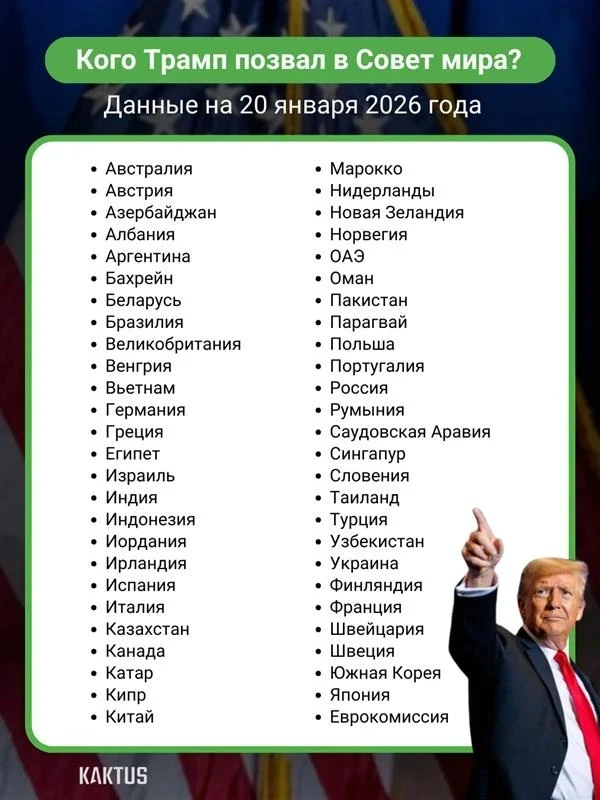
Leaders of states, as well as prime ministers and foreign ministers from countries such as Argentina, Azerbaijan, Armenia, Bahrain, Bulgaria, Hungary, Indonesia, Jordan, Kazakhstan, Qatar, Morocco, Mongolia, Paraguay, Pakistan, Saudi Arabia, Turkey, and others attended the event.
Donald Trump stated that over 50 countries would join the "Council of Peace." In his opening speech, Trump emphasized that the new organization would interact with the UN and focus on addressing key foreign policy issues, including the conflict in the Gaza Strip. He noted that the "Council of Peace" would not replace the UN in addressing global problems.
Trump also called on numerous world leaders to join the new initiative.
According to him, the "Council of Peace" has the potential to become one of the most significant bodies ever created.
As reported by the BBC, 19 countries have already expressed their willingness to participate in this organization, and their representatives signed the charter:
- Argentina - President Javier Milei;
- Armenia - Prime Minister Nikol Pashinyan;
- Azerbaijan - President Ilham Aliyev;
- Bahrain - Sheikh Isa bin Salman Al Khalifa;
- Bulgaria - Prime Minister Rosen Zhelyazkov;
- Hungary - Prime Minister Viktor Orban;
- Indonesia - President Prabowo Subianto;
- Jordan - Deputy Prime Minister Ayman Safadi;
- Kazakhstan - President Kassym-Jomart Tokayev;
- Kosovo - President Vjosa Osmani;
- Mongolia - Prime Minister Gombojavyn Zandanshatar;
- Morocco - Foreign Minister Nasser Bourita;
- Pakistan - Prime Minister Shehbaz Sharif;
- Paraguay - President Santiago Peña;
- Qatar - Prime Minister Sheikh Mohammed bin Abdulrahman Al Thani;
- Saudi Arabia - Foreign Minister Faisal bin Farhan Al Saud;
- Turkey - Foreign Minister Hakan Fidan;
- UAE - Chairman of the Executive Affairs Authority Khaldoon Al Mubarak;
- Uzbekistan - President Shavkat Mirziyoyev.
According to the charter, Donald Trump receives unique powers within this organization. He is established as the first chairman with the right to invite new members, form an executive council, veto decisions, and appoint his successor, making him a central figure in the council's governance.