

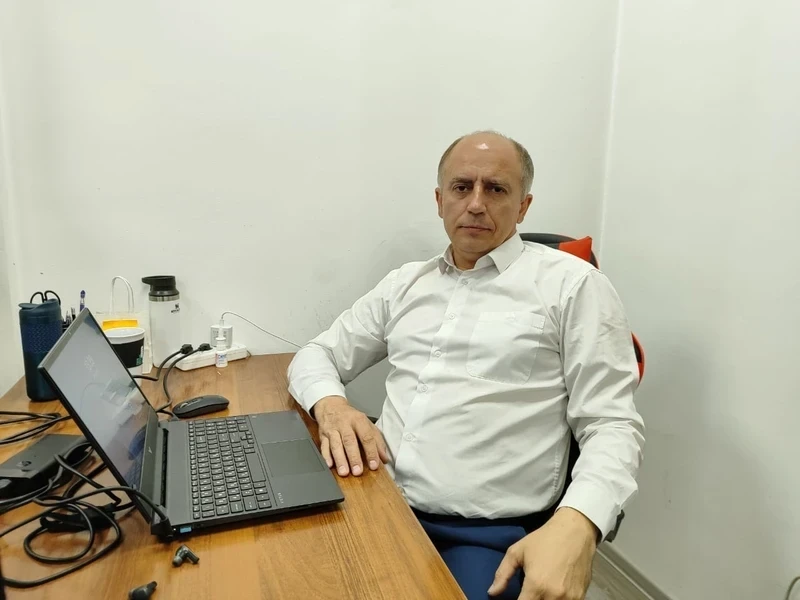
The process of digitalizing the medical system in Kyrgyzstan is actively continuing. The Director of the Center for Electronic Health at the Ministry of Health of the Kyrgyz Republic, Vitaliy Chumachok, shared the results of the work for 2025 with the Kabar agency.
According to his information, the information platform "Sanarip Clinic," aimed at the digitalization of healthcare, has already covered 100% of primary healthcare facilities and more than half of hospitals. It is important to note that in 2025, the system registered:
* 2.8 million outpatient visits;
* 239 thousand inpatient medical records;
* over 20 million medical visits;
* 306 thousand temporary disability sheets.
It is expected that the full implementation of digital medical records in the inpatient sector will be completed by the end of December 2026.
As part of the 100-day reform, the digitalization of the medical certificate 083/U, necessary for obtaining driver's licenses, has been successfully completed. The project was implemented through the "Sanarip Clinic" system with integration into key state digital platforms, such as "Tündük," the Unified Identification System, and the cloud electronic signature.
The automated process of obtaining the certificate significantly simplified the procedure: the document is generated, signed with an electronic signature, and sent to the State Agency for Vehicle Registration without a personal visit. The processing time has been reduced from 7 to 2 working days, and over 142 thousand digital certificates 083/U were generated in a year.
During the project implementation, necessary regulatory documents were developed and approved, an interdepartmental working group was created, and a technical assignment for the modernization of the Medical-Social Expertise Commission (MSEC) system was prepared. In addition, a new design for the MSEC information system and electronic forms for certificates for adults and children were developed, which combined previously fragmented documents. Key documents, including MSEC certificates and individual rehabilitation programs, were also digitized. Training for specialists took place in Bishkek, Chui, and other regions, resulting in over 44 thousand electronic referrals to the MSEC.
The information system "Digital Medical Birth and Death Certificate" has been implemented in all state medical institutions and six private maternity hospitals. More than 3,268 medical workers have been trained, and in 2025, the system registered 138,464 birth certificates and 29,535 death certificates.
The laboratory information system "AiLab" has over 2,500 users as of 2025. More than 3.5 million laboratory tests have been entered into the system, and 2.2 million referrals from "Sanarip Clinic" have been processed.
In the incident monitoring system for public health "AiEpid," 122,314 emergency notifications about infectious diseases were entered in 2025. Additionally, over 10,317 epidemiological maps were created in electronic format based on the results of investigations, and the total number of system users reached 2,005.
Automation of budget calculations for primary healthcare organizations is ongoing. A directory of populated areas has been created in the National Information System for Health (NISUR) with the integration of SOATE codes, loading population data from the National Statistics Committee (NSC), and adding coordinates. Discrepancies between the Cadastre and NSC data have been eliminated, and the "Serviced Populated Areas" module allows linking populated areas to primary healthcare organizations. A phased preparation of the structure of organizations is underway.

An automated medical waste accounting system has also been implemented in healthcare organizations, during which 815 medical workers were trained. The total number of users of the system reached 1,742, and the number of records amounted to 80,089.
The information system "iEmdoo" provides individual vaccination records for the population. The system has created 3,257,532 vaccination cards, entered 2,887,203 records, and the number of users is 3,668. The number of notifications through the Tunduk platform has increased to 10,000 per day.
Additionally, as noted by Chumachok, interdepartmental cooperation is developing. The Ministries of Health and Education of the Kyrgyz Republic have signed an agreement on data exchange and integration of information systems.
According to the Roadmap, data on preschool and general education institutions, as well as a dataset of students and data exchange on digital health books, is to be transferred. It is expected that this will increase vaccination coverage, increase the number of insured individuals in the mandatory health insurance system, and ensure coverage of foreign students in the mandatory health insurance system, as well as allow for more effective control of infectious diseases in kindergartens and schools.
Digital services have been implemented for citizens, such as online registration with clinics and the ability to call a doctor to the home. More than 32,394 people have used the registration service, and over 1,600 calls have been arranged remotely.
A unified mechanism for online payment of medical services has also been created through integration with payment gateways and banking systems. A mechanism for automatic generation of lists of citizens subject to vaccination has been implemented based on data from population registers and medical institutions. A data analysis module for laboratory research has been introduced to identify abnormal spikes in infections," concluded the specialist.


