
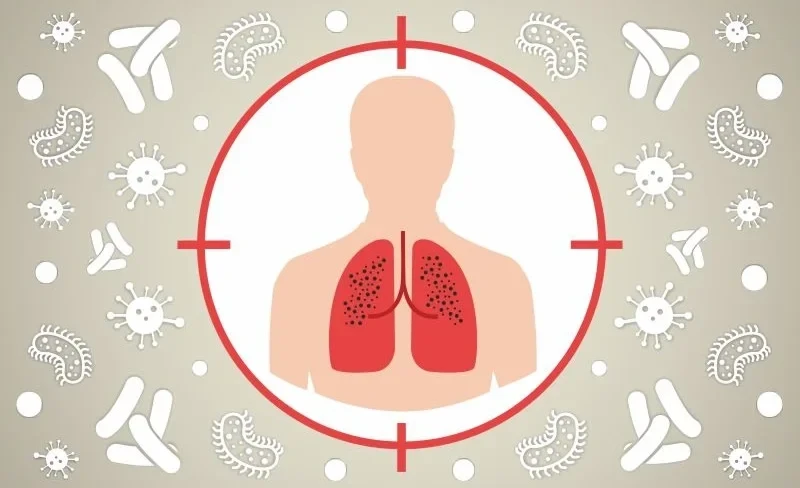
The Republican Center for Health Promotion and Mass Communication shared important information about tuberculosis, its symptoms, and treatment methods.
Tuberculosis is an infectious disease caused by the Mycobacterium tuberculosis, commonly known as Koch's bacillus. The primary damage occurs in the lungs, but the disease can also affect other organs. The infection is transmitted through the air by droplets from a person with an active form of the disease who is not receiving necessary treatment. When coughing, sneezing, or talking, the infected person releases bacteria into the air, which can be inhaled by others. Specialists note that patients receiving adequate therapy become non-infectious after just a few weeks of treatment.
Anyone, regardless of age, gender, or social status, can contract tuberculosis. It is important to understand the difference between infection and the disease itself.
According to the World Health Organization (WHO), approximately 23-25% of the world's population is infected with Mycobacterium tuberculosis; however, the disease develops in only 5-10% of them over their lifetime, especially when the immune system is weakened. Tuberculosis is most commonly diagnosed in people of working age, highlighting its social significance.
Risk factors include prolonged contact with tuberculosis patients in closed and poorly ventilated spaces, high population density, and living in regions with high morbidity rates. The likelihood of contracting the disease increases with a weakened immune system due to other illnesses, poor nutrition, stress, climate change, smoking, alcohol, and drug use. People working or living in closed institutions, healthcare workers, and those suffering from comorbidities such as HIV, diabetes, chronic lung diseases (COPD, asthma, chronic bronchitis), chronic kidney failure, oncology, as well as those taking hormonal medications and cytostatics, are at risk.
It is important to note that tuberculosis is not transmitted hereditarily, through handshakes, or by using common items such as dishes, clothing, or bedding.
The main symptom of the disease is a cough, which can vary in duration. Other signs include general malaise, weakness, increased fatigue, body temperature (often in the evening ranging from 37 to 37.5 °C), night sweats, decreased appetite, and weight loss. In later stages, shortness of breath, chest pain, and coughing up blood may also occur.
Medical professionals strongly recommend that anyone experiencing such symptoms should immediately consult a doctor at the Family Medicine Center, family doctors, or the local health post. Early examination helps detect the disease in its initial stages or rule out its presence. To diagnose tuberculosis, sputum tests may be ordered, including the Xpert MTB/RIF — a modern and accurate molecular genetic test, fluorography, or chest X-ray. For children, a skin test called Diaskintest is performed.
Treatment for tuberculosis is carried out exclusively with anti-tuberculosis medications. Provided that therapy is started promptly and the treatment regimen is strictly followed, the disease is curable. In Kyrgyzstan, anti-tuberculosis treatment is provided free of charge.
However, interrupting the treatment course or irregular medication intake can lead to the emergence of drug-resistant tuberculosis. In this case, the infection is caused by bacteria that do not respond to standard anti-tuberculosis medications. This type of tuberculosis can also be treated, but it requires a longer treatment duration and constant monitoring by doctors.
Healthcare workers emphasize that there is a problem of stigma and discrimination. Negative attitudes towards people with tuberculosis can delay seeking medical help or even lead to refusal of treatment. Eliminating stigma and discrimination plays an important role in the successful fight against tuberculosis and encourages earlier help-seeking. Understanding that patients receiving treatment do not pose a danger to others helps society and families provide support without fear.
Medical professionals also remind about common myths that are not true.
Tuberculosis can affect not only people with low income — it can touch anyone. Infection does not always lead to disease, and the disease itself is not a source of shame. Tuberculosis is not inherited and cannot be treated with folk remedies — effective treatment remains only with anti-tuberculosis medications.
Experts emphasize that knowledge of symptoms and timely consultation with a doctor play a key role in successful diagnosis and treatment of the disease.
Adelya Klycheva


