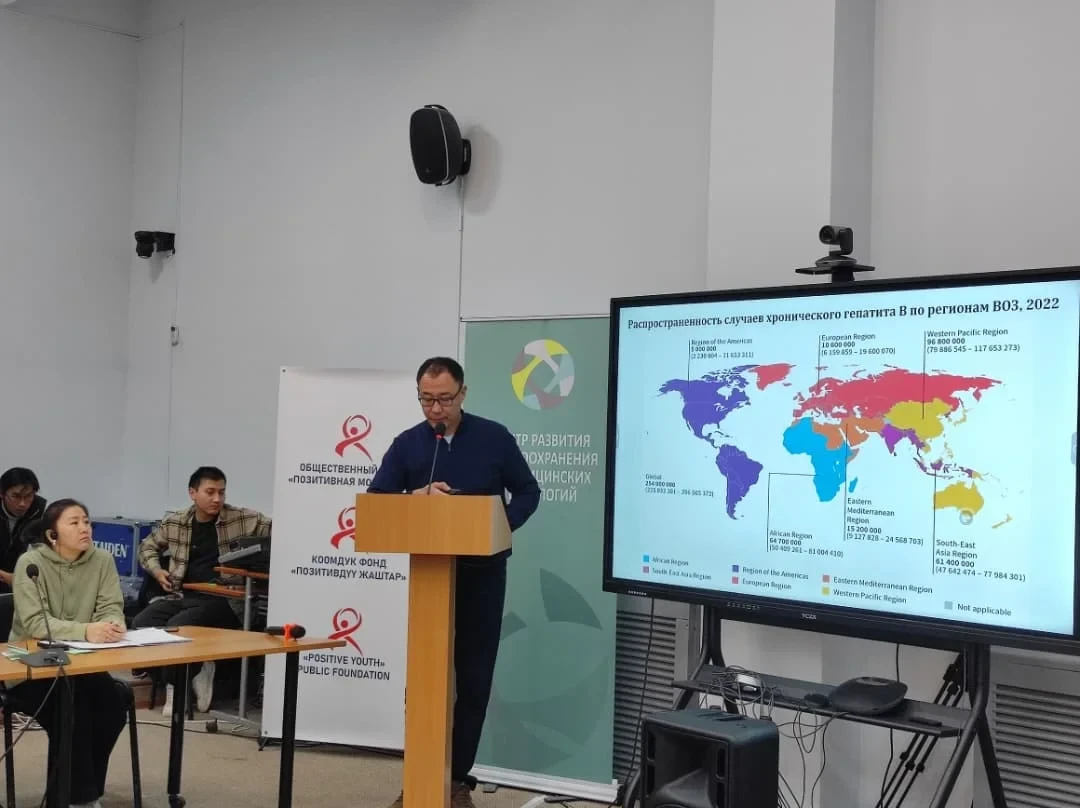
Deputy Jylgyz Egenberdieva raised the issue of the number of people in Kyrgyzstan who require liver transplants.
The Deputy Minister clarified that at the moment such a registry does not exist; however, the Ministry is actively working on this issue regarding both kidneys and livers.
Kadyraliev also noted that there is a lack of proper infection control in private medical institutions and other clinics.
Jylgyz Egenberdieva asked about the reasons for the delays in completing the screening program for viral hepatitis.
Umutkan Chokmorova, director of the Republican Center for the Control of Hemocontact Viruses and HIV, explained that three years ago, the authority for hepatitis diagnosis was transferred to the Republican AIDS Center due to the similarity in transmission routes of infections.
“Among people with HIV, the hepatitis C diagnosis has been established in 1,300 patients, and hepatitis B in 400. Thanks to effective hepatitis treatment, an appeal was made to the president, the government, and the Ministry of Health, which allowed for the integration of the hepatitis service into the Republican AIDS Center,” added Umutkan Chokmorova.
She also noted that the screening program is functioning, and the Cabinet is allocating the necessary funds for its implementation, which helps avoid interruptions in the process.
Furthermore, the center is actively working with ministries and organizations to ensure vaccination against hepatitis, as the working population often lacks time for vaccinations.
Jylgyz Egenberdieva pointed out that in some regions, people are required to get vaccinated first before they can undergo screening.
Before vaccination, express testing is conducted in all cases using capillary blood. If the result is negative, the patient receives the vaccine, and in the case of a positive result, they are immediately referred for additional tests, explained Umutkan Chokmorova.