
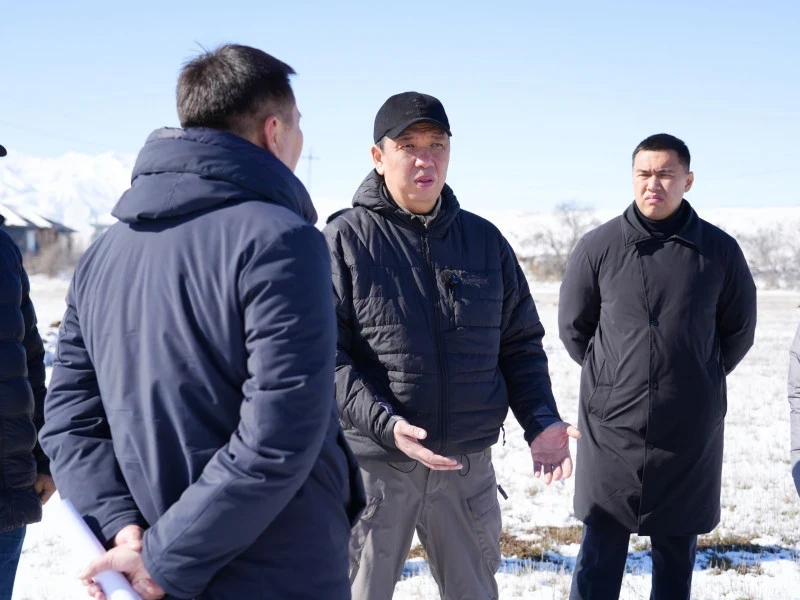
Photo of the Bishkek Mayor's Office
According to the mayor, after identifying the problem, the city administration began active measures to clean and restore the accumulation reservoirs. "In 2023, we deployed special equipment and completely cleaned the accumulation pools. Previously, there were eight; now we have increased them to eleven, and another one is under construction," Junushaliev reported.
He explained that the main function of such reservoirs is to accumulate water and its natural filtration through the soil, which helps replenish underground sources. This, in turn, increases the volume of water reserves at the Orto-Alysh site, which meets a significant portion of the capital's needs.
According to the mayor, the problem of water shortage manifested mainly from April to June, during the active irrigation period, when the load on water resources increased, leading to competition for water between the city and agriculture.
It is already March, and we have water. We started filling the reservoirs in advance before the agricultural work began, which allows us to provide the city with the necessary amount of water.
Aibek Junushaliev
The mayor emphasized that the "Orto-Alysh" water intake covers about 40% of Bishkek's drinking water needs, so maintaining the infrastructure and accumulation pools in working order is critically important for the stable water supply of the capital. He also urged residents to treat water carefully and use it sparingly, emphasizing that providing the city with water requires significant efforts and constant work from utility services.


