
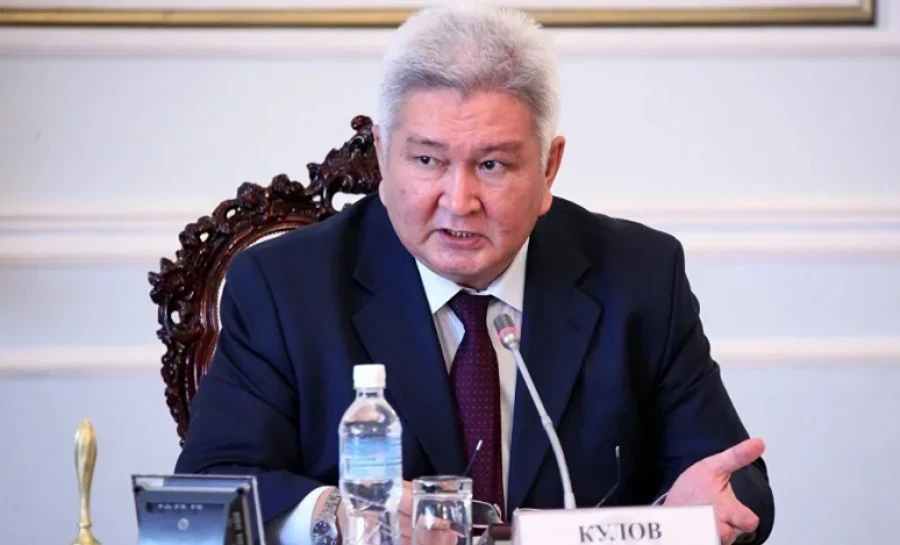
Former Prime Minister proposed to create a Special State Commission
Felix Kulov, the former Prime Minister, shared his opinion on the recent events in the country, which, according to him, reveal long-term secrets. The politician made this statement on social media.
He noted that the recent personnel changes initiated by the President of the Kyrgyz Republic, Sadyr Japarov, have become an important step towards strengthening state power and protecting constitutional order.
The dismissal of Kamchybek Tashiev and the detention of several ministers, as well as employees of the State Committee for National Security, showed that the interests of the state are more important to the president than personal connections.
Kulov also emphasized that the president demonstrated nobility towards his old friend, hinting that he would appreciate this decision over time, which speaks of political maturity and responsibility.
However, society cannot ignore alarming moments. After the detentions, complaints began to come from citizens about possible abuses and illegal actions that they had previously been afraid to speak about.
At the December Kurultai, the president openly criticized the work of the special services, pointing out violations of legislation by certain employees.
This criticism, voiced from a high podium, had deep meaning and served as a signal to reassess the situation.
Unfortunately, instead of a constructive approach, some forces attempted to use the situation for political purposes, which was expressed in the well-known letter from 75 public figures. This led to a potential threat to the stability of the constitutional order.
In these conditions, the actions of the president became not only justified but also necessary.
Today, what has long been hidden under the classification is beginning to be revealed. Many honest workers within the system may not have even suspected the existence of negative phenomena within the agency.
By the president's directive, work has begun to cleanse the system. Investigative bodies must provide a legal assessment of the actions of specific individuals, which falls within their competence.
However, a legal assessment is only part of the necessary process. The state requires a political reassessment of what has happened, aimed not at repression but at restoring public trust in power.
In this regard, it makes sense to consider the possibility of creating a Special State Commission based on the president's decree, which will analyze the causes and conditions that contributed to the violations and develop recommendations for their prevention in the future.
It is important to clarify that this is not about a punitive structure, but about a platform for open and professional analysis. The commission should include respected lawyers, representatives of the scientific community, the civil sector, and human rights defenders known for their impartiality. This will ensure balance, transparency, and public trust in the results of its work.
At the same time, there is a need to create a separate commission to develop proposals for improving the system of public administration at the new stage of the country's development.
The period when the state functioned as a "fire brigade," quickly solving accumulated problems, has fulfilled its historical role. Important results have been achieved in strengthening executive discipline and centralizing responsibility.
Now the next stage is required — institutional development. Strengthening presidential power must be combined with reasonable delegation of authority and responsibility within the management system. It is important to expand the real managerial and economic powers of local authorities, allowing them to independently address local issues in the interests of citizens.
The fact that citizens are forced to turn en masse to the president for everyday issues indicates not trust, but insufficient effectiveness of the middle management level.
The state system must function in such a way that problems are resolved at the level of their occurrence.
The president's decisions today are not a sign of weakness or crisis, but a step towards healing the system and transitioning to a more mature management model. History shows that the true strength of a leader is manifested not in maintaining the existing order, but in the ability to make difficult decisions for the sake of the country's future.
Kyrgyzstan is entering a period of deep institutional transformation, and the consistency of implementing the initiated reforms will determine the stability of the state, public trust, and development prospects for decades to come," concluded Kulov.
Photo www


