
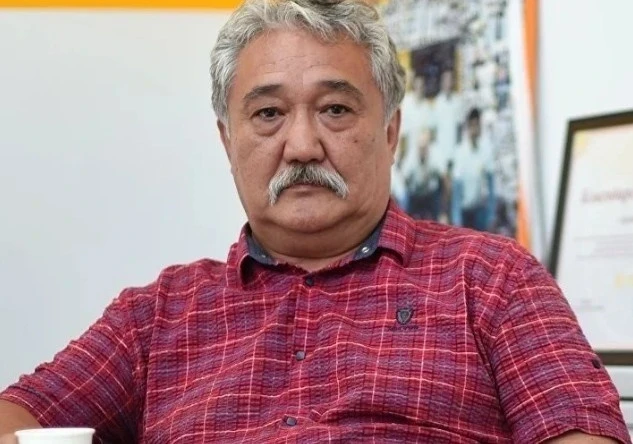
Kamchybek Tashiev has left his position in the GKNB, which has sparked active discussions among politicians and experts. Political scientist Bakyt Baketaev, known for his analytical views, recommends approaching this situation without excessive emotions and suggests considering two scenarios for possible developments.
Baketaev, with experience in situations related to four revolutions in Kyrgyzstan, emphasizes that Tashiev's resignation is an important but manageable step within the political process. "Sharp changes in the personnel composition of power always have a strategic underpinning," he notes.
The first scenario suggests an agreement and stabilization (the most likely). Tashiev and the president have a long-standing relationship; they have overcome difficulties together on the path to power and made tough decisions. Over the past five years, the management structure has changed significantly, ensuring the stability of the system. Disagreements between them can be a normal occurrence, as many decisions are made in the management process that do not always align in risk assessments. If the resignation occurred, it is likely related to the need to maintain stability. This may be a consequence of excessive activity from some of Tashiev's supporters or premature positioning in the context of future alignments. Kamchybek Tashiev is aware of all the risks that may arise if his actions are interpreted as a threat to the constitutional order. The president has already shown that he is capable of making tough decisions based on state interests rather than personal attachments. Therefore, a likely outcome may be the achievement of consensus, redistribution of roles without open conflicts, which will ensure the stability of the system.
The second scenario is latent competition and managed turbulence (less likely). This scenario suggests the possible development of a hidden political confrontation. If part of Tashiev's team opposes the decision regarding his resignation and begins to act independently through political, business, or power structures, this could lead to tension within the system. Political mobilization happens quickly in Kyrgyzstan, especially amid rumors.
The risks of this scenario include:
- fragmentation of the elites, which may cause managerial paralysis in certain agencies,
- information escalation, including compromising materials and leaks, which are common tools in internal struggles,
- street protests — Kyrgyzstan has a history of political conflicts quickly escalating into street actions; even a small mobilization can trigger a chain reaction,
- attention from external players — any internal instability instantly attracts interest from other countries.
However, the likelihood of the second scenario decreases due to several factors. Kamchybek Tashiev is an experienced player and understands the consequences that conflict escalation can lead to. Moreover, the legal and power tools of the state today are much stricter and more centralized than in previous revolutionary times. Society is also tired of upheavals and generally does not show a desire for radical changes in power.
Studying the experience of four revolutions, I have concluded that the crisis in Kyrgyzstan arises not from personnel decisions but from a loss of control over processes. As long as decisions remain within the system and are manageable, the country maintains its stability. The president demonstrates the approach: "A friend may be close, but state interests come first." The future of events depends on the maturity of both sides. If stability remains a priority, the second scenario will remain just a theory. Kyrgyzstan now needs to complete the reforms it has started rather than enter into a new struggle," concluded Bakyt Baketaev.


