
Irek Murtazin, a Russian investigative journalist, released a new episode on his YouTube channel "Ship Journal," where he discusses the connection between Canada's sanctions against Alexander Lebedev and Kyrgyzstan's struggle for control over the Kumtor gold mine. The episode is titled "Ricochet of the Battle for Kumtor."
The discussion is based on a lawsuit initiated by Lebedev in the Federal Court of Canada, where he contests the sanctions imposed against him, which took place on May 18, 2022. Murtazin points out that Canadian authorities have repeatedly changed the wording of the reasons for which Lebedev was sanctioned. Initially, he was considered a former intelligence officer, then criticized for investments in the tourism business in Crimea, and later for participating in Kremlin propaganda.
The journalist also notes that Lebedev has never conducted business in Canada and has never visited the country. Nevertheless, in his opinion, the imposition of sanctions coincided with the businessman’s active stance on the issue of Kumtor.
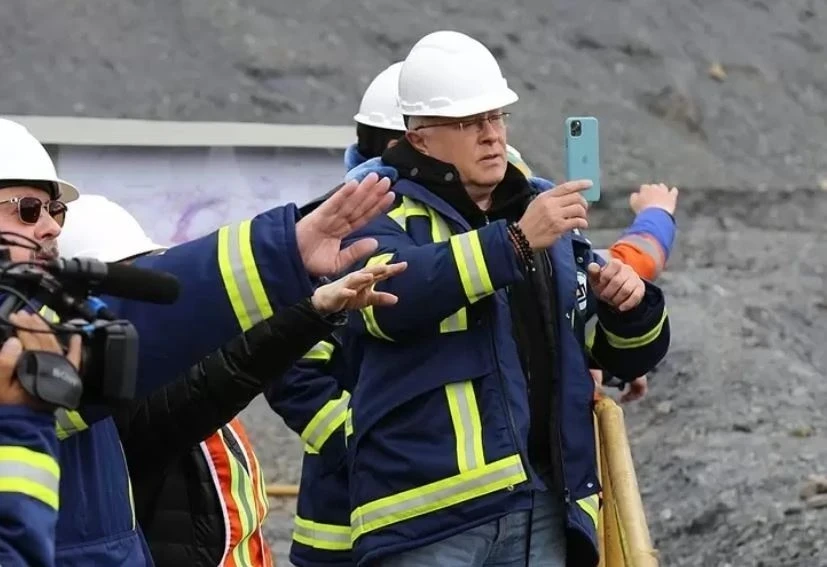
In the summer of 2021, Lebedev visited Kyrgyzstan, met with President Sadyr Japarov, and visited the Kumtor mine. After that, he published a series of sharp comments on social media, criticizing the activities of foreign investors over the years. Lebedev emphasized that the mine is located at an altitude of about 4,400 meters and that over more than 25 years of operation, the total revenue amounted to approximately $12 billion, of which Kyrgyzstan received only a small share.
On his internet page, the businessman expressed clear support for the actions of the Kyrgyz government to regain control over the mine, calling it "an attempt to return the stolen gold."
He pointed out the unprecedented nature of the situation for the post-Soviet space, stating that foreign investors had bribed Kyrgyz authorities and felt impunity. Lebedev noted that this led to significant environmental damage and threatens the health of 3,500 people working and living in the area. More than two billion tons of processed rock end up on glaciers in a seismically active zone, creating risks for both people and the ecosystem.
Lebedev also indicated that foreign companies did not pay all taxes and only provided minor dividends. Meanwhile, over 25 years, they earned $27 billion, while Kyrgyzstan received only $87 million in dividends.
The author believes that the tough stance of the Kyrgyz authorities and Lebedev's public support could have caused dissatisfaction among foreign investors who previously received significant profits from the exploitation of this mine.


