
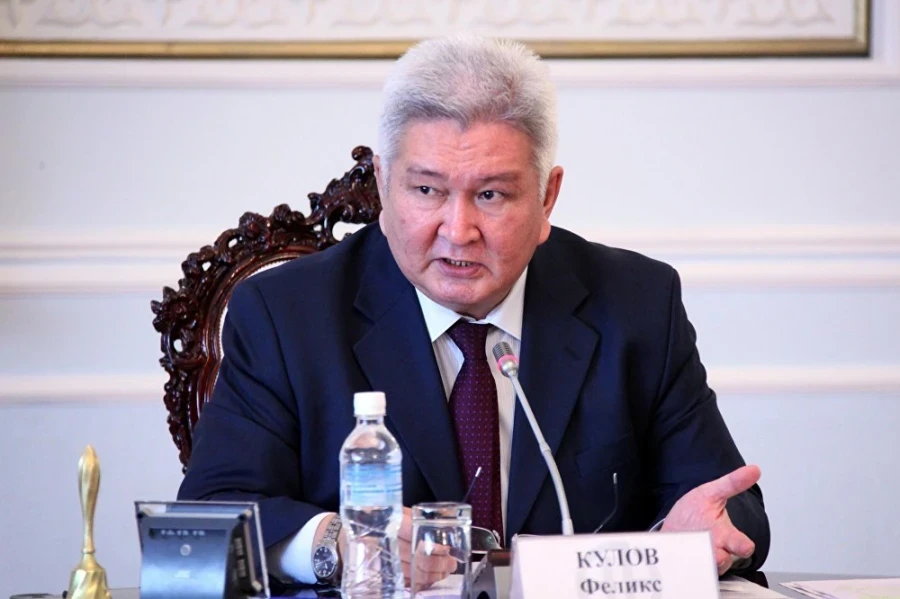
Former Prime Minister noted that the reasons for the breakup of the tandem could be quite serious
After Kamchybek Tashiev was relieved of his position as head of the security forces of Kyrgyzstan, questions arose in society about the real reasons for this decision, the future political tandem with Sadyr Japarov, and the possible consequences for the entire power system. To analyze the situation, the editorial team of Vesti.kg turned to Felix Kulov, a former prime minister who, with his extensive experience, knows how such alliances function: ten years ago, he himself was part of the well-known tandem of Bakiyev - Kulov.
- Felix Sharshenbaevich, if we set aside the official versions, what do you think could be the true reasons for Kamchybek Tashiev's dismissal: was it his personal decision, pressure, a conflict among the elites, a loss of trust, or part of a broader restructuring of power? Which version seems most plausible to you?
- As you understand, we will not be informed about the true reasons for Kamchybek Tashiev's dismissal, which is normal for decisions at this level. Nevertheless, it is clear that this was not a spontaneous decision by the president. The breakup of a tandem that had long been considered solid and repeatedly confirmed by Tashiev himself could only have occurred for very serious reasons.
This is also confirmed by subsequent decisions: the dismissal of his deputies, the reorganization of the GKNB, and the separation of the Border Service into an independent agency. All these changes indicate a systemic, rather than a personal approach to decision-making.
Without delving into conspiracy theories, one might assume that questions arose regarding the balance of powers and subordination in the "superior - subordinate" relationship. In such situations, the president, as the guarantor of the Constitution and the unity of governance, must act decisively and in advance, even when it concerns strong and influential individuals.
Thus, the decision made demonstrates not a weakening of power, but its maturity and ability to make operational adjustments in governance in the interests of the country's long-term goals, rather than the personal merits of individual officials.
- How do you see the political prospects after the dismissal: can Kamchybek Tashiev run for president, and will he become a rival to the current president?
- From a legal standpoint, Kamchybek Tashiev, like any citizen of the Kyrgyz Republic, has every right to participate in the presidential elections. However, he has repeatedly stated that he does not aspire to the presidential seat and prefers stability over personal ambitions.
Of course, the political situation can change, and theoretically, such a scenario cannot be ruled out. However, from the perspective of state approach and ensuring the country's stability, it is most important to avoid a split among the people and destabilization of the political situation. This is exactly what he himself called for when he held the position of chairman of the GKNB.
In these circumstances, the most reasonable and responsible strategy would be not to conflict with the current president, but to maintain a constructive dialogue and respect for the existing authority. This aligns with the interests of the state, the expectations of society, and the principles of state responsibility that Kamchybek Tashiev himself had previously declared.
- Given the current situation, will Tashiev risk returning to Bishkek in the near future, and are there real legal or political risks for him, including the possibility of persecution or arrest, or do you consider such discussions to be speculation?
One cannot speak of any significant risks. Kamchybek Tashiev's return to Bishkek and his further steps depend on his own decisions and chosen political line. If he does not engage in confrontational actions, there will be no grounds for persecution.
From the state's perspective, initiating pressure or forceful actions against a former high-ranking official would be impractical, as it could create unnecessary tension and negatively affect political stability. It is clear that the authorities are interested in maintaining calm and manageability, rather than actions that could strengthen political opponents.
In this context, discussions about a possible arrest or persecution can be considered speculation without real grounds.


