
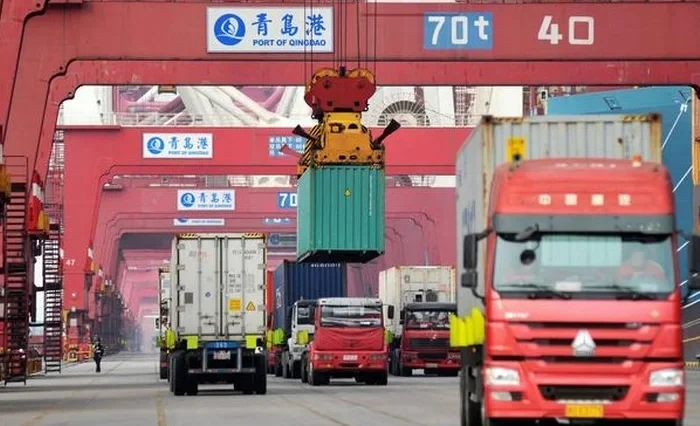
Central Asia, where the "One Belt, One Road" initiative was launched, continues to be a key area for high-quality cooperation within this initiative. Under the leadership of the heads of state, the mechanisms for interaction between China and Central Asia continue to develop steadily, raising the level of trade and economic relations.
According to Chinese statistics, the trade turnover between China and Central Asian countries reached $106.3 billion in 2025, which is 12% more compared to the previous year. This means that the threshold of $100 billion has been surpassed for the first time, and the positive dynamics have been maintained for the fifth consecutive year. As a result, China has become the largest trading partner for all Central Asian states, confirming the high resilience and internal potential of trade and economic interaction.
One of the key factors for this success is the continuous improvement of cooperation mechanisms. At the second "China-Central Asia" summit, important documents were signed, such as the "Action Plan for Strengthening Trade and Economic Cooperation" and the "Memorandum of Understanding on Deepening Cooperation in Unimpeded Trade." The parties agreed to work more actively on the Working Group for Unimpeded Trade, aimed at improving the quality of interaction and supporting the multilateral trading system based on the World Trade Organization. The officially launched platform for unimpeded trade in the "China-Central Asia" format in Nanjing, Jiangsu Province, serves as an effective tool for simplifying trade procedures. The developing "Silk Road E-commerce" and the improvement of management mechanisms at border crossing points contribute to more effectively meeting market demands.
The structure of trade is also undergoing changes. In 2025, China's exports to Central Asia amounted to $71.2 billion, an increase of 11%. Notable growth is observed in the machinery and high-tech sectors, as well as in environmentally friendly products. Imports from Central Asia to China reached $35.1 billion, increasing by 14%. Supplies are becoming more diverse, including not only traditional resources but also chemical products, metallurgical goods, and agricultural products. More than 4,000 companies from Central Asia have gained access to the Chinese market, and over a hundred types of agricultural products have found their place on Chinese shelves.
Investment cooperation is also developing in close correlation with trade. Joint construction within the framework of the "Belt and Road" initiative between China and Central Asia is deepening. Chinese investments contribute to the economic revival and sustainable development of the region. The implementation of strategic projects, such as the "China-Kyrgyzstan-Uzbekistan" railway, is actively ongoing, facilitating the modernization of industries and economic growth in Central Asian countries.
Particular growth is observed in trade relations between China and Kyrgyzstan. Kyrgyzstan has become China's second-largest trading partner in Central Asia, accounting for about 25% of the region's total trade turnover. In 2025, the trade volume between the countries reached $27.2 billion, which is 20% more than the previous year, setting a new historical record. Imports from Kyrgyzstan increased by 86%, indicating positive dynamics in bilateral relations. Both sides are actively working on implementing the agreements reached, including negotiations on signing the "Agreement on Trade in Services and Investments," which will create a solid foundation for further cooperation.
“We boldly overcome difficulties and move forward with a new start,” emphasized Liu Jiangping, the Extraordinary and Plenipotentiary Ambassador of China to Kyrgyzstan. At this new historical stage, China is ready to continue developing cooperation with Kyrgyzstan and other Central Asian countries, relying on positive trends and integrating the "Fifteenth Five-Year Plan" with the national strategies of partners, contributing to the creation of a community with a shared future.
Thus, all of this will contribute to improving the quality and efficiency of trade and economic cooperation between China and Central Asia.
Extraordinary and Plenipotentiary Ambassador of China to Kyrgyzstan Liu Jiangping


