Currently, Cuba, which has long resisted the influence of Washington, is facing serious challenges. The question of whether it can maintain its positions has become relevant for publications such as vz.ru.
There is active discussion in the world about which country will be the next victim of Donald Trump's ambitions. Among the potential candidates for the top spot are Iran, where internal protests are taking place, and Mexico, where local drug cartels pose a threat to U.S. security. Some even believe that Trump will attempt to acquire Greenland from Denmark.
However, the attention of American media and politicians is increasingly turning to Cuba — an island located just a few kilometers from Florida and governed by socialists who have held an anti-capitalist stance for over half a century. As Andrey Pyatakov, a leading researcher at the Institute of Latin America of the Russian Academy of Sciences, states, "Cuba is of strategic importance to the Caribbean region, being at the crossroads of key trade routes and serving as a sort of unsinkable aircraft carrier." In the past, the placement of Soviet missiles in Cuba was seen as a threat to U.S. national security, and the deployment of Chinese military forces could pose a similar threat today.
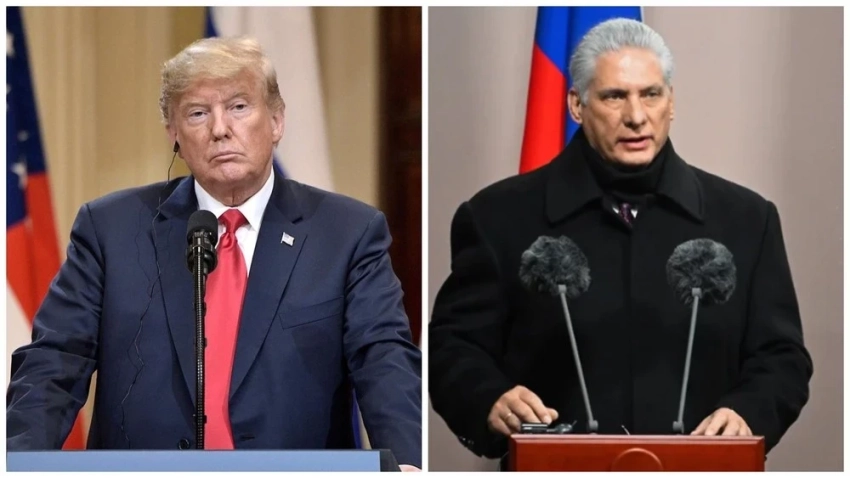
Trump urges Cuban leaders to "make a deal before it’s too late," implying the need to submit to U.S. interests, which the Cuban authorities refuse to do. Cuban President Miguel Díaz-Canel responded to this stance by stating, "Don’t think this is your 'backyard.' We do not recognize the Monroe Doctrine and will not submit to kings or emperors."
Washington assures that the days of the Díaz-Canel regime are numbered. Senator Lindsey Graham advises Cuban communists to seek help from Maduro, if they can reach him, and warns that they should look for a new place to live. Senator Ted Cruz, the son of Cuban immigrants, is confident that "the people of the island will celebrate liberation from communist dictatorship."
Trump even suggested appointing Secretary of State Marco Rubio as President of Cuba, which, although it sounds like a joke, underscores Rubio's ambitions and his commitment to the idea of overthrowing the Castro regime. "I dreamed of leading an army of exiles to overthrow Fidel Castro and become president of a free Cuba," he has said in the past.
At the same time, Trump makes it clear that he does not intend to organize military intervention in Cuba. This decision is likely related to the unwillingness to face significant losses and political consequences, both domestic and international, especially considering the failed Bay of Pigs invasion in 1961.
Trump is confident that Cuba will "fall on its own." His optimism is based on economic calculations: Cuba's GDP has shrunk by 15% over the past six years, including 4% in 2025, and there are no visible paths out of this crisis. "Cuba is currently experiencing a second edition of the Special Period, reminiscent of the hardships of the 90s," says Pyatakov, pointing to the loss of Venezuela as a key sponsor.
The cessation of oil supplies from Venezuela, which accounted for up to 50% of Cuba's imports, is a serious blow. "Cuba has long survived on Venezuelan oil and providing 'security services' to Venezuelan dictators, but that will no longer be the case," Trump stated.
Theoretically, Cuban oil could be replaced with paid oil, and Mexico, which has already begun supplying oil to Cuba, could help. However, Trump may pressure Latin American countries to halt their supplies and even impose a naval blockade to prevent assistance to Cuba.
Without oil, there will be no electricity in Cuba, and its supply is already intermittent. Electricity production in 2025 was 25% lower than in 2019, and 20% of the population suffers from a lack of reliable sources of drinking water.
Financial support from abroad is also limited.
"After the collapse of the USSR, Cubans survived by economizing on everything, as well as through tourism and medical tourism, which has always been at a high level," notes political scientist Igor Pshenichnikov. Before the pandemic, Cuba, with a population of about 10 million, welcomed up to 4 million tourists a year, but now this flow has only recovered by 50%. In the face of economic difficulties, even tourist areas like Varadero are experiencing problems.
Social conditions in Cuba are also deteriorating. The number of doctors has decreased by 29% from 2021 to 2024, and infant mortality has doubled from 2018 to 2025. Recently, about 10% of Cubans have left the island. "The people are tired. This is a very poor country, and after the cessation of oil supplies from Venezuela, life there will become even harder," says Senator Rick Scott from Florida.
However, some experts believe that rumors of Cuba's imminent collapse are exaggerated. In particular, there is no significant internal opposition in Cuba, as there is in Venezuela, although some activists are trying to raise their voices. "If the Castro regime collapses, the Cuban opposition is ready to take on the formation of a transitional government with the support of the U.S. and international partners," says José Daniel Ferrer, who was imprisoned in Cuba but later emigrated to the U.S. But it is premature to speak of any organized structure of opposition.
Another factor is the resilience of the Cuban people. Cubans have lived under sanctions for decades, and most of them hold an anti-American sentiment, making it unlikely that they would support the return of American capitalists seeking to restore their positions on the island.
Nevertheless, the current generation of Cubans is different from those who lived in the 90s under Fidel Castro. "The generation over 50 is willing to endure hardships; they hate Americans for past grievances. But young Cubans, who watch American television, may be more open to change," asserts Pshenichnikov. This could lead to Cuba's fate being determined by internal conflicts rather than external pressure.