
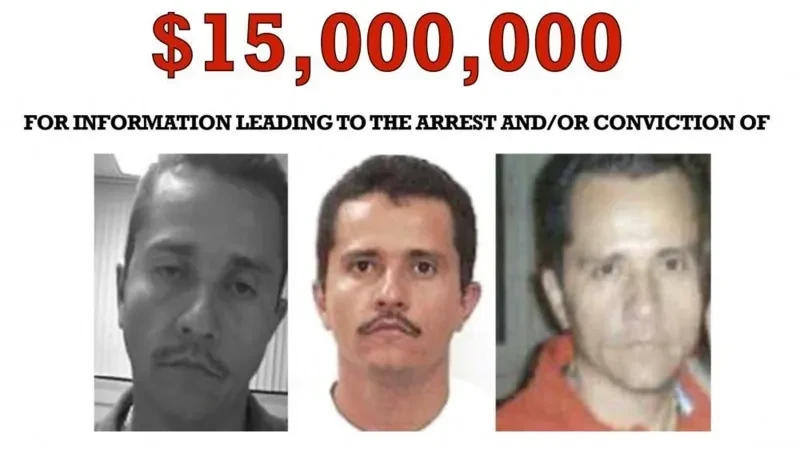
According to the Ministry of Defense, Nemesio Oseguera Cervantes, better known as "El Mencho," was killed during an operation to arrest him. He was one of Mexico's most wanted criminals and led the Jalisco New Generation Cartel (CJNG). This was reported by the BBC.
The death of 59-year-old El Mencho occurred on Sunday when he was being transported to Mexico City after sustaining serious injuries from clashes with the army and his supporters.
During the operation conducted in Tapalpa, located in central Jalisco state, four CJNG members were killed, and three soldiers were injured. The United States provided Mexico with intelligence that contributed to the successful execution of this operation.
In response to the authorities' actions, CJNG carried out arson attacks on vehicles, set up roadblocks, and attacked law enforcement in eight Mexican states.
The U.S. State Department issued a warning for citizens to stay indoors in the states of Jalisco and Tamaulipas, as well as in certain regions of Michoacán, Guerrero, and Nuevo León.
Mexican President Claudia Sheinbaum Pardo urged residents to remain calm, noting that "in most regions of the country, life continues at its usual pace."
El Mencho, who previously worked as a police officer, led a major criminal organization smuggling significant amounts of cocaine, methamphetamine, and fentanyl into the U.S. A reward of $15 million was offered for his capture.
The Mexican Ministry of Defense released a statement saying that the operation was carefully planned and conducted by special forces, with the involvement of aircraft from the Air Force and the National Guard.
During the operation, several armored vehicles and large caches of weapons, including rocket launchers, were confiscated.
Witnesses captured video of smoke rising over several cities, including Guadalajara, where the FIFA World Cup will soon take place.
In the popular tourist area of Puerto Vallarta, thousands of vacationers found themselves isolated due to the violence.
Throughout Sunday, reports emerged of armed individuals appearing on the streets of Jalisco and other regions.
Governor of Jalisco Pablo Lemus Navarro urged residents to comply with the state of emergency and stay home.
He also announced the suspension of public transportation in the state.
U.S. airlines, including United Airlines and American Airlines, as well as Air Canada, canceled flights to Puerto Vallarta and Guadalajara.
Former U.S. Ambassador to Mexico Christopher Landau described El Mencho as "one of the most brutal drug lords." He also noted that his death was a "significant event for Mexico and the entire world."
The killing of El Mencho represents an important victory for the Mexican government in its fight against drug cartels.
This could also improve relations with the U.S. president, who had previously threatened to take action against Mexican cartels.
In January of last year, President Trump stated that after attacks on drug trafficking, they would now begin to act on land, pointing to the cartels' control over Mexico.
However, President Sheinbaum emphasized that the deployment of American troops on the southern border "is not being considered." Nevertheless, if the situation is not quickly controlled, the success of the Mexican administration may be overshadowed by the cartel's retaliatory actions.
The Jalisco cartel is known for its attacks on law enforcement and government officials.
It has shot down army helicopters using grenade launchers, killed officials, and employed brutal methods to intimidate rivals, including hanging the bodies of victims from bridges.
CJNG is the largest cartel in the Mexican drug market.
Since its founding in 2010 in Jalisco state, the CJNG cartel has spread across the country.
The American DEA considers CJNG a competitor to the Sinaloa drug cartel, which operates in all 50 states of the U.S.
CJNG also plays a key role in drug supplies to the U.S., earning billions from fentanyl production.
Fentanyl mainly enters the U.S. through the Mexican border.
According to data from U.S. Customs and Border Protection (CBP), since October 2024, 9,200 pounds (4,182 kg) of fentanyl have been seized in the country.
96% of the seized fentanyl was intercepted at the southwestern border with Mexico.
Less than 1% of the drug was seized at the northern border with Canada, while the rest was delivered by sea or through other checkpoints.


