
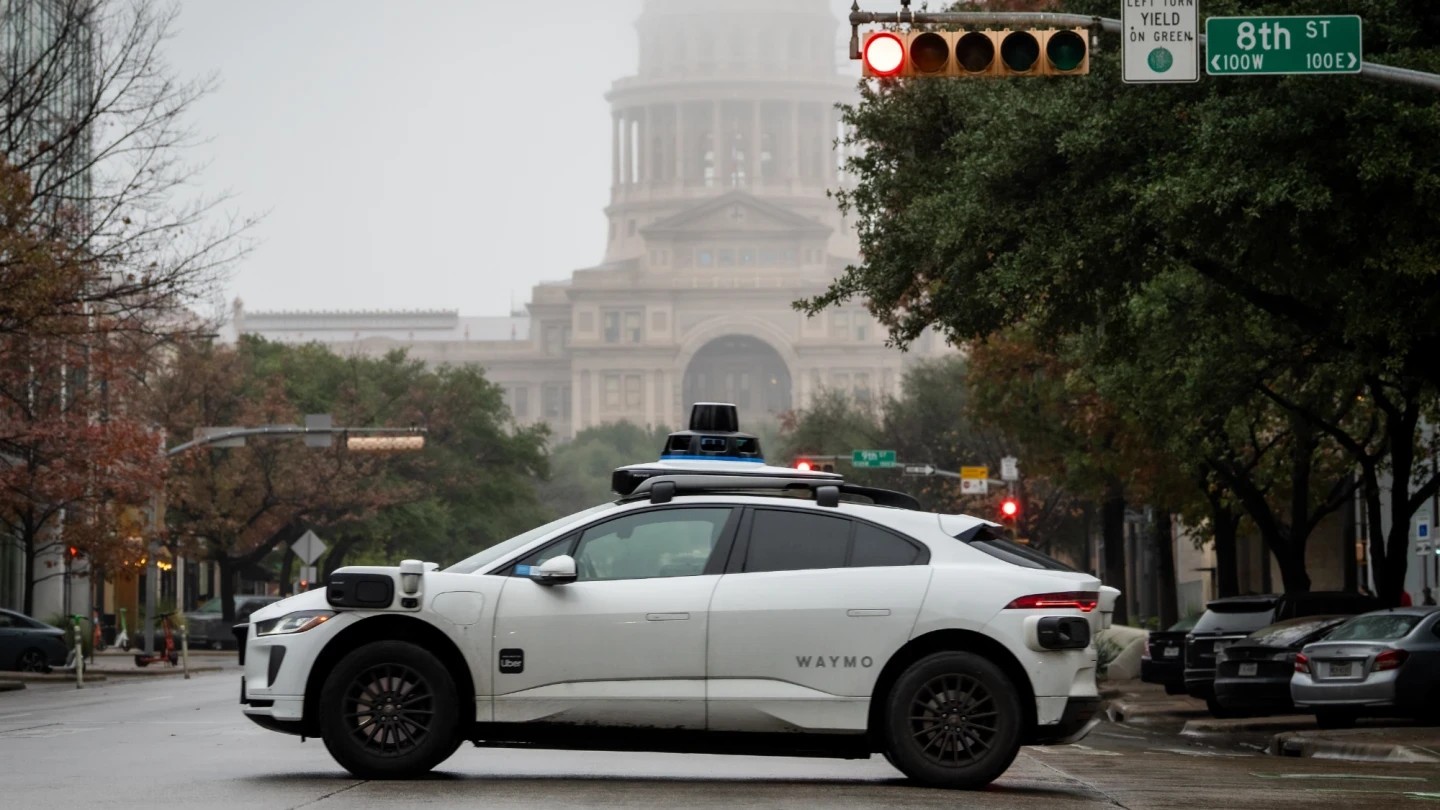
At the end of January in Santa Monica, California, a Waymo self-driving car, owned by Alphabet, was involved in an incident. While driving near an elementary school, a small child suddenly ran into the road. The car's LiDAR sensors were only able to detect him at the last moment, as he appeared from behind a parked SUV. Despite the car braking sharply and reducing its speed from 17 to 6 miles per hour, it struck the child, throwing him onto the sidewalk. Fortunately, as reported by [the source](https://www.popsci.com/technology/driverless-cars-see-around-corners/), the child sustained only minor injuries, but this is unlikely to comfort his parents, especially given the increasing number of self-driving cars on the streets.
Although Waymo was able to recognize the child at the last moment, the question arises: what if the car could "see" him in advance while being around the corner? This concept has become the basis for new research conducted by a group of engineers from the University of Pennsylvania, who have developed a sensing system that uses radio waves to detect objects hidden behind walls.
In the course of experiments, the HoloRadar system was installed on small robots and successfully recognized people located behind walls while moving around the campus. Although the research is still in its early stages, the team is confident that their sensing system can be integrated into robots, helping them better navigate their surroundings. This could be a key factor in preventing future accidents for self-driving cars.
The senior author of the study and professor of computer and information science, Minmin Zhao, commented: “Robots and autonomous vehicles need to see beyond what is directly in front of them.” He added that this is an important step toward a more complete understanding of the environment by robots.
To date, most self-driving cars, with some exceptions like Tesla, rely on a combination of cameras, radars, and LiDAR to perceive their surroundings. LiDAR systems work by emitting millions of laser pulses and measuring the time it takes for them to bounce back. This data allows for the creation of detailed three-dimensional maps of the environment.
However, LiDAR has its drawbacks. Objects like large buildings can block laser pulses, making it difficult to detect hidden objects. Therefore, Zhao and his team decided to turn to radio waves, an approach that had previously been overlooked in autonomous vehicles.
Researchers initially avoided radio signals due to their longer wavelength compared to visible light, which reduced the resolution and clarity of object detection. However, the team realized that this limitation could be an advantage when scanning LiDAR around corners.
Radio waves emitted by the robot can penetrate through small irregularities in walls, and only part of the signal passes through the barrier, while a larger portion reflects back. This creates an effect where surfaces behave like mirrors, reflecting radio signals in a predictable manner.
HoloRadar uses radio waves to detect objects around corners, allowing for the identification of people at intersections. “It’s similar to how drivers use mirrors at blind intersections,” noted co-author of the study and graduate student Haowen Lai.
To process the collected data, the team developed a two-component artificial intelligence model that first filters out unnecessary information and makes assumptions about what is hidden around the corner. The system then creates a 3D model, allowing for the visualization of objects behind the wall. The experiment confirmed the effectiveness of the system: a robot equipped with HoloRadar successfully identified hidden objects while moving around the campus, navigating three different corners.
Can the use of radio waves enhance the safety of self-driving cars?
Previously, attempts have been made in the field of robotics to solve the problem of visibility around corners, albeit with limited results. For example, in 2019, MIT used a camera on top of a self-driving car to scan shadows in order to theoretically detect an approaching vehicle. Recently, scientists from Stony Brook University applied single-photon LiDAR to detect light reflecting around corners. However, these methods rely on light waves, making them less effective in poor visibility or darkness. In contrast, HoloRadar, which uses radio waves, does not have such limitations, although researchers emphasize that it should complement existing sensing systems rather than replace them.
Self-driving cars are becoming an increasingly common sight on urban streets around the world. In the United States, accidents have already been reported, resulting in at least a dozen deaths, and this number is likely to grow as their deployment increases. The ability of autonomous vehicles to "see" through walls could be a significant step toward enhancing their safety.


