
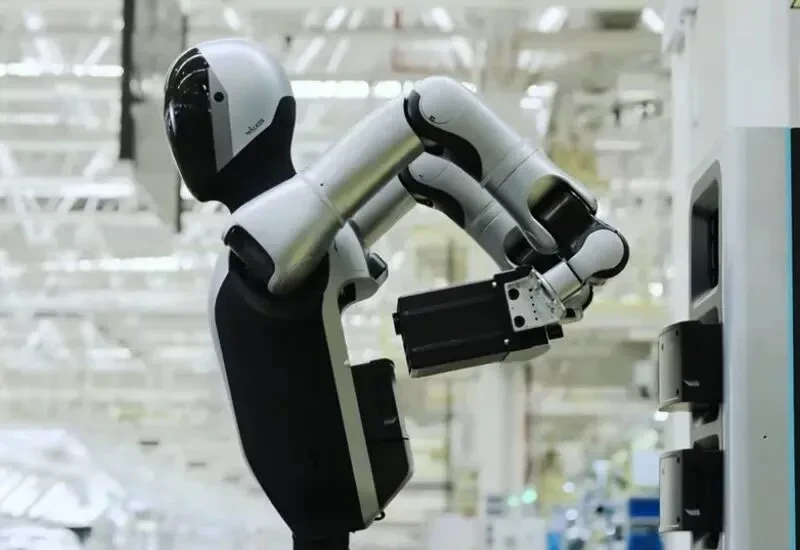
Scientists are aiming to solve a complex problem in robotics—the creation of tactile systems that go beyond simple pressure detection and provide safer and more adaptive behavior for machines. The foundation of the new sensory system is a network of flexible pressure sensors embedded in electronic skin. These sensors can convert mechanical force into electrical signals when touch, compression, or impact occurs on the surface of the skin.
In the early stages of development, these signals were transmitted directly to the robot's central processor. However, in the new system, if the force of impact exceeds a set threshold, the signal is sent directly to the motors. The key difference in this approach lies in signal processing. Instead of perceiving touch as simple pressure, the system uses neuromorphic coding based on the principles of biological nerves to convert force into rapid electrical impulses. The frequency and nature of these impulses vary depending on the intensity and location of contact.
When pressure remains within normal limits, the signals reflect ordinary interaction. However, exceeding the threshold causes a sharp change in the nature of the signal, activating protective responses. Researchers emphasize that this system is designed solely for recognizing mechanical impacts and cannot interpret emotional pain or high levels of sensory perception; it merely transmits a functional signal indicating harmful exposure.
“Our neuromorphic robotic electronic skin has a hierarchical architecture inspired by neural networks, which provides high-resolution sensory perception and active detection of pain and injuries through local reflexes,” the researchers note. “Such a device significantly enhances the sensory characteristics of robots, their safety, and intuitive interaction with humans, which is especially important for service robots capable of showing empathy.”
To evaluate the effectiveness of the system, researchers conducted a series of experiments, subjecting the electronic skin to various physical impacts—from light touches to gradually increasing loads simulating potentially dangerous contacts. These tests helped the team determine how accurately the system can identify the transition from safe contact to unsafe in real-time.
During the experiments, the sensor network consistently generated clear signal patterns, activating protective responses depending on the applied force. The system demonstrated a reaction within milliseconds, allowing for real-time responses such as withdrawing from dangerous contact or reducing applied force. Stable operation of the system was also noted during repeated cycles, indicating its durability.
These achievements are critical for the safety of human-robot interaction. As the presence of robots in everyday life increases, the ability to distinguish dangerous contacts becomes increasingly relevant, especially when performing tasks at close range, which raises the risk of accidental collisions and excessive force application.
Most existing robot safety systems are not designed for such close physical interactions. They often rely on external sensors or pre-set movement limitations. While these methods are effective, they may not be fast or flexible enough. Integrating this sensory function directly into the robot's skin allows machines to respond instantly to physical threats.
Moreover, the new technology could significantly improve performance in collaborative tasks requiring physical contact, such as working with objects and using assistive devices. Robots will be able to adjust grip and contact strength in real-time, making their interaction with fragile items more natural and safe.
This feedback could also make human-robot interaction more intuitive. Just as people instinctively adjust their touch when someone withdraws, the visible reaction of machines could help guide behavior and reduce unintentional harm.
Despite the potential benefits, this technology also raises questions about the boundaries of robot realism. While sensory capabilities enhance safety and performance, borrowing strategies from biology prompts ethical and design debates about whether machines should imitate the reactions of living beings.
Some researchers argue that robots do not need signals resembling pain, while others believe such strategies could help create adaptable and resilient machines. Finding a balance between functional advantages and the risk of encouraging unnecessary anthropomorphism remains important.
As of today, the system is in the early stages of research and is not yet ready for commercial use. Currently, the electronic skin covers only limited areas of the surface. Expanding the coverage to the entire body of a humanoid robot will require significant changes in manufacturing and improvements in energy efficiency and data processing.
In the future, research will focus on expanding coverage with sensors and increasing durability, which is necessary for transitioning the technology from laboratory conditions to real-world applications.
Original: New Atlas


