
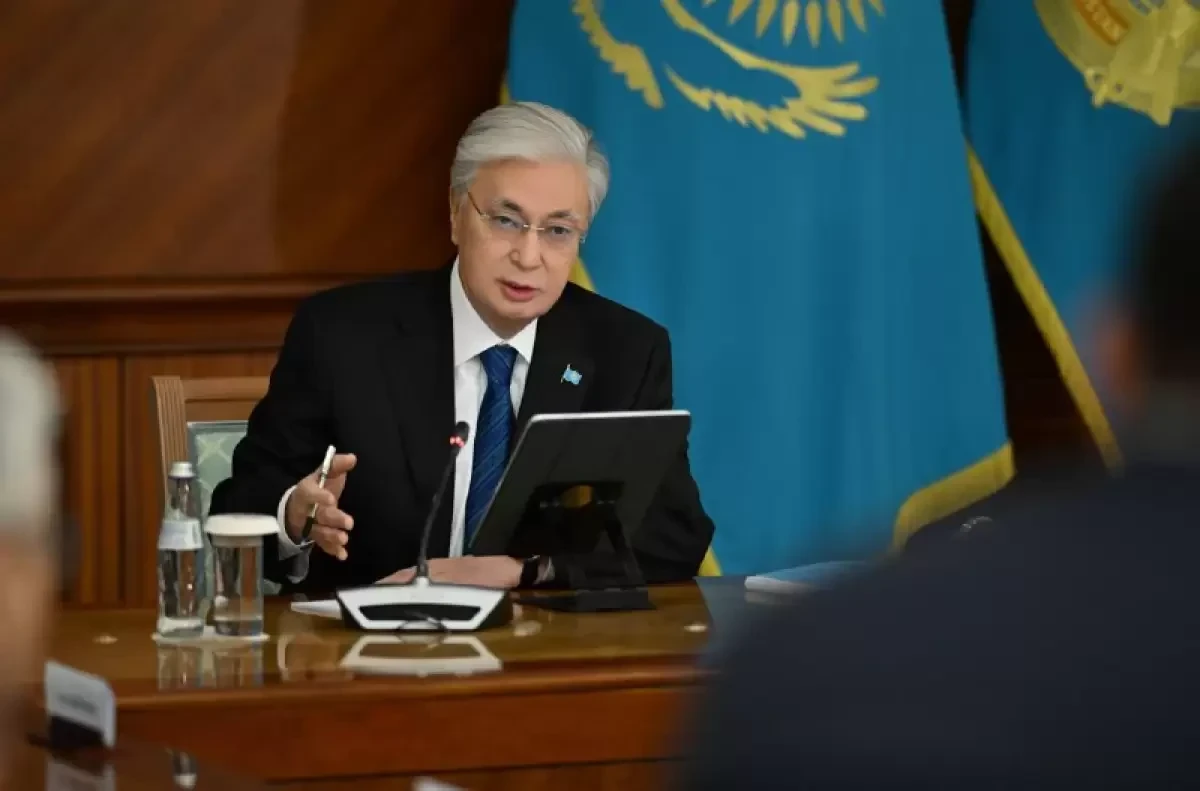
The President Tokayev announced the holding of a referendum on February 11, after reviewing the results of the Constitutional Commission's work. According to preliminary information, the text of the new Constitution has been changed by more than 80% and affects 77 articles.
In his statement, Tokayev emphasized that the adoption of amendments would create "a powerful impetus for the development of Kazakhstan and help unlock the potential of every citizen." He also noted that the political reforms of recent years demonstrate that the country is transitioning from a super-presidential form of government to a presidential republic with a strong parliament.
However, lawyers and human rights activists believe that the new draft Constitution may actually increase presidential powers and weaken other branches of government, which could lead to stricter control over citizens under the pretext of protecting national interests.
Increase in Presidential Powers
The Kazakhstan International Bureau for Human Rights and the Legal Media Center expressed their concerns about the proposed changes. The chief expert of the KMBPCH, Yevgeny Zhovtis, told the BBC that the draft Constitution has a more authoritarian and super-presidential character.
In the new version of the Constitution, according to Zhovtis, it is proposed that the president will be able to appoint numerous positions without the consent of parliament, whereas currently the appointment of the chairman of the Constitutional Court requires the consent of deputies.
Furthermore, the transition to a unicameral model of parliament will significantly reduce the powers of deputies, and the name of the parliament may change to Kurultai. The proposed changes also deprive parliament of the right to lift immunity from a number of high-ranking officials, including the Attorney General and the Chairman of the Supreme Court.
“I have serious doubts about this Constitution; in my opinion, it is worse than the current one. It is being created for the authorities, not for the people. It will also be changed in the future,” the expert added.
Restriction of Freedom of Speech
Elvira Azimova, head of the constitutional commission, during a meeting with Tokayev, stated that the new Constitution was prepared based on proposals from citizens and experts. However, human rights activists expressed dissatisfaction due to the lack of their involvement in the amendment development process.
The Legal Media Center noted that the new Article 23 of the Constitution contains vague formulations, which could lead to restrictions on freedom of speech and pressure on the media.
“These changes could be used to limit criticism of government officials, while modern constitutional development requires ensuring public interest and the right to access important information,” human rights activists emphasized.
The supremacy of the Constitution over international treaties was also declared on February 3 at a meeting of the constitutional commission. Majilis deputy Murat Abenov noted that the fulfillment of international obligations must take into account Kazakhstan's sovereignty.
KMBPCH expert Zhovtis clarified that this way international law will lose priority over Kazakh legislation.
Status of the Russian Language
Previously, there were rumors in the press that the new draft Constitution lowers the status of the Russian language. According to Zhovtis, there has been no change in status; only the wording was changed from "on par" to "alongside."
According to the current version of the Constitution, the Russian language, alongside Kazakh, is used in state bodies, and the new wording does not change the existing practice. Thus, the Russian language remains unofficial, as it has been before.


