
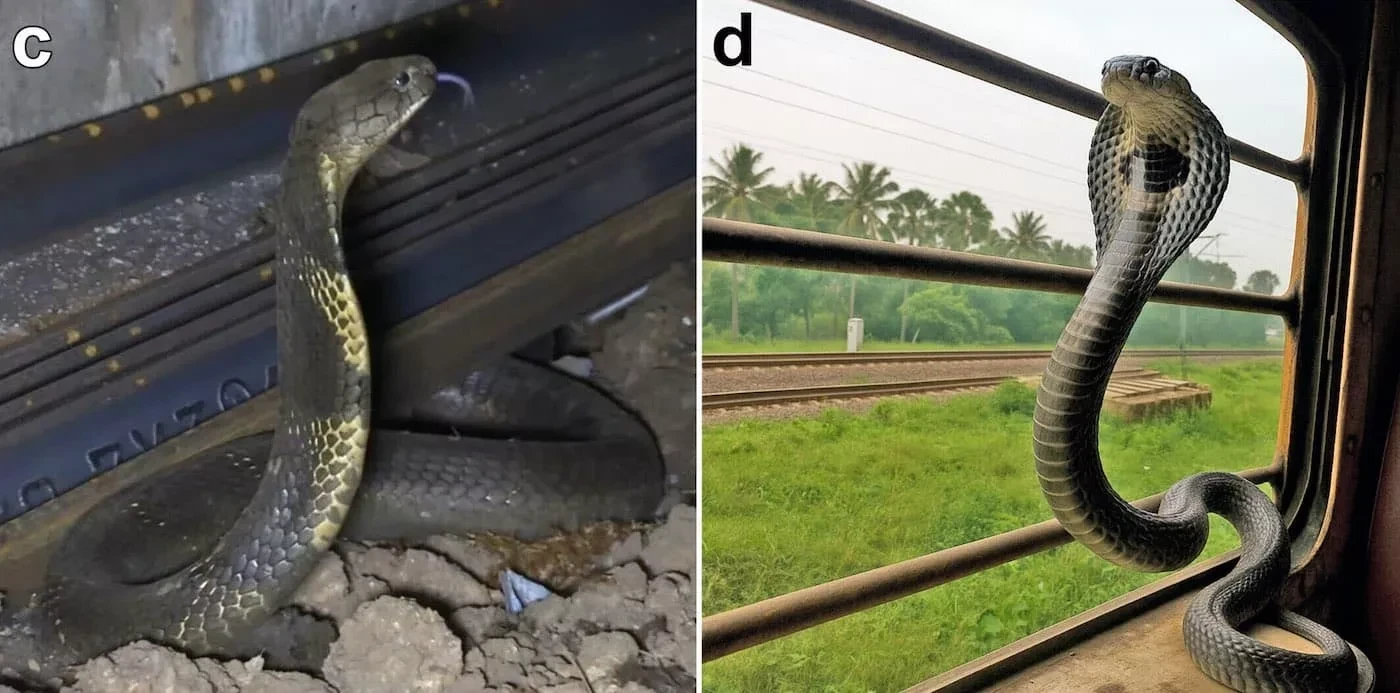
This species of snake, known for its sensitivity to climate, requires low temperatures, high humidity, and dense vegetation for survival. It was previously believed that their range was strictly limited to mountain chains, as lowlands present dangerous conditions for them. However, in the last 20 years, locals have increasingly found these large snakes in port cities and at railway stations, far from their usual habitat.
Researchers from India and the UK decided to analyze how this vulnerable species ends up in unfavorable ecosystems. Typically, roads and infrastructure serve as barriers for animals, but in this case, the transportation network turned out to be a link between isolated patches of wilderness and populated areas. The results of the study were published in the journal Biotropica.
During their work, the team examined archival data from the ARSG animal rescue service from 2002 to 2024, including 47 confirmed cases of royal cobras with precise geolocations. Using the MaxEnt algorithm, the scientists created a habitat suitability map based on climate data and satellite images of vegetation.
The model showed that cobras should inhabit the forests of the interior regions of the state. However, over 10% of the detected cases (five out of 47) occurred in "red zones," where the likelihood of the species' survival is extremely low. Statistical tests confirmed that conditions in these locations differ significantly from the norm. All abnormal locations were within 200-330 meters of railway tracks.
The scientists reconstructed the mechanism by which snakes end up on railways. In mountainous areas like Castle Rock, railway tracks run through dense forests. Snakes may climb into freight trains in search of shelter or food, and when the train departs, they find themselves trapped, traveling 80-120 kilometers and ending up on the coast or in industrial areas.
Direct observations support the hypothesis: one of the "passengers" was found at Chandor station, and in another case, witnesses photographed a royal cobra crawling along the window of a passenger car.
This study documents a new type of interaction between humans and wildlife that can be termed "passive anthropogenic dispersion" of large predators. Although the sample of five cases may seem small, for a secretive and rare species, it represents a significant portion of the population that regularly falls into "death traps." The scientists note that while the evidence remains correlational (radio collars have not yet been placed on the snakes), there are no alternative explanations for the appearance of forest endemics in dry port areas.
The discovery raises concerns. Firstly, the transported snakes are likely to die due to a lack of moisture and familiar food. Secondly, this increases the risk for humans: a bite from O. kaalinga can be fatal, and local hospitals typically lack antivenom for this species.
The authors of the study proposed an unusual solution: not just to "monitor" the situation, but to use genetic analysis of snakes caught in cities to determine their "native" populations and return them to the forest, which would help prevent genetic pollution and the death of rare individuals.


