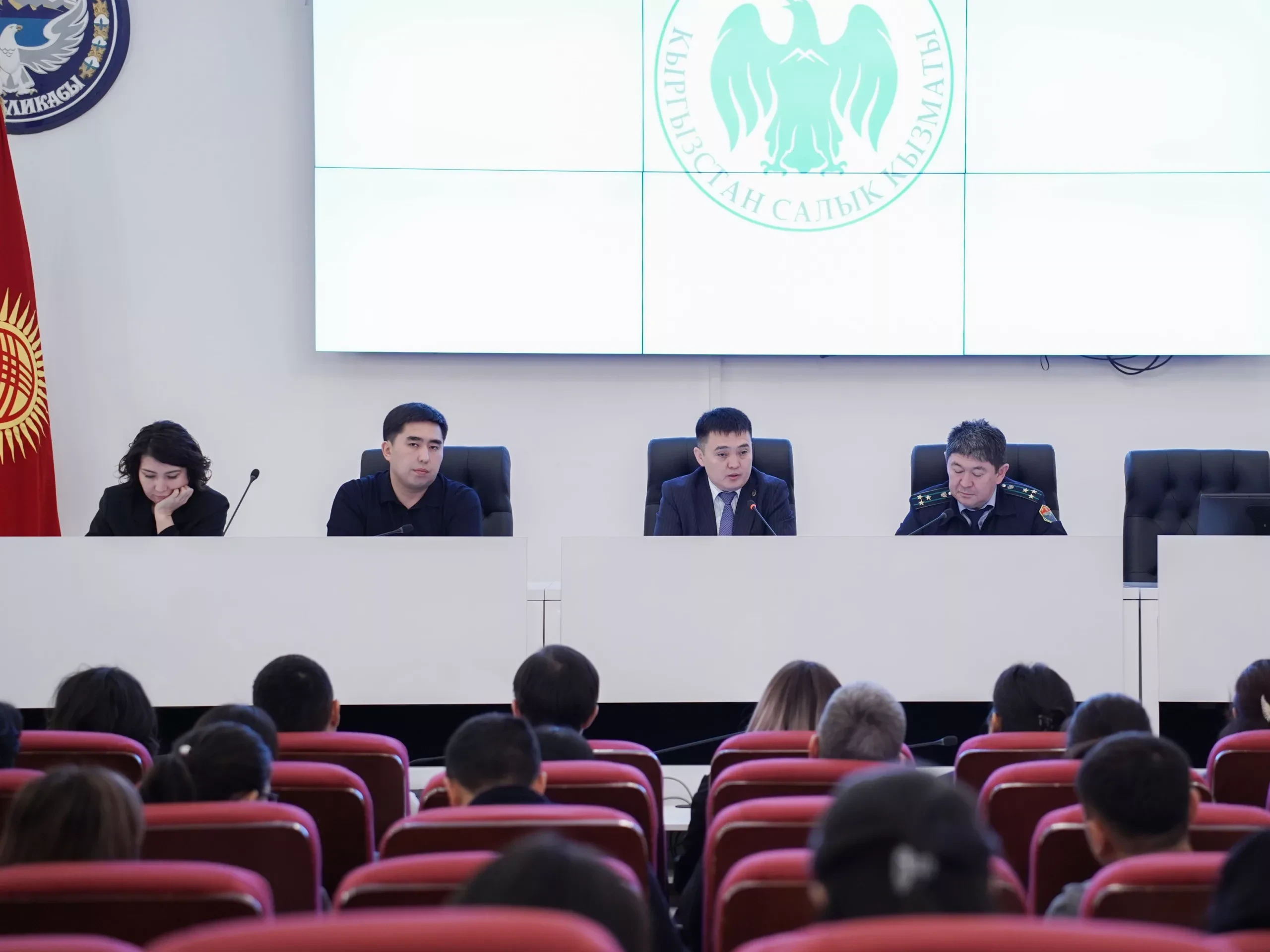
Recently, a meeting was held in Kyrgyzstan organized by the State Tax Service, dedicated to the issues of implementing cashless payments in the business sector.
Key figures participated in the discussion, including the Deputy Chairman of the STS Azat Almanbetov, as well as representatives from the National Bank of Kyrgyzstan, the Interbank Processing Center, the Union of Banks, and various commercial banks.
The meeting addressed current problems faced by entrepreneurs when contacting the STS. The focus was on issues related to the use of business wallets, POS terminals, bank accounts, cards, and QR payments.
Among the topics raised were commissions for cashless payments, delays in crediting funds to entrepreneurs' accounts, lack of information about the payer in bank statements for receipts through QR codes, as well as excessive requirements and procedures from some banks that complicate business operations.
In response to these challenges, STS representatives proposed a number of specific actions and changes:
- Consider reducing the commission for entrepreneurs when making cashless payments;
- Develop technical solutions for expedited fund crediting and increasing the transparency of payment information;
- Utilize existing electronic services of the STS for verifying the registration of entrepreneurs without the need for paper documents;
- Initiate changes in legislation aimed at simplifying the procedures for opening bank accounts;
- Explore the possibility of amending banking legislation to allow the use of personal wallets for entrepreneurial activities in the context of the digital economy.
It is important to note that the development of the digital economy and support for cashless payments must go hand in hand with the creation of convenient, fast, and transparent services for entrepreneurs, avoiding additional barriers.
As a result of the meeting, specific tasks were outlined for the banking sector and regulators to address the identified problems. Representatives of the National Bank and commercial banks expressed their readiness to consider these issues and take necessary measures within their competence.
The State Tax Service will continue its systematic work to protect the interests of entrepreneurs and improve conditions for doing business in the context of digitalization.