
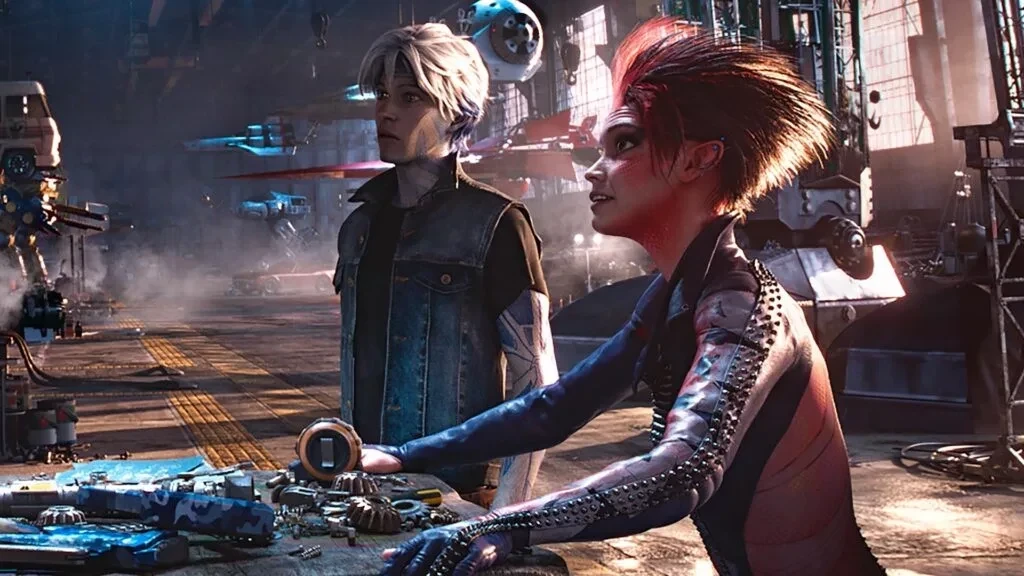
Kiara Nyrgin, co-founder of Chima, a research lab in applied AI, often reflects on the concept of "world models" — AI systems capable of creating interactive and dynamic environments based on simple prompts. For example, Google DeepMind's Genie 3 can create a three-dimensional world based solely on a single phrase. At the same time, Fei-Fei Li from World Labs is working on large world models that endow AI with the ability to perceive and generate three-dimensional spaces, possessing "spatial intelligence."
These technologies open up astonishing possibilities: we can create and explore any worlds — from historical locations to fantastical landscapes. How will this affect Generation Z, who have grown up with gadgets in their hands and short attention spans? What will happen when technologies begin to require deep concentration from us?
World Models: What Are They?
Large language models, like those powering chatbots such as ChatGPT, are trained on vast amounts of text data. World models, on the other hand, focus on modeling physical laws, the properties of objects, and the dynamics of interactions. For instance, with Genie 3, you can provide a description: "A helicopter pilot maneuvers over a cliff with a waterfall," and then control the helicopter in the created environment, much like in a video game. This allows participants to explore historical sites like the Palace of Knossos or even model natural disasters, creating more complex and engaging scenarios.
World Labs takes a different approach, emphasizing spatial intelligence to create AI that can not only generate but also understand three-dimensional spaces. Their models are designed to be intuitive and easily manageable, allowing users to export created worlds to game engines or VR applications. This opens up opportunities for active participation in content creation rather than just consumption.
By the end of 2025, we saw numerous announcements confirming changes in the AI field aimed at world modeling. Yann LeCun, a pioneer in AI, announced a new startup, AMI Labs, valued at over $3.5 billion. Additionally, Runway introduced a new family of world models for robotics and gaming. New startups like Iconic have already attracted investments to develop AI-based game engines capable of creating "living adaptive worlds."
The pace of development of this technology is impressive. In December 2025, Ryo Lu from Cursor, a startup valued at around $30 billion, shared how a full city simulator, IsoCity, complete with pedestrians and cars, was created in just three days. Such achievements seemed impossible just a few years ago.
World models require users to engage more deeply than current forms of entertainment. We won't be able to simply browse models; we will need to actively explore our surroundings, create mental maps, and make conscious decisions — this is the complete opposite of the quick content offered by TikTok. This is a return to deep immersion, familiar to many from games like Minecraft and The Legend of Zelda, which encourage curiosity and attention.
The Attention Paradox
Interestingly, the modern view of youth attention is paradoxical. It is believed that members of Generation Z cannot focus for more than a few seconds. Research shows that constant consumption of short videos can impair concentration and develop a habit of instant gratification. Some studies even link TikTok usage to attention deficit.
However, as a 2022 McKinsey report points out, the myth of Generation Z's eight-second attention span is not accurate. It's not that young people are incapable of focusing; rather, they choose what to direct their attention toward. In a world of endless content, they have become skilled explorers who can filter out the unnecessary and find what is truly interesting. When they find something meaningful, they are willing to invest time in it. The report also shows that Generation Z is contributing to a resurgence of interest in books, especially among youth, and actively consumes video content, including documentaries and streams.
The recent launch of Sora — a video creation app from OpenAI — confirms this contradiction. Sora garnered over a million downloads in less than five days, outpacing ChatGPT in growth rate, even with invite-only access. Intriguingly, Sora is a social platform where users view AI-generated videos, including memes and content that critics label as "AI-generated junk." It's a sort of TikTok, but with content created by artificial intelligence, indicating that even with access to powerful generation tools, users prefer to continue consuming content in familiar formats.
This raises interesting questions about world modeling. If developers can integrate complex AI-generated video into familiar formats, how will Generation Z interact with more thoughtful exploration processes? The rapid growth of Sora shows that AI tools that align with existing consumption habits are in demand; however, the question remains whether world models are necessary for success.
Three Potential Scenarios
I outline three potential scenarios for the development of this field, each of which will impact the cognitive and creative development of youth.
Cognitive Renaissance. Generation Z perceives world modeling as a new form of creative expression and learning that opens new horizons for game creation, filmmaking, and historical exploration. This generation is becoming creators of worlds rather than mere consumers of content. The rising trend of the "creator economy" and the popularity of games like Minecraft and Roblox confirm that youth are actively engaged in content creation.
The Great Rejection. Young people may find world models too slow and complex. The instant gratification from platforms like TikTok may distract them, and modeling could become a niche activity for a narrow audience of professionals unable to capture mass attention. In this scenario, the dopamine loops of social media could overshadow even the most innovative technologies.
Hybrid Future. Most likely, there will be a third scenario in which the younger generation does not choose between short content and world models but integrates both approaches. Short content will provide entertainment and social interactions, while world models will be used for education, creative expression, and professional growth. We will learn to switch between superficial and deep content consumption.
These reflections raise questions about how the benefits of using world models will be distributed. Those with time and resources may reap significant rewards in spatial thinking and problem-solving. The question is not whether world models are good, but that different modes of interaction lead to different cognitive outcomes, and we must consider the potential emergence of a new digital divide.
Freedom of Action and Ownership Rights
With the development of increasingly immersive and sustainable worlds created by AI, as well as the introduction of humanoid agents, new questions arise regarding ownership rights and control over digital experiences.
Consider what companies like Iconic are creating: living adaptive worlds where AI agents retain memory and evolve over time. These worlds are designed to feel alive and respond to users. The potential applications of these models are vast — from education to entertainment — but they challenge the relationships between users and the digital environment: when the most important experiences for youth occur on platforms owned by companies, what does this mean for their autonomy and freedom of action? How does the expectation of real relationships change when AI agents are programmed for ideal responsiveness and infinite patience?
There are no straightforward answers to these questions, but they are worth discussing, especially considering that AI experts predict that "world models will become the dominant AI architectures" in the next three to five years. If this is the case, we are witnessing not just a new technology but a fundamental shift in how people interact with the digital space and possibly with reality itself.
Ultimately, the impact of virtual worlds on youth will depend on how we choose to engage with them. We can view them as tools for learning and creativity, using them to develop new skills and explore opportunities. We can consciously acknowledge their shortcomings and strive to minimize them, considering the potential displacement of real experiences. Or we can choose the path of least resistance and immerse ourselves in worlds created by others.
Source


