
The Myth of All-Wheel Drive Safety
When purchasing a car with all-wheel drive, many drivers believe they can handle all winter challenges. The ease with which the car starts moving on an icy surface creates a false sense of confidence. However, this is just the beginning, and the problem arises when braking.
Braking and Its Limitations
During deceleration, the situation does not change. The brake pads of all cars, regardless of the type of drive, function the same way. On ice, traction remains unchanged, and no technology can deceive this fact. Research conducted by the American IIHS Institute shows that all-wheel drive vehicles are involved in accidents as often, and sometimes more frequently, than front-wheel drive vehicles. This is because owners of all-wheel drive cars often find themselves in situations they could have avoided.
Tests conducted by Consumer Reports have shown that the braking distance of all-wheel drive and front-wheel drive vehicles is virtually the same, confirming that technology cannot replace common sense.
Driver Psychology and Its Consequences
The main problem lies not only in the car's design but also in drivers' perceptions. Behind the wheel of a crossover, many feel almost invincible due to the high seating position and all-wheel drive. This leads to minor but dangerous deviations in road behavior—speeding and reducing following distances.
Research from the Georgia Institute of Technology has shown that owners of all-wheel drive vehicles are more likely to exceed the speed limit by 8-12% in poor weather conditions. This results in unexpected and dangerous situations where drivers end up in ditches, bewildered as to why their vehicle failed to perform.
Comparison with Simple Cars
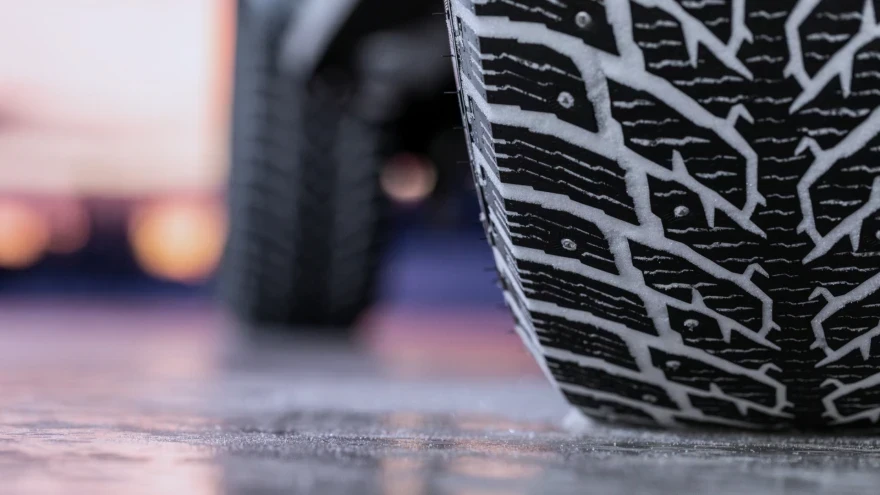
Interestingly, a driver of an old Almera on studded tires may calmly pass where a crossover gets stuck in the snow. This happens not because his car is better, but because he takes the conditions into account and does not try to prove his strength on the road.
Crossovers Are Not SUVs
There is also a common misconception that crossovers, due to their imposing appearance, are true SUVs. In reality, they are regular passenger cars with slightly increased ground clearance and some additional features. Comparisons conducted by the magazine "Avtorevyu" show that crossovers even lag behind older SUVs in challenging conditions.
The Importance of Tires
Another issue is the low-profile tires that many crossovers use. Although they look attractive, such tires can be useless on loose snow due to their small contact patch. As tests by ADAC and other organizations show, the quality of tires is significantly more important than the type of drive. Front-wheel drive on good winter tires performs better than all-wheel drive on ineffective tires.
All-wheel drive certainly helps in some situations, such as driving on snowy slopes or getting out of unplowed yards. However, when drivers start to think that it allows them to ignore the laws of physics, serious risks arise. Ice remains slippery for everyone, and inertia will not change if a driver cannot stop in time before a suddenly appearing obstacle.
Experienced drivers understand this and take it into account.


