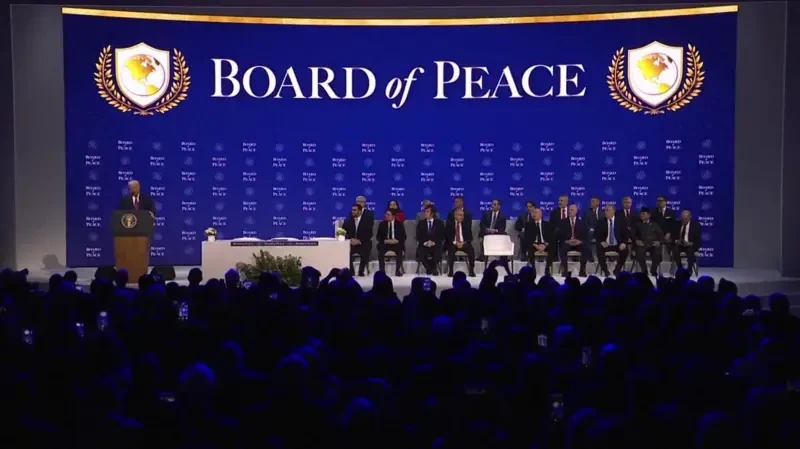
Trump's initiative, launched at the forum, is already sparking debates about its true intentions and consequences. Despite criticism, it has become the most significant attempt to revise the world order established after World War II. Unlike the long-standing attacks on the UN, Trump has proposed a concept that may potentially rival this institution.
The World Council was initially conceived as a means to aid the recovery of the Gaza Strip following the devastating attacks by Israel, triggered by Hamas's aggression in October 2023. In November of last year, UN Security Council Resolution 2803 granted Trump the authority to lead this initiative. However, he quickly expanded its scope, addressing issues of security and peace on a global level, which led to accusations of attempting to undermine the authority of the Security Council itself.
In anticipation of criticism from BRICS, proclaimed defenders of the Global South, many of its members either supported Trump or chose to remain on the sidelines instead. This came as a surprise to those expecting active resistance from these countries.
The World Council, led by Trump, wields significant executive power. He controls the composition of the group and has veto power over its decisions, holding this position on a permanent basis. Membership in the council is divided into regular, for a term of three years, and permanent, which can be acquired for $1 billion.
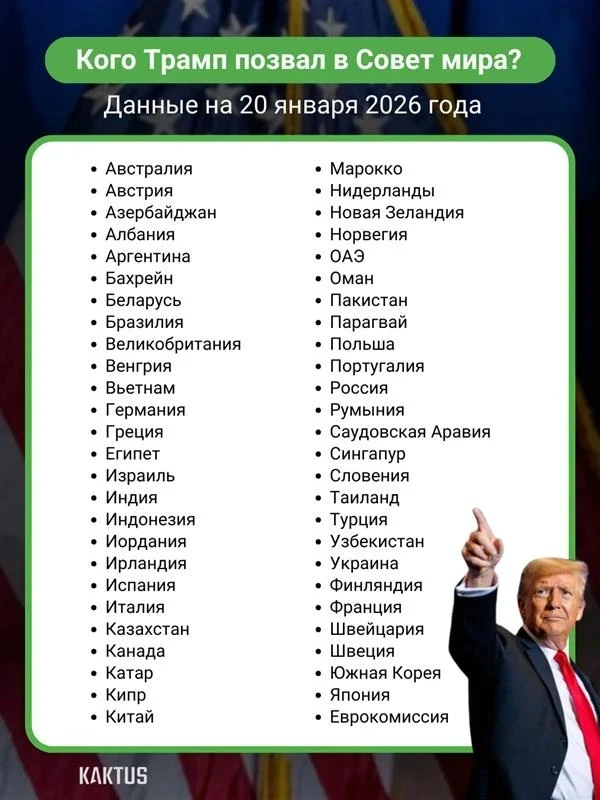
At the outset, Trump invited around 60 countries, of which about 25, including Indonesia, Saudi Arabia, and Egypt, joined his initiative. Several European countries, such as Hungary and Bulgaria, also aligned with the Council. Notably, Egypt and Indonesia's participation is significant, as they recently became members of BRICS+.
While South Africa, as a founding member of BRICS, did not receive an invitation, Brazilian President Luiz Inácio Lula da Silva rejected Trump's proposal, calling it an attempt to create a new version of the UN where Trump would be the sole ruler. He called for coordination of actions within BRICS, warning of the risks associated with Trump's initiative.
China, for its part, limited itself to formal criticism, avoiding confrontation with Trump. A spokesperson for the Chinese Foreign Ministry expressed support for an international system based on the UN, reflecting Beijing's cautious approach amid tariff pressures and anticipated trade negotiations.
India also exhibited caution, neither accepting nor rejecting the invitation. The government did not want to exacerbate relations with Trump, considering numerous issues, including tariffs and interference in the conflict with Pakistan. Prime Minister Narendra Modi understood that the expanded mandate of the Council could pose a threat to India.
Russia, for its part, also showed restraint. President Vladimir Putin stated the need to study the proposal and consult with partners, while suggesting the contribution of $1 billion in frozen assets to the new Council, which appeared more like a simulation of interest.
The accession of Belarus to the Council was unexpected, and it is unclear whether this decision was coordinated with the Kremlin. Vietnam, another surprising participant, seeks to avoid tariff pressures from the US despite its close ties with Russia and China.
Among American allies in Asia, such as Japan and Australia, there is a sense of caution. However, Indonesia, previously regarded as a leader of the Non-Aligned Movement, actively supported the Council. President Prabowo Subianto justified participation in the initiative by the necessity to restore peace in Gaza and engage with Israel.
Indonesia's shift reflects a broader trend in the Islamic world, where in September 2025, several countries, including Saudi Arabia and Turkey, recognized the importance of cooperation with Trump to achieve peace.
This declaration legitimizes US-led initiatives and paved the way for the approval of UN Security Council Resolution 2803, which empowered Trump to coordinate peacekeeping actions in Gaza. Although the resolution was temporary, it effectively transferred key functions of the UN to one individual.
The resolution was adopted unanimously, although Russia and China abstained from voting. The UK and France supported the document, but neither country signed the Council's charter in Davos, indicating an underestimation of the implications of this step.
Non-permanent members of the Security Council also supported the resolution, citing humanitarian reasons. This event may go down in history as the first instance where the Council effectively transferred its powers to an individual.
Thus, the question arises: will this mark the end of the Security Council? Trump's mandate expires at the end of 2027, and its extension could be blocked by Russia and China. However, by that time, the World Council may gain its own institutional strength and legitimacy.
One thing is now clear: the myth of a unified Global South opposing the US has been debunked. The BRICS wall, once considered a bastion against American hegemony, is now under threat of collapse, revealing the fragility of international political structures.