In anticipation of Orozo Ait and Nowruz, the team of Kaktus.media analyzed how much it costs to prepare pilaf in different regions of the country and how its prices have changed over the past year.
Pilaf Prices: Annual Analysis
In conducting the analysis, we focused on the cost of the main ingredients — rice, beef, carrots, onions, and vegetable oil. The results showed that only one of the five products, namely rice, has decreased in price over the year. Meanwhile, prices for the other components of pilaf have significantly increased.For the second consecutive year, the issues of rising meat prices are actively discussed in the country. A comparison of beef prices in March of this year with the same period last year shows that it has increased by 91 soms, which has offset the slight decrease in rice prices.
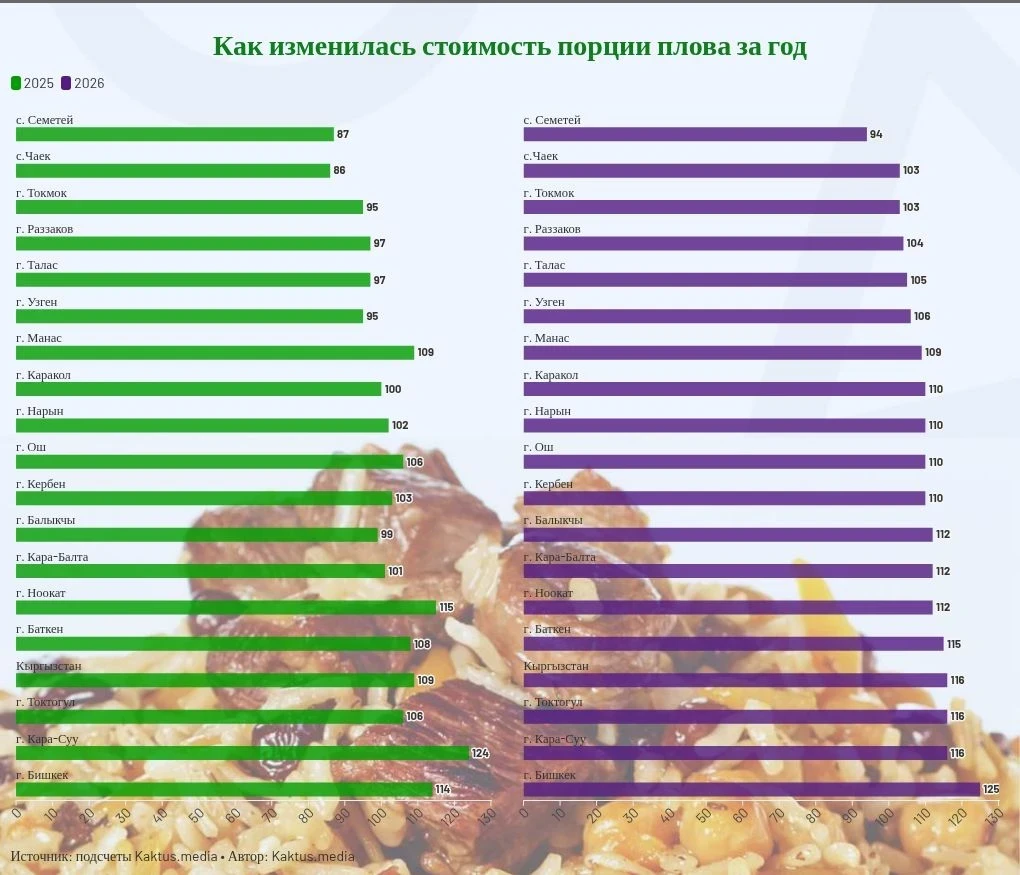
Currently, the highest price for pilaf is recorded in Bishkek — 125 soms, while in the village of Semetey, a serving costs 94 soms, making it the most affordable option. This is the only village where the price is below 100 soms, while in other settlements, pilaf is more expensive.
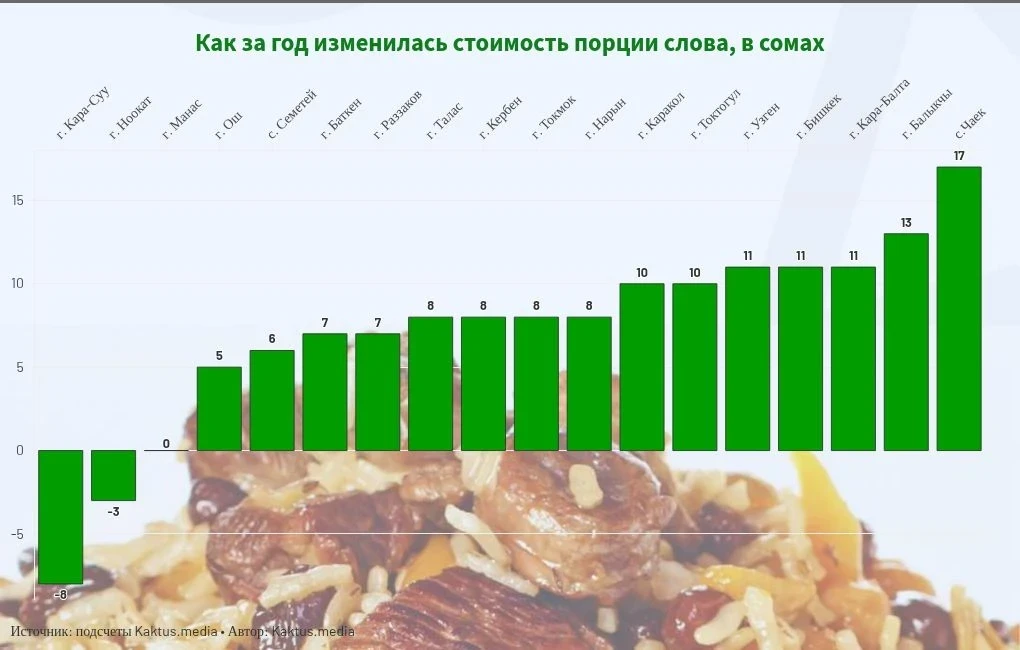
Compared to last year, the average cost of a serving of pilaf in the country has increased by 7 soms — from 109 to 116 soms. The biggest increase in pilaf prices was in the village of Chayek, where the increase was nearly 20%. In Kara-Suu and Nookat, the price slightly decreased, while in Manas it remained at the same level.
Price Comparison of Pilaf in Central Asia
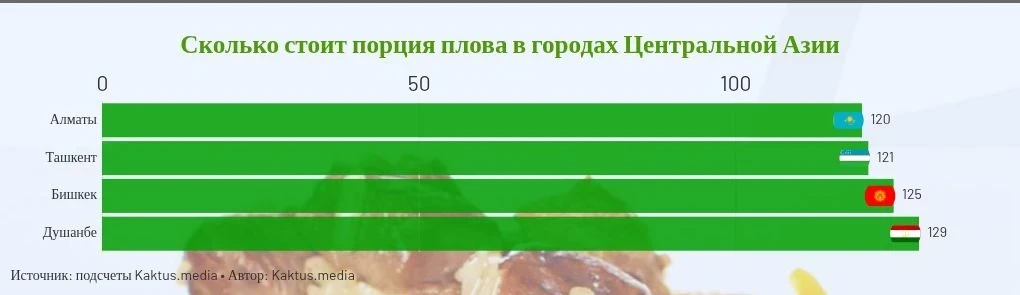
We also decided to find out how much a serving of pilaf costs in our neighboring countries. For this, data from National Statistical Committees and open sources of information on prices for rice, beef, carrots, onions, and vegetable oil in Tashkent, Almaty, and Dushanbe were used.