
A meeting was held at the Antimonopoly Regulation Service of Kyrgyzstan with representatives of major oil traders, including: the Public Association "Association of Oil Traders of Kyrgyzstan," the Public Association "Alliance of Entrepreneurs," LLC "SHNOS," LLC "Alpha Oil," LLC "Munai Prom," LLC "Partner Neft," and JSC "RN-Kyrgyznefteprodukt."
Participants discussed reserves, price situation, and stability of fuel supplies to the domestic market.
According to the antimonopoly service, fuel supplies are being carried out according to plan, there are no disruptions, and fuel reserves in the country are sufficient for two months.In January, prices for gasoline and diesel decreased to 3 soms per liter, and current price changes are limited and depend on wholesale prices from Russian refineries.
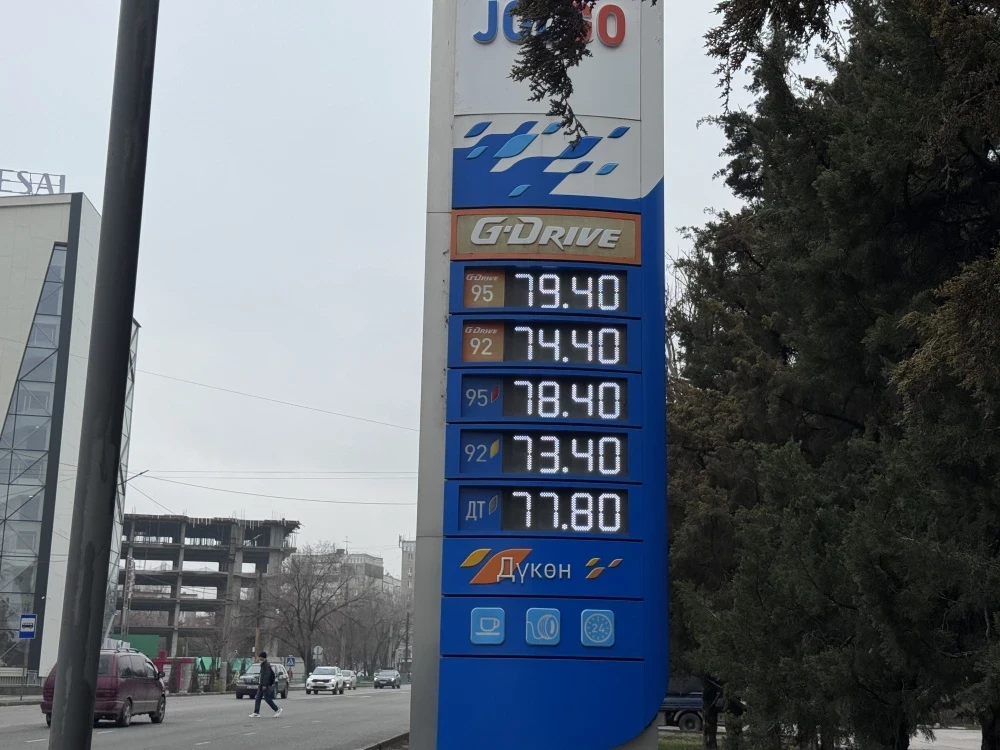
Fuel prices in Bishkek in March 2026.
“Geopolitical tensions persist; however, the antimonopoly service is monitoring the situation in the fuel market, which does not negatively affect the domestic market of Kyrgyzstan in the near term. Duty-free supplies of petroleum products are carried out under an intergovernmental agreement between the ministries of energy of Kyrgyzstan and Russia, which contributes to the stability of supply volumes and protects the domestic market from external risks. The service regularly monitors the price situation in the fuel market,” emphasized the state antimonopoly service.
As a result of the meeting, oil traders were recommended to control prices and maintain sufficient fuel reserves to avoid shortages in the domestic market.
Price Fluctuations
It should be noted that the majority of fuel entering the country is imported - over 80% of gasoline and diesel comes from Russia and Kazakhstan, making domestic prices sensitive to changes in these markets.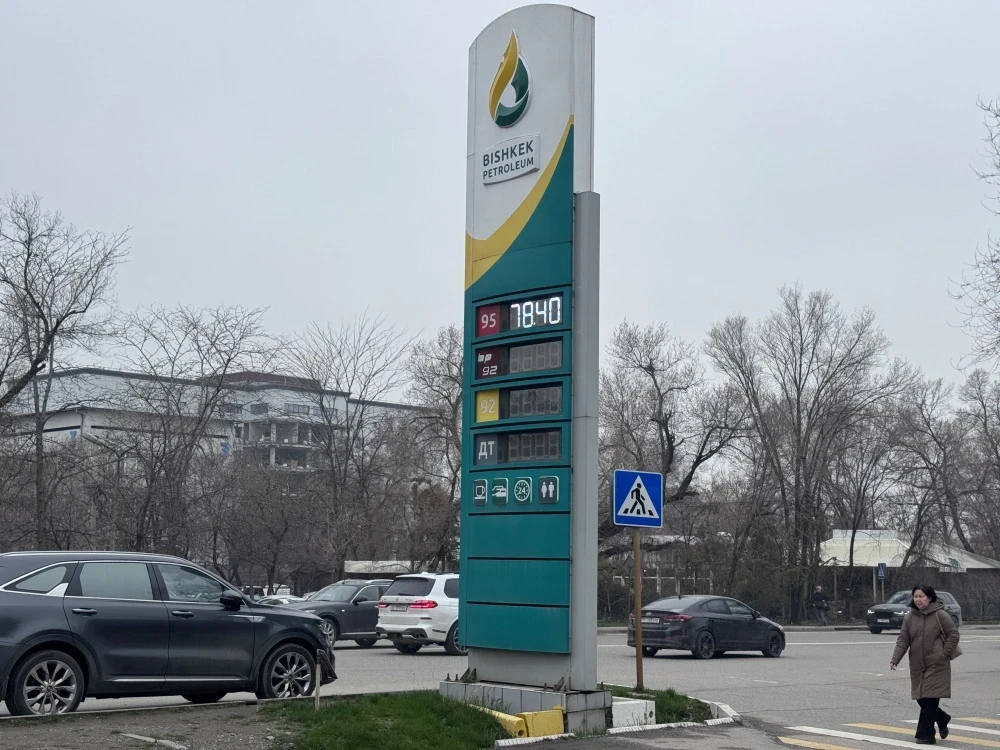
In 2025, there was an increase in fuel prices: gasoline rose by an average of 15%, and diesel by more than 11%. The main reasons for the increase included repairs at oil refineries in Russia, geopolitical instability, and increased demand for fuel.
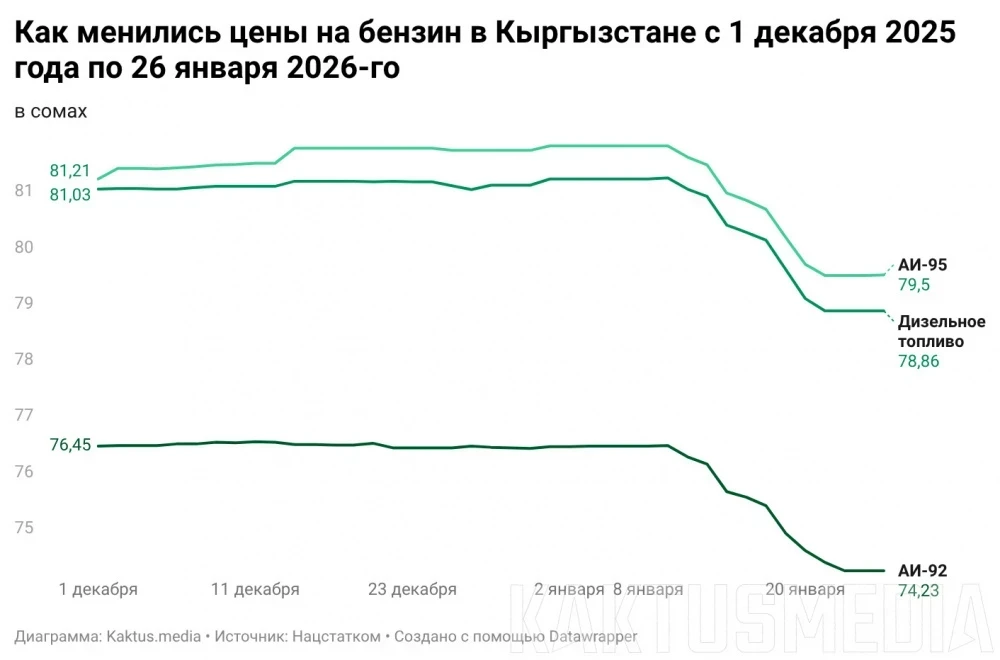
However, at the beginning of 2026, a slight decrease in prices was recorded.
According to data from the National Statistics Committee, in January, the price of AI-92 gasoline was about 74 soms per liter, AI-95 was about 79 soms, and diesel was 78-79 soms. The decrease in prices was approximately 2-3 soms per liter, related to adjustments in wholesale prices and seasonal declines in demand.
Fuel Prices in Bishkek
As of today, the price of AI-92 gasoline is 74.4 soms per liter. AI-95 gasoline costs 79.4 soms, and diesel has slightly decreased to 77.8 soms.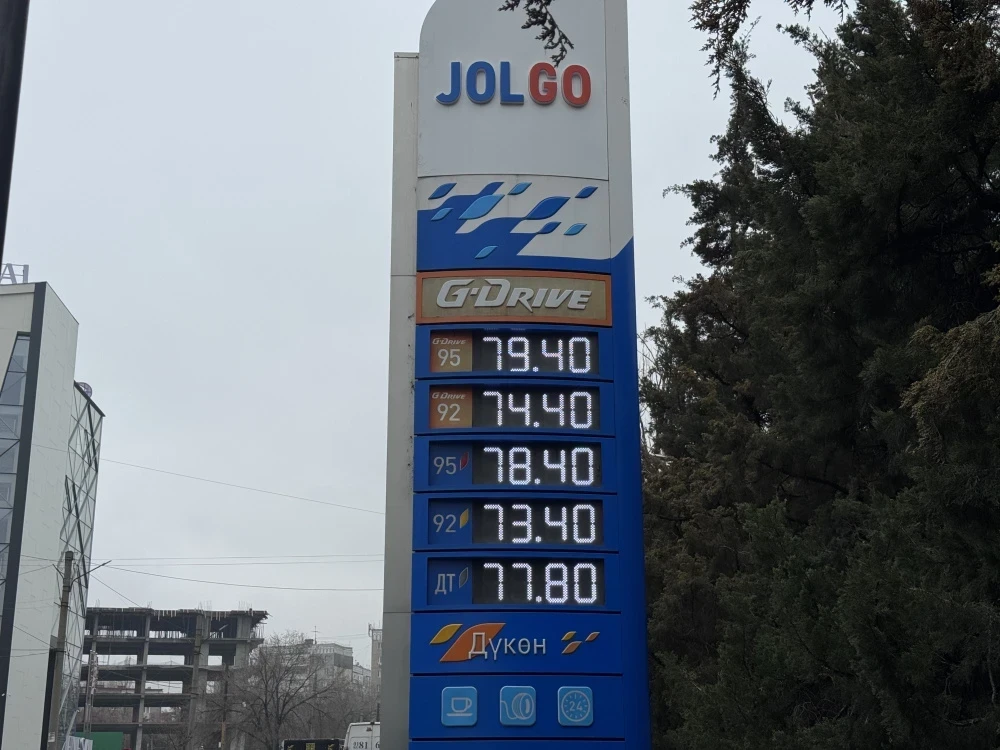
Fuel prices in Bishkek in March 2026.
Many drivers note that the cost of fuel in Kyrgyzstan remains high, and fuel expenses constitute a significant part of the family budget, especially for those who use personal transport daily.
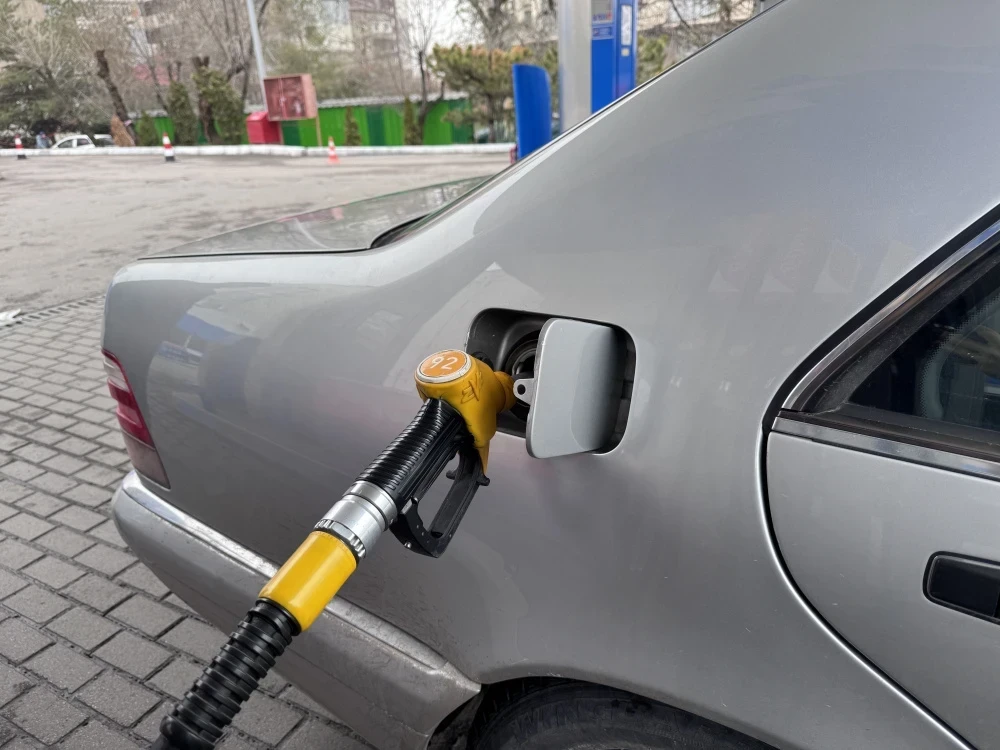
Fuel prices in Bishkek in March 2026.
“We would gladly give up our car and use public transport, but we have our own problems. Constant crowds at the stops, buses are overcrowded, and during rush hour, it's almost impossible to get away. Therefore, to take the children to schools, kindergartens, and extracurricular activities, and then get to work, a lot of money is spent on fuel. But there are no alternatives,” they share.
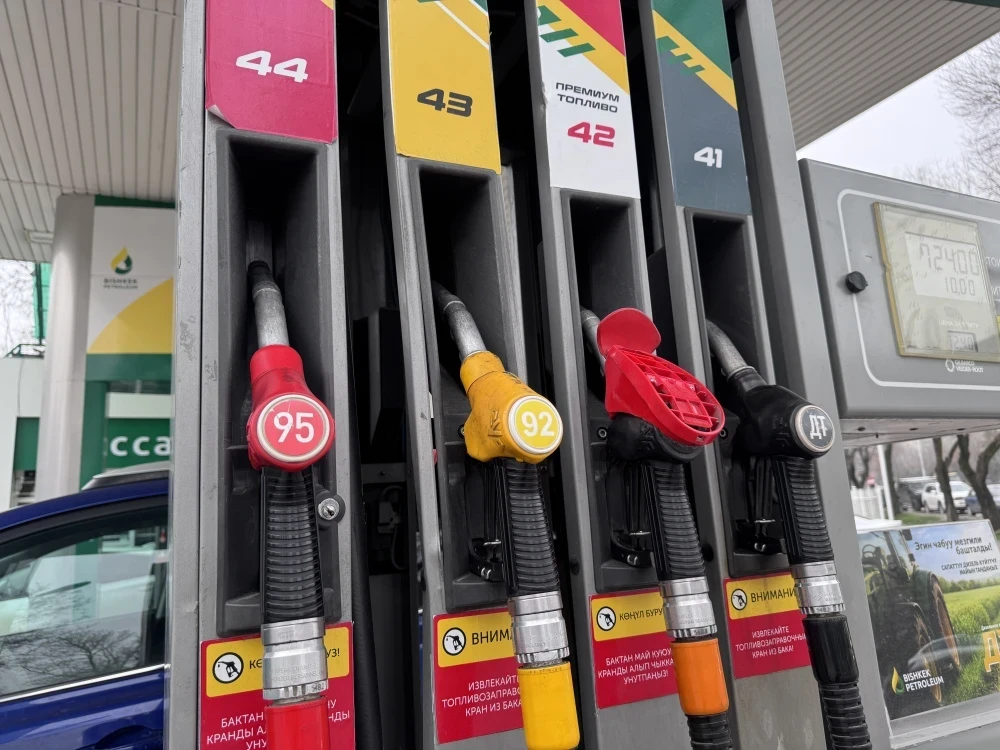
Fuel prices in Bishkek in March 2026.
Currently, authorities and oil traders claim that fuel supplies to the country are being carried out according to schedule, and fuel reserves are sufficient for about two months.
Further price changes will depend on fuel costs at Russian oil refineries, as this market determines prices for Kyrgyzstan.


