
It is worth noting that following Iran's retaliatory actions, Qatar was forced to suspend liquefied natural gas production at its largest plant. QatarEnergy announced the cessation of operations at its facilities in Ras Laffan and Mesaieed, stating that the attacks affected active production capacities. This company holds a leading position in the world in LNG production, accounting for nearly 20% of global volume.
The price of gas futures for April delivery at the Dutch TTF hub rose by 33.6%, reaching a peak of over $727 per 1,000 cubic meters, according to current exchange rates on the Forex market.
The gas market in Europe began to rise amid escalating tensions in the Middle East, and in just two days, gas prices increased by 66.7%.
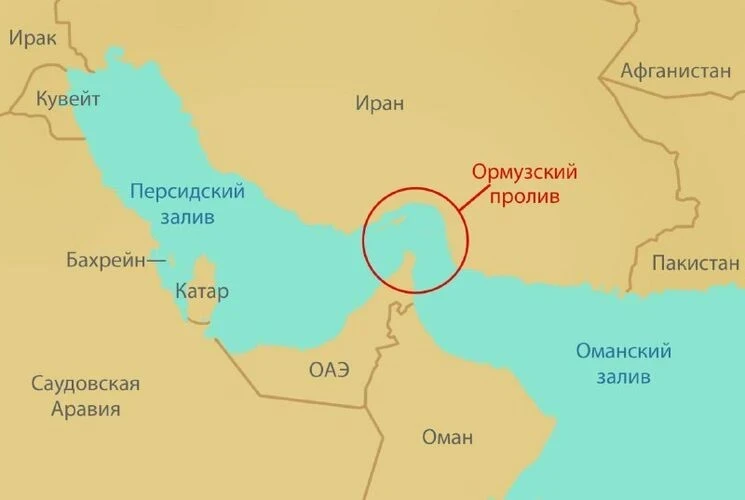
Iran confirmed the closure of the Strait of Hormuz, as reported by the head of the Islamic Revolutionary Guard Corps.
The advisor to the IRGC commander stated: "Tehran will attack any vessel that attempts to pass through the strait," emphasizing that this decision applies to all ships without exception.
He also added: "We will attack any ship that tries to cross it." It should be noted that about 20% of the world's oil and up to 30% of liquefied natural gas, which is supplied to Asian markets from Gulf countries, including Iraq, Saudi Arabia, Kuwait, Bahrain, Qatar, and the UAE, passes through the Strait of Hormuz.
Experts warn that blocking this "corridor" could lead to a sharp increase in energy prices.


