
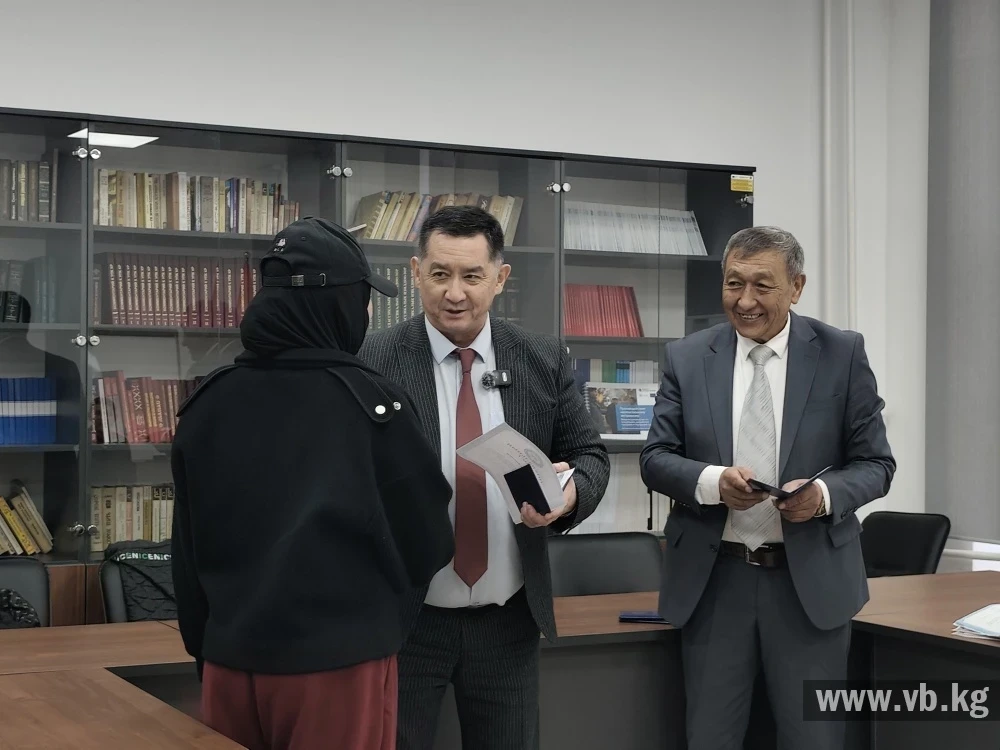
At the Department of Probation under the Ministry of Justice of the Kyrgyz Republic, the morning began with activity: groups of people are acquiring new skills, ranging from cooking to plumbing and hairdressing. Professional courses have been launched here, aimed at helping probation clients gain the necessary profession and successfully integrate into society.
Training is conducted in various fields: culinary arts, plumbing, and hairdressing. Specially equipped classrooms have been allocated for each of these areas, and classes are organized according to a strict schedule that combines theoretical knowledge with practical skills. This approach allows participants to gradually master the profession and practice in real conditions.
The courses are designed for five months, with each group consisting of 12 people. The program is structured so that future chefs begin by studying recipes, calculations, and cost estimates for dishes. They also learn to plan purchases and use products efficiently before moving on to practical classes. This method is applied in other courses as well.
Deputy Director of the department, Nurlanbek Bazarbaev, noted that the main goal of the project is to help probation participants return to a full social life.
- We launched the courses to support our clients in their reintegration into society, gaining additional education, and mastering a new profession. This gives them the opportunity to start a new life and become in-demand specialists, - he added.
The choice of training directions is determined by the current demand in the labor market. The food service sector is actively developing, there is a shortage of plumbers in construction, and the profession of hairdresser traditionally remains a stable source of income.
- We strive to focus on the real needs of the labor market. Our goal is for graduates to find jobs and support themselves, - emphasized Bazarbaev.
Previously, there were also courses for driver training; however, this program is currently undergoing reform. After resolving legal issues, training in this area will be resumed.
The first results are already visible: the first cohort of training for chefs and plumbers has completed their courses and received their certificates.
- Receiving a certificate upon completion of the courses is already our success. In the private sector, having such a document becomes an important requirement for employment, - he noted.
The department does not limit itself to just training and actively assists its graduates in finding jobs.
- We strive to ensure that they not only master the profession but also manage to get employed. If a person has difficulties finding work, we provide assistance. During probation supervision, it is important for a person to have employment, and we create all the necessary conditions for this, - said Bazarbaev.
Psychological support also plays an important role in this process. Specialists conduct individual consultations, assess the emotional state of participants, and develop personalized support programs.
Enrollment in the courses is done on a voluntary basis.
- Resocialization is impossible without the desire of the individual. We cannot force anyone. Our task is to create conditions and support those who are ready to change their lives, - he added.
The project has a long-term perspective, with plans to expand the list of professions and increase the number of facilities for practical classes.
The agency notes that the program is already yielding real results, helping people return to professional activities and a full social life.
Reference: The Law of the Kyrgyz Republic "On Probation" was adopted on February 24, 2017, and came into force on January 1, 2019. Since September 2019, the probation institute has been transferred to the Ministry of Justice, under which the Department of Probation was created. The main goal of probation is the resocialization of offenders, their return to law-abiding life, and the reduction of recidivism rates.
Prepared by: Elizaveta Bliznyuk


