
A round table was held in Bishkek on the topic "Global Trends in Central Asia: from Security Provision to the Extraction of Critical Minerals." The event was organized by the Expert Initiatives Center "Oiy Ordo" in collaboration with the Council for Sustainable Development in the Context of Climate Change under the Speaker of the Jogorku Kenesh of the Kyrgyz Republic.
The main focus was on the strategic directions of cooperation between Central Asian countries and key foreign policy partners. During the discussion, participants examined the economic prospects of the region against the backdrop of growing geopolitical competition and the struggle for strategic resources. The experience of "Kumtor" was also discussed as a key example of protecting national environmental and economic interests, as well as possible formats for interaction with Washington, London, Beijing, Brussels, and Moscow.
Particular emphasis was placed on which formats might be most beneficial for Kyrgyzstan and other Central Asian countries in the context of preserving resource sovereignty in 2026 and beyond.
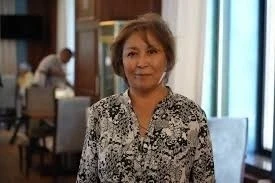
Kaldan Ernazharova, director of the Public Foundation "Institute for the Development of Public Relations in Central Asia," noted that according to the Constitution of Kyrgyzstan, natural resources belong to the state; however, the state itself is not their owner.
She stated, "The state manages resources on behalf of the people, who are the primary bearers of sovereignty and have the right to control their use in the interests of the entire country. Lands, subsoil, waters, forests, pastures, as well as the plant and animal world are part of sovereignty, not private property of officials or individual authorities.
Thus, resources should benefit the economy of Kyrgyzstan, and revenues should go to the budget to ensure infrastructure, energy, and social needs.
If resources are used contrary to the interests of the people, it constitutes a violation of the constitutional principle, even if everything appears legal formally. Society has the right to demand transparency, accountability regarding budget revenues and the preservation of strategic facilities, as well as decision-making in national interests.
The experience of Kumtor demonstrated that the return of the deposit under state control was legally justified. Revenues remain in the country, and responsibility now lies with the state. However, this return does not eliminate other problems, such as management quality, hidden risks, and accountability of those who entered into unfavorable contracts. Kyrgyzstan traditionally faces the problem of a lack of systemic accountability among officials.
For many years, subsoil use has remained a politicized process. Opaque contracts, environmental issues, conflicts with local populations, the suspension of deposit operations, rumors of kickbacks, and the lack of definitive legal assessments undermined trust in both the state and investors. Strategic resources should not be tools for political games or street pressure, as this affects taxes, the budget, and economic stability.
Currently, the number of major conflicts around deposits has decreased; however, there are still not enough serious investors. The main reasons are obvious: weak geological exploration, lack of state funding, absence of infrastructure, energy shortages, and brain drain. Without a systemic approach, the industry remains in an unstable position, despite the presence of specialized educational institutions and specialists.
A long-term plan for managing strategic resources with the involvement of professionals is necessary. Specific laws concerning gold, uranium, antimony, and other critical resources are needed, with clear delineation of the roles of the state and requirements for contracts, prioritizing national interests.
It is also important to reconsider the institutional model. Instead of ineffective administration through ministries, it is advisable to create state-owned companies to manage specific resources. For example, "Kyrgyz Altyn" for gold and specialized state companies for other strategic resources responsible for extraction and interaction with investors. This will enhance manageability, accountability, and transparency," she added.
Ernazharova cited the experience of Mongolia as an example, demonstrating possible alternative models. In that country, part of the revenues from resources is directed to a wealth fund, serving the interests of citizens, with strict state control. This approach reduces politicization and increases economic efficiency. Kyrgyzstan should study this experience, adapting it to its conditions.
It is worth noting that the Mongolian parliament adopted a law in April 2024 to create a National Wealth Fund (NWF) for managing revenues from natural resources. The main goal of the fund is to ensure fair distribution of wealth, invest in infrastructure projects, and reduce the economy's dependence on the mining sector.
As emphasized during that period by the Prime Minister of Mongolia, Luvsannamsrain Oyun-Erdene, the discussion of the law lasted over 30 years. The fund will include three components: a future heritage fund, a savings fund, and a development fund. The first will accumulate resources for future generations by investing them in international financial instruments. The second fund will support healthcare, education, and housing programs. Financing for major projects and national programs will be provided from the development fund.
Every citizen of Mongolia must have a personal savings account to which funds from the savings fund will be deposited. The central bank will be responsible for this. With the adoption of the law, the largest mining companies will be required to deposit up to 34% of their profits into the NWF. This law marks a turning point in the management of Mongolia's natural resources.
The key principle is maximum openness. When society realizes that it is a co-participant and beneficiary of the results, trust in the state and companies increases. It is also important to abandon the raw material model and develop processing, at least to semi-finished products, creating industrial clusters.
Raw material sales do not ensure sustainable growth. Resources must work not only for current revenues but also for future generations. For this, an optimal management model, strong institutions, state control, competition with international partners, and an understanding that sovereignty begins with the proper management of the country's subsoil are necessary.
Kyrgyzstan has significant reserves of strategic raw materials; however, only a small portion of the resources truly brings economic and geopolitical value. The rest remain potential assets, not converted into development due to institutional and technological constraints. Therefore, it is time to develop a real strategy that will allow the country to transition from the status of "a poor country with rich resources" to that of a self-sufficient and developed country. Natural wealth must serve the benefit of the people of Kyrgyzstan.
Source: centrasia.institute


