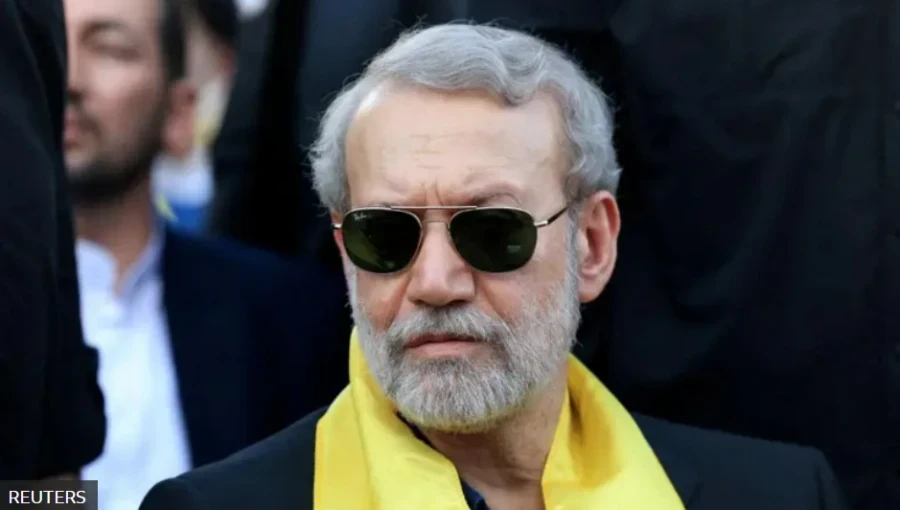
His role in the Iranian political landscape has always been unique
Since the beginning of the redistribution of power in Iran, triggered by the actions of the United States and Israel, following the removal of several high-ranking military and political leaders, Ali Larijani has once again found himself at the center of political processes. Having led the parliament for over a decade and repeatedly sought the presidency, he has now become one of the key figures in the changing political climate.
Previously regarded as a "cautious heavyweight" capable of balancing between conservative and pragmatic elements of power, Larijani's political career seemed to have come to an end after his disqualification from the 2021 elections.
However, current circumstances have changed the situation. With the departure of President Ebrahim Raisi and the rise of Masoud Pezeshkian, Larijani has not only returned but has also become the main architect of the new political situation in the country.
A key moment was the change in the position of Supreme Leader Ali Khamenei. While Larijani was sidelined from the elections in 2021, his status has changed in 2024, and he has once again become a "special envoy" on crucial issues, performing diplomatic tasks for Iran's leadership. His recent trips to Lebanon and Syria amid the regional crisis highlight his importance as Tehran needs to convey serious messages.
In addition, Larijani has established himself as an informal mediator between the office of Iran's leader and Pezeshkian's government, which, while sincere, does not always handle political maneuvers adeptly.
Many experts refer to Larijani as the "older brother" of the new administration. He represents a part of the Iranian establishment that recognizes the need for competent governance for the long-term survival of the system. His influence on personnel policy, economic strategy, and the containment of radicals is becoming increasingly noticeable. Nevertheless, his role is also linked to the suppression of recent protests in the country.
Larijani's associates hold important positions in the government and advisory councils, while he himself promotes the concept of "reasonable opening" of the economy and the resumption of negotiations on the nuclear deal with the West, aligning with the new president's course.
With significant authority in the parliament, which he led for 12 years, Larijani has helped the government withstand attacks from ultra-conservatives.
Larijani's strengthening is a response from the authorities to internal and external challenges. After the unrest of recent years and increasing pressure from the West, Iran's ruling circles have realized that they lack "rational conservatives."
Although Larijani does not demand radical reforms, he advocates for the creation of an "effective state." In Ali Khamenei's eyes, this makes him an ideal candidate for stabilizing the situation.
Today, he is seen as the voice of reason in an unstable region. Despite not holding the presidential seat, Larijani's influence on Iran's foreign policy and strategic decisions may have reached a record level in the past decade. This serves as an example of how the ability to wait and maintain composure can lead to the heights of power in Iranian politics.
Photo www