
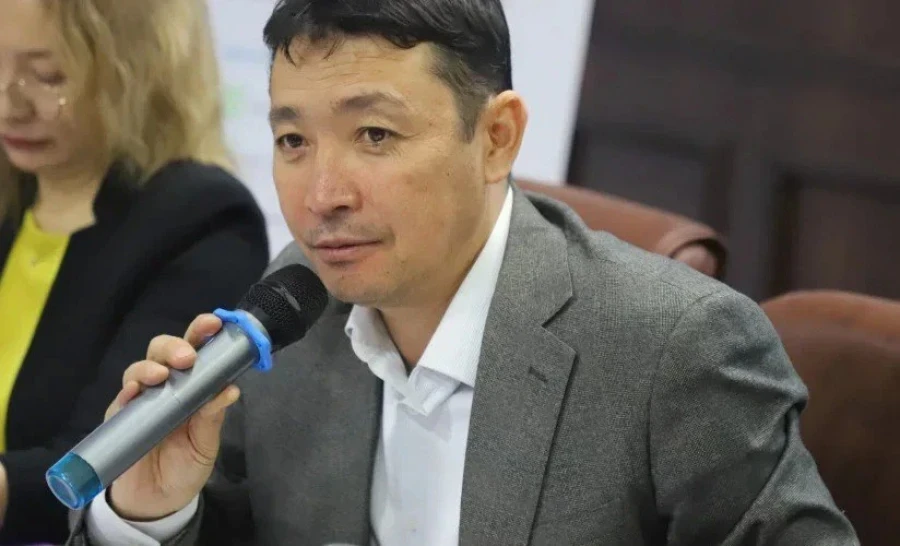
Political scientist Bakytbek Jumagulov shares his views on legal interpretations and the need for institutional clarifications.
The discussion on the implementation of the presidential mandate in light of constitutional changes is actively ongoing among both experts and the public. Bakytbek Jumagulov, a political scientist and director of the Eurasian Strategic Research Center, emphasizes that the current president was elected according to the previous version of the Constitution, which establishes a six-year term and limits the possibility of re-election. Currently, he operates under the new Constitution, which provides for a five-year term and the possibility of two consecutive terms.
From the expert's perspective, this situation does not violate legal norms. The presidential mandate was obtained lawfully, and the new version of the Constitution does not revise the results of elections held previously. Nevertheless, Jumagulov notes that the transition from one constitutional model to another raises legal questions and various interpretations, which is a normal process during periods of institutional change.
According to him, these legal questions have practical significance. Without proper clarifications from state institutions, they can become subjects of public discussions and provoke ambiguous reactions. An important aspect is the need for timely and balanced communication from the authorities.
Jumagulov also emphasizes that the discussion of such issues should be conducted in a legal and institutional context, avoiding politicization. He believes that the involvement of parliament and relevant state bodies in clarifying the legal aspects of the transitional period could help create a clearer understanding of the changes in society.
Furthermore, the expert points out that various mechanisms, including electoral decisions, can serve as tools for strengthening public trust and renewing political consensus. However, all such actions must occur within the framework of the law and be the result of conscious decisions by the state.
Overall, in Jumagulov's opinion, the stability of the political system largely depends on the ability of the authorities to effectively clarify legal issues and ensure predictability in constitutional processes. Openness, dialogue, and legal certainty play a key role in maintaining stability and trust in state institutions.
Bakytbek Jumagulov, director of the Eurasian Strategic Research Center, political scientist


